Manufacturing across the GCC is undergoing a major transformation as regional and global stakeholders demand responsible, transparent, and sustainability-aligned business practices. Government-led sustainability strategies in the UAE, Saudi Arabia, Qatar, and Oman are pushing industries to reduce carbon footprints, adopt cleaner production systems, and improve social and governance standards. At the same time, international buyers expect their suppliers to follow strong ESG principles before awarding contracts.
This shift has made ESG supply chain assessment an essential capability for manufacturers that want to remain competitive in global value chains. By evaluating emissions, waste handling, worker safety, and ethical sourcing practices across suppliers, manufacturers gain accurate insights that support compliance, risk reduction, and long-term growth.
What Is an ESG Supply Chain Assessment in Manufacturing
An ESG supply chain assessment is a structured process used to evaluate the environmental, social, and governance performance of suppliers involved in manufacturing. Its purpose is to identify risks, improve operational practices, and align supply networks with sustainability commitments.
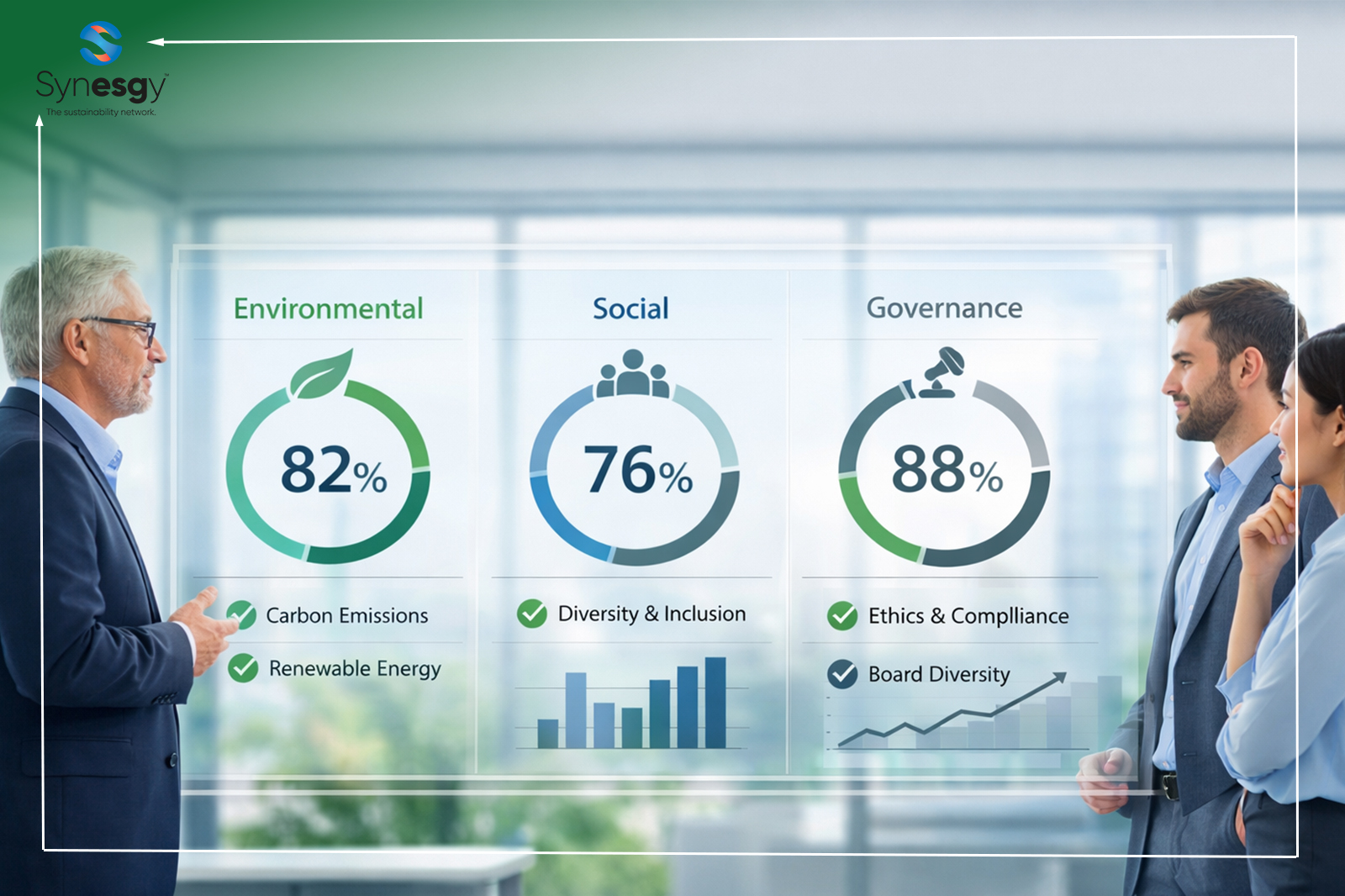
The assessment covers three core areas. The environmental component checks emissions, resource use, waste handling, and overall ecological impact. The social component evaluates workplace safety, worker welfare, fair recruitment, and community considerations. The governance component measures supplier transparency, anti-corruption controls, certifications, and operational integrity.
Supply chain visibility is critical because a large portion of emissions, waste, and compliance risks sit outside the manufacturer’s own facilities. An effective ESG supply chain assessment gives manufacturers a clear view of how suppliers operate and how these operations influence overall ESG performance. It also supports structured reporting frameworks that regional regulators and global buyers expect.
Why ESG Supply Chain Assessment Matters for GCC Manufacturers
GCC manufacturers face rising expectations from regulators, customers, investors, and international markets. ESG supply chain assessment helps them meet these expectations in several ways.
It supports compliance with national sustainability visions such as UAE Net Zero 2050 and Saudi Vision 2030, which emphasise decarbonisation and responsible industrial development. Many buyers now evaluate ESG risk analysis before entering partnerships, so manufacturers with transparent supply chain assessments are better positioned to win contracts.
This process also reduces operational risk by identifying suppliers with unsafe practices, high emissions, poor waste management, or weak governance controls. Manufacturers that embed strong ESG supply chain assessment practices can enter regulated markets where sustainability disclosure is mandatory, improving their export potential.
Environmental Priorities in GCC Manufacturing
-
Emission Reduction and Energy Use
Manufacturing in the GCC has historically been energy-intensive due to the region’s industrial structure and heavy reliance on energy-based processes. As global and regional decarbonisation efforts increase, manufacturers face growing pressure to track and reduce carbon output. ESG supply chain assessment allows manufacturers to measure emissions across supplier tiers, identify high-carbon activities, and replace suppliers with more energy-efficient operations. It also supports supply chain ESG risk assessment, helping organisations understand where their emission hotspots lie and how to reduce them.
-
Waste Management and Circular Production
Waste generation remains a challenge across many GCC industries. Countries in the region have adopted various circular economy commitments that encourage recycling, reuse, and better waste management. ESG supplier assessment supports these goals by evaluating how suppliers manage waste, the level of recycling they undertake, and whether they follow proper disposal standards. By identifying suppliers with poor waste practices, manufacturers can reduce material loss and expand sustainable sourcing programs that support circular production.
Social Factors: Workforce Safety and Labor Standards
-
Workplace Health and Safety Compliance
Workplace safety is a priority in GCC manufacturing, supported by sector-specific safety regulations and industrial standards. Manufacturers are expected to maintain safe facilities and ensure that partners in the supply chain do the same. ESG assessment helps identify unsafe environments by reviewing supplier safety records, audit reports, and health and safety monitoring processes. This helps manufacturers address risks early and maintain compliance with national occupational safety rules.
-
Ethical Labor Practices
Manufacturers across the GCC are required to uphold worker welfare, fair wage structures, ethical recruitment, and proper labour conditions. ESG assessments allow organisations to check whether suppliers follow these requirements and global labour standards, helping prevent exploitation and unethical workplace behaviour. Supplier ESG assessment supports social sustainability goals by ensuring responsible labour practices throughout the supply chain.
Governance Expectations in GCC Manufacturing
Governance standards influence how suppliers manage documentation, procurement, compliance, and ethical business conduct. ESG supply chain assessment checks supplier certifications, regulatory compliance, and adherence to anti-corruption practices. This includes verifying operational transparency, reviewing procurement workflows, and ensuring that business practices meet national and international expectations. Strong governance across suppliers reduces the risk of fraud, delays, and non-compliance issues.
How ESG Supply Chain Assessment Supports Sustainable Manufacturing
ESG supply chain assessment has become a strategic tool for building sustainable manufacturing models across the GCC. It encourages manufacturers to adopt low-emission materials and phase out practices that increase carbon output. Assessment insights help improve resource efficiency, reduce waste, and make operations more resilient.
By evaluating social and governance indicators, manufacturers can strengthen supplier networks with partners who follow ethical and responsible standards. This builds trust among buyers, investors, and stakeholders who prefer to work with companies committed to long-term sustainability.
Digital Platforms and Tools That Simplify ESG Supply Chain Assessment
Modern ESG assessment is supported by digital platforms that make the process more accurate and scalable. Manufacturers can use digital questionnaires to collect structured supplier data and centralise information in one place. Automated supplier scoring tools convert ESG performance into measurable ratings that support benchmarking.
Real-time dashboards provide visibility into emissions, waste, safety indicators, and governance compliance across suppliers. ESG risk analytics help manufacturers identify high-risk areas quickly and take corrective actions. Digital tools also make assessments repeatable, consistent, and aligned with international frameworks, improving the quality of supply chain ESG risk assessment.
Steps to Conduct an Effective ESG Supply Chain Assessment
-
Map supply chain tiers
Manufacturers begin by mapping all suppliers across Tier 1, Tier 2, and Tier 3 to understand where ESG risks may exist. This step helps create full visibility of raw material sources, production facilities, logistics partners, and subcontractors so that no hidden risks remain unaddressed.
-
Define environmental, social, and governance criteria
Clear criteria aligned with national sustainability goals and global standards guide the assessment process. Manufacturers establish specific indicators for emissions, waste, worker safety, labor conditions, ethics, and governance so that every supplier is evaluated consistently.
-
Collect structured data from suppliers
Supplier submissions must be standardised to reduce inconsistency and improve comparability. Manufacturers use questionnaires, documented evidence, certifications, and performance data to assess actual practices rather than statements of intent.
-
Evaluate maturity and benchmark performance
Suppliers are evaluated based on ESG maturity, industry norms, and global benchmarks. This allows companies to identify leaders, laggards, and suppliers that require additional support. Benchmarking also helps set realistic improvement goals for different supplier groups.
-
Highlight risk categories and compliance gaps
ESG risk assessments and insights identify areas that pose environmental, social, or governance risks. Manufacturers can see which suppliers have high emissions, low safety standards, weak labor practices, or governance issues that may affect long-term partnerships.
-
Provide corrective actions and improvement plans
Manufacturers share action plans with suppliers to close gaps and improve long-term ESG performance. These plans may include training, documentation updates, technology adoption, safer working conditions, or cleaner production methods.
-
Monitor progress and update reports regularly
Continuous monitoring ensures that suppliers improve, stay compliant, and become long-term partners. Manufacturers update reports, track changes over time, and maintain transparent communication so that ESG performance becomes part of ongoing supplier management.
GCC Region Focus: Policy Drivers and Market Expectations
The GCC region is driving sustainability through clear policy targets. UAE Net Zero 2050, Saudi Vision 2030, Qatar National Vision 2030, and Oman Vision 2040 all emphasise industrial decarbonisation, clean energy adoption, and responsible resource use. Governments are promoting circular economy programs, improved waste management systems, and cleaner production standards.
Export markets also require strong ESG disclosure, especially in Europe and North America. Buyers expect transparency across procurement and supply chain operations. Manufacturers that use structured ESG supply chain assessments are more likely to meet these expectations and maintain market access.
Key Challenges Manufacturers Face During ESG Supply Chain Assessment
Manufacturers often face visibility constraints when evaluating multiple layers of suppliers. Some suppliers lack structured reporting systems, which leads to inconsistent or incomplete ESG data. Smaller suppliers may not have strong ESG maturity and may find it difficult to meet reporting requirements.
Another challenge is verifying sustainability claims. Without proper tools or third-party verification, manufacturers risk basing decisions on inaccurate information. Effective ESG supply chain assessment platforms help reduce these challenges with standardised data, verification methods, and automated scoring.
Best Practices for GCC Manufacturers
Manufacturers can strengthen their ESG performance by incorporating ESG criteria into supplier contracts and procurement policies. Supplier training programs increase awareness and help smaller suppliers improve their practices. Incentive-based models encourage suppliers to adopt sustainable methods.
Using verified third-party platforms ensures accuracy, transparency, and alignment with global standards. Manufacturers can also integrate ESG performance into supplier scorecards to create a consistent evaluation model that rewards improvement and compliance.
Key Takeaways
ESG supply chain assessment has become essential for sustainable manufacturing across the GCC. It enables manufacturers to reduce emissions, minimise waste, and strengthen safety and ethical standards in their supply networks. Governments across the region are setting clear sustainability goals, making ESG alignment important for long-term competitiveness.
Digital tools support accurate evaluation, benchmarking, and reporting, improving supply chain transparency. Companies that adopt ESG assessment early gain resilience, better market opportunities, and a stronger reputation among global partners.
Conclusion
ESG supply chain assessment is a strategic requirement for manufacturers that want to remain competitive in a rapidly evolving industrial landscape. The GCC region is moving toward higher environmental, social, and governance expectations, supported by national policy and global market demands. Manufacturers that integrate ESG assessment into their operations gain improved compliance, reduced risks, and a more resilient supply chain, helping them achieve long-term sustainable growth.
For more insights:
Phone: +971 4 406 9900
E-mail: info.me@crif.com
FAQs
Q: Can smaller suppliers meet ESG requirements easily?
A: Yes. Smaller suppliers can meet ESG requirements when they receive clear guidance, training, and access to structured digital tools. Synesgy supports this by providing simple ESG questionnaires and automated scoring that help suppliers improve their sustainability maturity at a manageable pace.
Q: What is ESG risk assessment?
A: ESG risk assessment is the process of identifying environmental, social, and governance risks across a company or supply chain. Through platforms like Synesgy, organisations can analyse structured data, benchmark supplier performance, and understand where high-risk areas exist.
Q: What is an ESG supply chain assessment?
A: An ESG supply chain assessment is a structured review of supplier performance across environmental, social, and governance indicators. Synesgy helps manufacturers conduct this assessment with standardised questionnaires, verified data, and clear scoring models that ensure responsible and ethical operations.
Q: How often should companies conduct ESG risk analysis?
A: Most companies conduct ESG risk analysis annually. Industries with higher regulatory pressure or complex global supply chains may review performance more frequently. Synesgy allows organisations to run ESG checks at any time, making ongoing monitoring easier.
Q: How do companies evaluate the ESG performance of suppliers?
A: Companies evaluate supplier ESG performance using questionnaires, digital scoring tools, documentation reviews, and audit reports. Synesgy provides a unified platform where all supplier data is collected, scored, and verified, making evaluation more consistent and reliable.
Q: What are the ESG standards in the UAE and Saudi Arabia?
A: The UAE and Saudi Arabia follow national sustainability visions that require decarbonisation, better resource efficiency, strong labour welfare, and transparent governance. Synesgy aligns its assessment model with regional and global ESG frameworks, helping companies meet these standards more easily.
Q: Where can I find ESG supply chain assessment services near me in the UAE?
A: Manufacturers in the UAE can access ESG supply chain assessment services through Synesgy, which offers a centralised digital platform designed for local and regional sustainability requirements.