The understanding of ESG sustainability has matured significantly, evolving from basic CSR programs into a comprehensive system of measurable accountability and responsibility. Companies with advanced ESG practices now lead their industries in trust, compliance, and financial stability. As more markets embrace mandatory sustainability reporting, ESG has become a strategic priority across sectors.
Today, stakeholders expect transparent data, responsible governance, ethical supply chains, and verifiable climate action, not just commitments on paper. Organisations are now expected to evaluate their environmental and social impact through globally aligned frameworks and digital platforms that ensure accuracy, comparability, and continuous improvement.
This article breaks down what ESG means, why it has become a defining requirement for business resilience, and how companies can embed ESG principles into long-term strategy to meet rising regulatory and investor expectations.
What Is ESG Sustainability and Why Is It Important for Businesses?
ESG sustainability refers to a company’s performance across three critical dimensions: environmental protection, social responsibility, and governance integrity. Unlike traditional CSR activities, ESG focuses on measurable data, transparent reporting, and long-term impact.
Today, ESG defines modern business responsibility for several reasons:
Why ESG Matters
-
Risk Reduction: Companies with strong ESG practices tend to face fewer regulatory penalties, supply chain disruptions, and reputational risks.
-
Stronger Compliance: Governments in the EU, GCC, and Asia are now enforcing sustainability reporting and climate disclosures.
-
Brand Trust: Consumers and B2B clients increasingly choose companies with clear ESG sustainability commitments.
-
Operational Efficiency: Energy savings, waste reduction, ethical procurement, and improved workforce practices all lead to long-term cost advantages.
With global climate goals intensifying, including net-zero targets and mandatory disclosures, ESG has become a central indicator of resilience, integrity, and ethical leadership.
Difference Between ESG, Sustainability, and CSR
Many organisations still confuse sustainability, CSR, and ESG, even though each plays a distinct role in responsible business strategy.
-
Sustainability
A broad concept focused on maintaining long-term environmental and social balance. Sustainability includes climate action, resource use, community welfare, and ecosystem protection.
-
CSR (Corporate Social Responsibility)
Voluntary initiatives such as community programs, charity events, and employee wellbeing activities. CSR is important but often non-measurable.
-
ESG (Environmental, Social, Governance)
A structured, measurable, and reportable framework for evaluating how responsibly a company operates. ESG links performance data with sustainability outcomes.
How ESG Connects to Sustainability
-
ESG is the data-driven evolution of CSR, turning corporate responsibility into measurable action.
-
ESG ensures that sustainability goals are backed by policies, audits, benchmarks, and transparent reporting.
-
Investors rely on ESG metrics, not CSR, to evaluate long-term business viability.
What ESG Sustainability Means for Businesses
Over the years, the meaning of CSR ESG sustainability has dramatically changed. It is no longer limited to environmental initiatives; it now covers digital transparency, supply chain accountability, and governance maturity.
Key Trends
-
Stricter Global Reporting Requirements
Frameworks like CSRD, ESRS, SEC’s climate disclosure rules, and GCC-level sustainability guidelines are becoming mandatory.
-
Increased Investor Scrutiny
Investors now screen companies through ESG scores and sustainability benchmarks before making decisions.
-
Mandatory Supply Chain Transparency
Businesses must monitor suppliers for environmental, labour, and governance risks to maintain credibility.
-
ESG as a Competitive Advantage
Organisations with mature ESG practices outperform peers through stronger brand equity, regulatory readiness, and investor trust.
What Are the Three Pillars of ESG (Environmental, Social, Governance)?
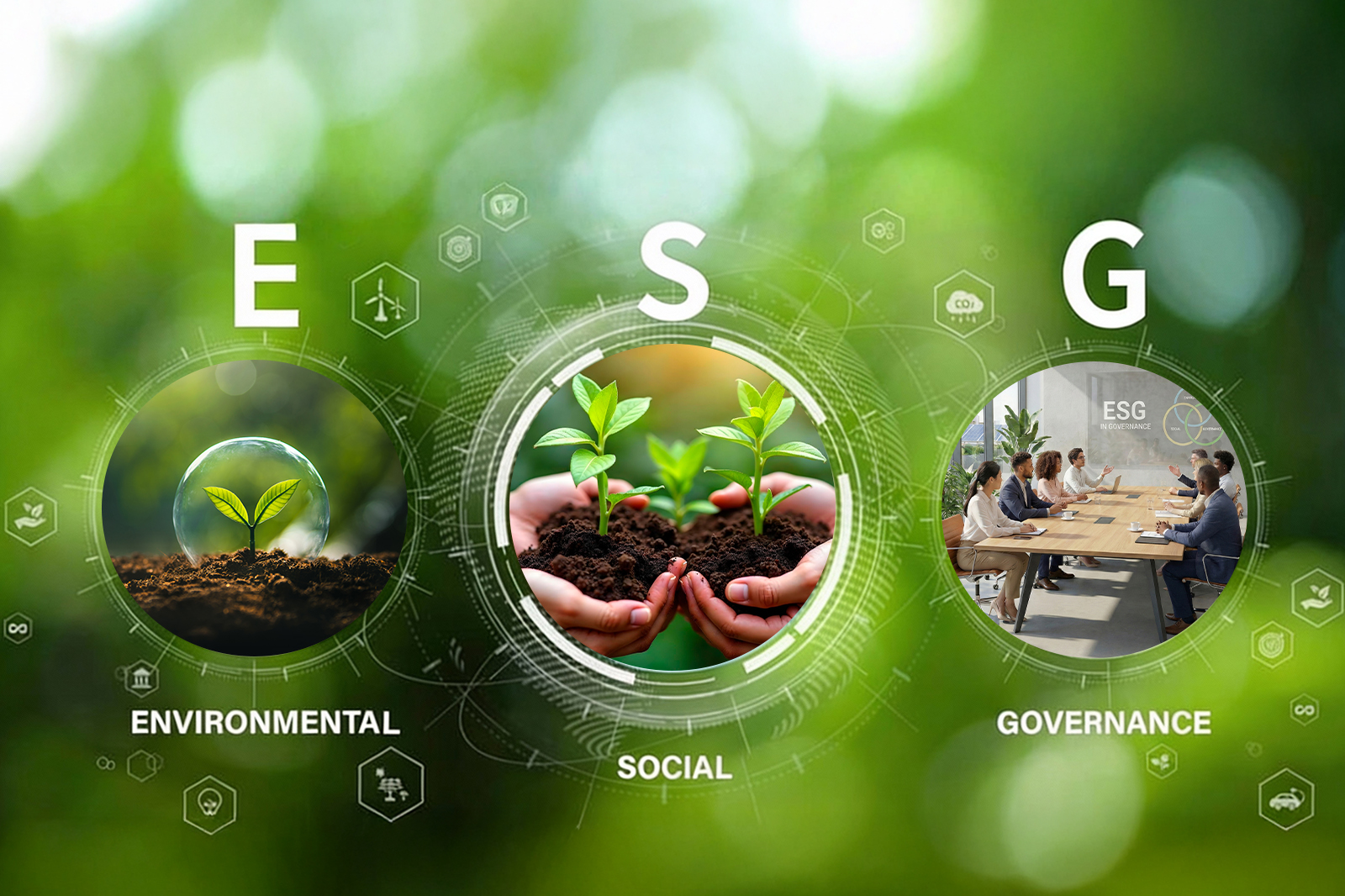
The ESG pillars of sustainability form the foundation for responsible and transparent operations. Each pillar includes specific metrics that companies must measure and improve.
Environmental (E)
Focuses on how a company minimises its ecological footprint.
Key areas include:
-
Greenhouse gas emissions
-
Energy efficiency
-
Water consumption
-
Waste management
-
Sustainable sourcing
-
Climate resilience
Social (S)
Covers how a business treats employees, communities, and stakeholders.
Key areas include:
-
Labour rights and safety
-
Diversity, equity, and inclusion (DEI)
-
Employee wellbeing
-
Community investment
-
Customer safety and data privacy
Governance (G)
Assesses leadership accountability, ethics, and transparency.
Key areas include:
-
Anti-corruption controls
-
Board diversity and independence
-
Executive accountability
-
Responsible tax behaviour
-
Ethical decision-making
For sustainable growth, all three ESG pillars must work together. Strong environmental performance means little without governance transparency or fair labour practices.
What Are the Common Frameworks for ESG Reporting?
Credible ESG reporting requires alignment with globally accepted standards. These frameworks ensure that sustainability information is measurable, comparable, and transparent for regulators, investors, and stakeholders.
Key ESG and Sustainability Reporting Frameworks
-
GRI (Global Reporting Initiative)
Best for: comprehensive sustainability disclosure across environmental, social, and governance impacts.
Focus: material impacts on the environment, labour practices, human rights, supply chain practices, and governance.
Used widely by global companies to provide a full picture of sustainability performance and impact.
-
SASB (Sustainability Accounting Standards Board)
Best for: industry-specific ESG metrics that link directly to financial performance.
Focus: financially material sustainability risks and sector-relevant disclosures.
SASB helps companies communicate how ESG issues influence business value and risk exposure.
-
TCFD (Task Force on Climate-Related Financial Disclosures)
Best for: climate-related financial and operational risk reporting.
Focus: governance, strategy, risk management, and climate metrics such as emissions and transition risks.
Increasingly used by companies responding to investor and regulatory pressure on climate transparency.
-
UN SDGs (Sustainable Development Goals)
Best for: aligning business sustainability efforts with global development priorities.
Focus: social progress, environmental protection, economic inclusion, and responsible production.
-
EU CSRD / ESRS (Corporate Sustainability Reporting Directive / European Sustainability Reporting Standards)
Best for: mandatory sustainability reporting for companies operating in or trading with the European Union.
Focus: detailed, regulated disclosures covering environmental impacts, social responsibility, and governance performance.
Provides the highest level of reporting standardization and legal accountability.
Aligned reporting across these frameworks enhances transparency, strengthens investor trust, supports regulatory compliance, and ensures that sustainability data meets international expectations.
Steps to Build an ESG Sustainability Framework for Organisations
A well-defined CSR ESG sustainability framework helps companies streamline reporting, ensure compliance, and establish measurable goals.
Step 1: Conduct an ESG Materiality Assessment
Identify ESG topics most relevant to stakeholders. Examples include emissions, diversity, cybersecurity, or governance controls.
Step 2: Set ESG Goals and KPIs
Define measurable, science-based objectives such as reducing emissions, increasing renewable energy use, or improving workforce diversity.
Step 3: Create Policies and Governance Structures
Establish clear guidelines, assign roles, and set cross-functional accountability for ESG initiatives.
Step 4: Integrate ESG Into Day-to-Day Operations
Embed sustainability in procurement, HR policies, facility management, supply chain decisions, and risk assessments.
Step 5: Collect Data and Monitor Progress
Use ESG dashboards, supplier assessments, surveys, and reporting systems like Synesgy to track real-time progress.
Step 6: Report Transparently
Follow frameworks such as GRI or SASB to ensure clarity, comparability, and alignment with stakeholder expectations.
Step 7: Continuously Improve and Benchmark
Compare performance against global peers, adapt to new regulatory guidelines, and update sustainability strategies regularly.
How Companies Can Implement ESG Strategies Effectively
Strong performance comes from embedding ESG into core operations, not just annual reporting.
Key Approaches
-
Align ESG with business and financial strategy to ensure relevance.
-
Build a cross-functional ESG team involving operations, HR, legal, procurement, and finance.
-
Use digital tools to collect reliable ESG data, especially across multi-tier supply chains.
-
Engage leadership and employees through training, KPIs, and internal policies.
-
Integrate ESG risk management into decision-making to improve long-term resilience.
-
Effective implementation ensures measurable outcomes that support long-term business growth.
How to Measure ESG Performance in Companies
Measurement is essential for visibility, improvement, and investor trust.
What to Measure Across the ESG Pillars
-
Environmental: CO₂ emissions, energy use, water efficiency, waste reduction.
-
Social: diversity ratios, employee turnover, worker safety, training hours.
-
Governance: board diversity, anti-corruption compliance, and audit results.
Tools Used to Measure ESG
-
ESG audits and supplier assessments
-
Centralized dashboards
-
Climate risk analysis tools
-
Benchmarking tools
Why ESG Measurement Matters
-
Ensures transparency with stakeholders
-
Strengthens compliance with regional and global regulations
-
Supports investor decisions
-
Demonstrates progress toward sustainability goals
How Does ESG Impact a Company’s Financial Performance?
Multiple global studies confirm that ESG-aligned companies outperform peers financially. This is due to:
-
Direct Business Benefits
-
Lower operational costs through energy efficiency and waste reduction.
-
Improved creditworthiness as lenders reward companies with strong governance.
-
Higher investor confidence backed by credible ESG data.
-
Reduced risk of fines, litigation, or supply chain disruptions.
ESG also helps companies avoid penalties, maintain supply chain continuity, and strengthen market reputation, all of which directly influence profitability.
Why Should Companies Prioritize ESG Initiatives?
Companies should prioritize ESG initiatives because they deliver strong competitive, regulatory, and financial advantages. By strengthening transparency and responsible practices, ESG builds trust with customers, employees, and investors while enhancing long-term business resilience. It also opens access to ESG-linked financing and green investment opportunities, which are increasingly tied to sustainability performance.
Additionally, prioritizing ESG supports compliance with global sustainability regulations and prepares organisations to thrive amid rising reporting standards and regulatory expectations worldwide.
Key Takeaways
-
ESG sustainability is a measurable and strategic business priority.
-
It goes beyond CSR, incorporating data-driven metrics that improve transparency.
-
ESG performance directly influences financial stability and investor confidence.
-
Global reporting frameworks like GRI, SASB, and TCFD help companies align with best practices.
-
ESG strategies must be integrated into daily operations and continuously monitored.
-
Organisations prioritising ESG gain long-term competitiveness and regulatory readiness.
Conclusion
ESG represents far more than environmental awareness or social responsibility. It is an integrated, measurable, and forward-looking approach to business management that strengthens resilience, compliance, financial performance, and stakeholder trust.
Companies that embed ESG into their long-term strategy will remain competitive in a world where transparency and responsible operations define market leadership. As regulations tighten and investor expectations rise, organisations cannot afford to delay their ESG transformation.
The journey begins with data, clarity, and a structured ESG sustainability framework, enabling responsible and sustainable business performance for years to come.
Ready to turn ESG strategy into measurable action? Connect with our experts to build a structured, data-driven ESG framework that supports compliance, resilience, and long-term growth.
For more insights:
Phone: +971 4 406 9900
E-mail: info.me@crif.com
FAQs
Q: Where can businesses get support for their ESG journey?
A: Businesses can rely on Synesgy for end-to-end ESG assessments, supplier evaluations, and structured sustainability reporting. Synesgy provides a unified digital platform to collect ESG data, benchmark performance, and ensure global reporting alignment.
Q: When should companies start considering ESG factors in their operations?
A: Companies should integrate ESG immediately to stay compliant and competitive in evolving regulatory environments. Early adoption supports long-term planning, risk reduction, and stronger investor confidence.
Q: Who should be involved in developing a company’s ESG strategy?
A: Leadership, sustainability teams, HR, finance, procurement, and legal departments must collaborate on ESG strategy. Cross-functional involvement ensures ESG goals are embedded across all business operations.
Q: Who provides reliable ESG data and ratings for investors?
A: Synesgy offers trusted ESG assessments and verified sustainability information aligned with global reporting standards. Investors rely on Synesgy’s transparent scoring and structured questionnaires to evaluate a company’s ESG performance.
Q: How do you measure the success of ESG initiatives?
A: Synesgy measures success through structured ESG scoring, dashboards, supplier evaluations, and year-on-year comparisons. Its platform clearly shows progress, highlights risk areas, and supports continuous improvement across all ESG pillars.