ESG compliance in the UAE is entering a new phase where data matters more than declarations. Companies are no longer judged by what they claim, but by what they can measure and prove. At the center of this shift are Scope 1, Scope 2, and Scope 3 emissions.
These emission categories are becoming the foundation of credible ESG reporting, helping organizations quantify their environmental impact across operations and value chains. As regulatory frameworks evolve and disclosure expectations become more structured, businesses are expected to present clear, measurable emissions data rather than broad sustainability narratives.
Without a clear emissions baseline, businesses risk falling out of compliance, weakening investor confidence, and facing growing regulatory pressure. The need to measure, track, and report emissions is no longer optional. It is immediate. Establishing this baseline is the first step toward building a transparent, audit-ready ESG strategy that aligns with both regulatory requirements and market expectations.
What Are Scope 1, Scope 2, And Scope 3 Emissions In ESG Compliance?
Scope 1, 2, and 3 emissions define how a company measures its greenhouse gas impact across operations and value chains.
-
Scope 1 emissions are direct emissions from owned or controlled sources such as fuel usage, company vehicles, and on-site operations.
-
Scope 2 emissions are indirect emissions from purchased energy, mainly electricity consumption.
-
Scope 3 emissions include all other indirect emissions across the value chain, including suppliers, logistics, business travel, and product use.
Together, these scopes provide a complete view of a company’s environmental impact.
For UAE businesses, ESG compliance increasingly requires visibility across all three scopes. Partial reporting is no longer sufficient. Incomplete emissions data can directly weaken compliance positioning and raise concerns during audits or disclosures.
What Is The Difference Between Scope 1, Scope 2, And Scope 3 Emissions?
The difference lies in control, ownership, and complexity.
-
Scope 1: Fully controlled and directly measurable
-
Scope 2: Indirect but still operationally linked
-
Scope 3: Indirect and spread across the entire value chain
As companies move from Scope 1 to Scope 3, data complexity increases significantly. While Scope 1 and 2 can be tracked internally, Scope 3 requires coordination with external stakeholders.
This is where most organizations face challenges.
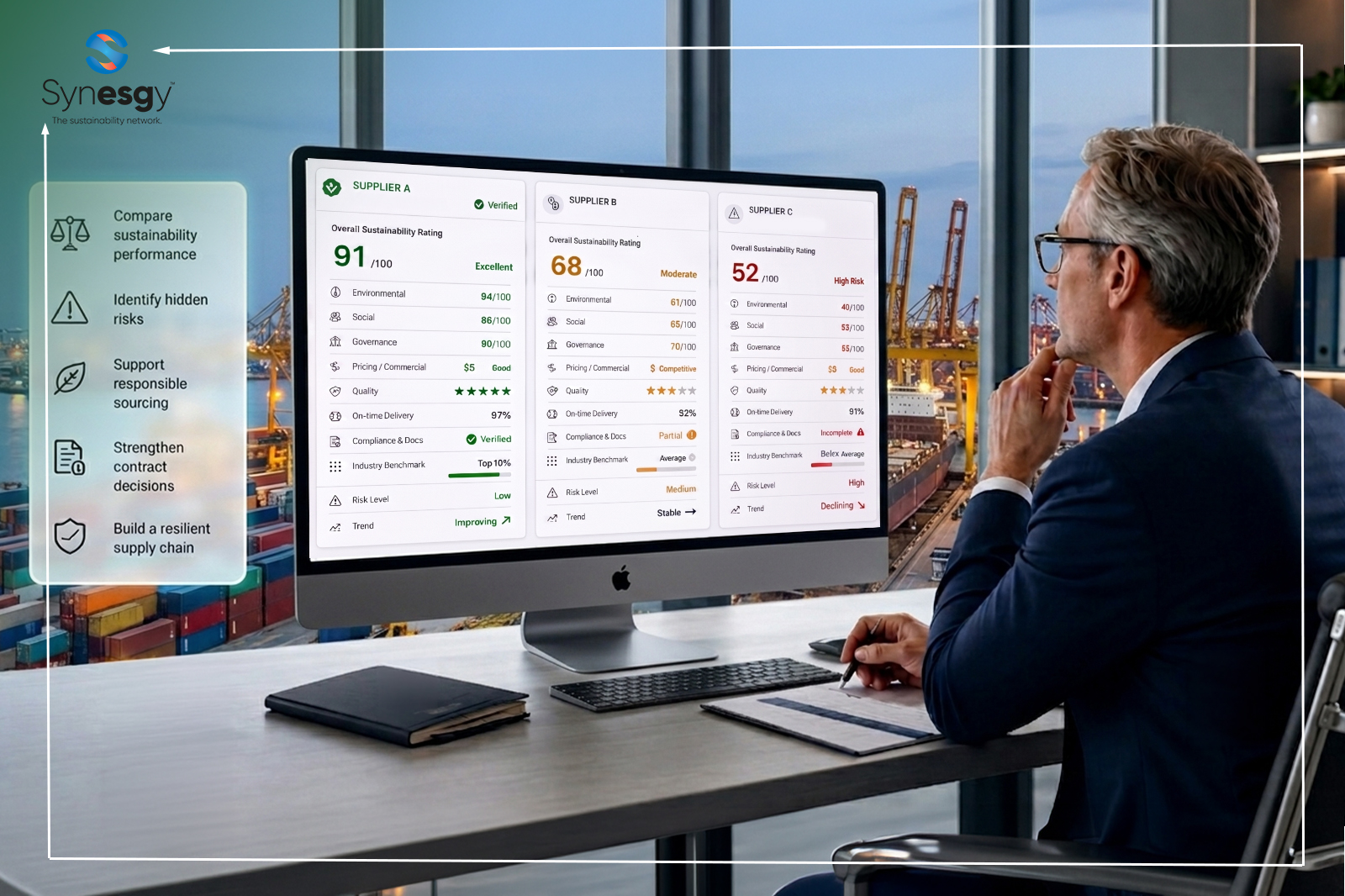
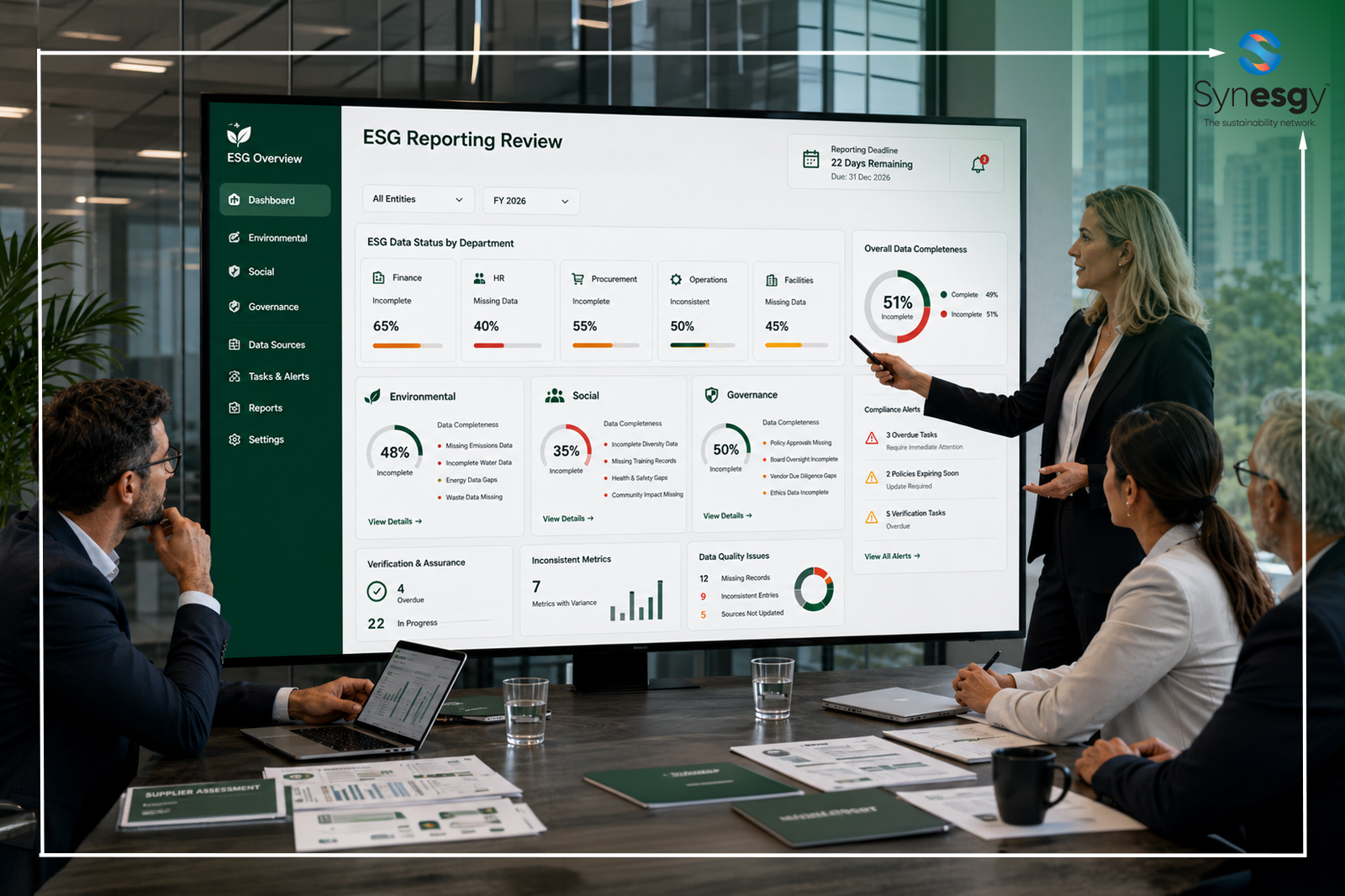
Without structured systems, emissions tracking becomes inconsistent and fragmented. Platforms like Synesgy help standardize ESG data collection across operations and supply chains, making it easier to capture emissions accurately and consistently.
Why Do UAE Companies Need To Measure Scope 1, 2, And 3 Emissions Now?
The urgency is driven by a clear shift in expectations.
Regulatory Acceleration
UAE regulators are strengthening ESG disclosure frameworks. Companies are expected to provide measurable emissions data, not just qualitative statements.
Investor Pressure
Investors are integrating ESG into decision-making. Companies without emissions data are increasingly viewed as high-risk and less transparent.
Market Competition
Businesses that establish emissions baselines early gain a strategic advantage in compliance readiness and sustainability positioning.
Delaying emissions measurement is no longer neutral. It creates a gap that becomes harder to close over time. Companies that act now position themselves ahead of regulatory changes, while those that delay risk compliance issues and reduced investor confidence.
How Do Scope 1, 2, And 3 Emissions Impact ESG Compliance In The UAE?
Emissions data directly influences ESG compliance outcomes. It affects:
-
ESG ratings and performance scores
-
Accuracy of disclosures
-
Regulatory acceptance of reports
Incomplete emissions tracking leads to incomplete ESG reporting. This creates compliance risks and weakens credibility.
For UAE companies, ESG compliance is increasingly tied to data quality. Verified, structured emissions data is becoming essential.
Solutions like Synesgy support this by enabling standardized ESG assessments and consistent reporting, helping companies reduce errors and strengthen compliance alignment.
What is An Emissions Baseline And Why Is It Important For ESG Compliance?
An emissions baseline is the starting point from which companies measure their carbon footprint.
It defines where a company stands today.
Without a baseline, companies cannot:
-
Track emissions reduction
-
Set measurable targets
-
Demonstrate progress to regulators or investors
This is a critical gap. In ESG compliance, a baseline is not optional. It is foundational. It enables companies to move from reactive reporting to a proactive strategy. Organizations that fail to establish a baseline will struggle to show improvement or justify their sustainability claims.
How Can Companies Calculate Scope 1, 2, And 3 Emissions Accurately?
Accurate calculation requires structured data and standardized methodologies.
Key Steps:
-
Collect activity data such as fuel usage, electricity consumption, and logistics data
-
Apply emission factors based on global standards
-
Consolidate and validate data across departments and suppliers
While Scope 1 and 2 are relatively straightforward, Scope 3 introduces complexity due to external dependencies. This is where structured ESG platforms become critical.
Using Synesgy, companies can streamline data collection, standardize inputs, and improve accuracy across all emission scopes. Manual tracking alone is no longer sufficient at scale.
What Are The Challenges Of Tracking Scope 3 Emissions For UAE Businesses?
Scope 3 emissions present the biggest challenge and the biggest risk.
Key Challenges:
-
Lack of supplier data visibility
-
Multi-layered supply chains
-
Inconsistent reporting standards across partners
Despite these challenges, Scope 3 often represents the largest share of emissions. Ignoring it creates a significant compliance gap.
UAE companies must extend ESG tracking beyond internal operations. Platforms like Synesgy enable supplier engagement and ESG data collection, helping businesses build a more complete emissions profile. Without this, ESG reporting remains incomplete.
How Do Emissions Reporting Requirements Affect UAE Companies?
Emissions reporting is becoming more structured and more enforced.
Companies are now expected to:
-
Provide measurable and verifiable data
-
Align with global ESG frameworks
-
Maintain consistency across reporting cycles
Failure to meet these expectations leads to:
-
Increased regulatory scrutiny
-
Lower ESG scores
-
Reduced investor trust
Emissions reporting is no longer a compliance formality. It is a critical business function.
What Frameworks Are Used To Measure Scope 1, 2, And 3 Emissions?
Several global frameworks guide emissions measurement:
-
GHG Protocol for emissions accounting
-
GRI for sustainability reporting
-
SASB for industry-specific disclosures
-
TCFD for climate-related financial risk
Aligning with these frameworks ensures that ESG reporting is standardized, credible, and globally recognized. Companies that fail to align risk with inconsistency and reduced comparability in ESG disclosures.
How Does Emissions Data Support ESG Reporting And Compliance?
Emissions data is the backbone of ESG reporting.
It enables companies to:
-
Quantify environmental impact
-
Validate sustainability claims
-
Support audits and regulatory reviews
Without reliable data, ESG reports lose credibility. Platforms like Synesgy help ensure that emissions data is structured, validated, and aligned with compliance requirements, making reporting more accurate and defensible.
Why is Emissions Transparency Critical For Investor Confidence In The UAE?
Investor expectations have changed. ESG performance is now a key factor in evaluating companies.
Transparent emissions data allows investors to:
-
Assess environmental risk
-
Compare companies objectively
-
Make informed investment decisions
Companies that provide verified emissions data are more likely to attract capital and build long-term trust. Those that lack transparency risk being viewed as high-risk or non-compliant.
Key Takeaways
-
ESG compliance in the UAE now requires measurable emissions data
-
Scope 1, 2, and 3 emissions are essential for complete ESG reporting
-
Without a baseline, companies cannot prove progress or compliance
-
Scope 3 is complex but critical for full transparency
-
Early action reduces compliance risk and strengthens investor trust
Conclusion
ESG compliance in the UAE is moving toward measurable, data-driven accountability. Emissions tracking is no longer optional. It is the foundation of credible reporting.
Companies that establish a baseline now will be prepared for evolving regulations, stronger audits, and higher investor expectations. Those that delay will struggle to catch up.
Start building your emissions baseline and ESG framework with Synesgy to stay compliant, audit-ready, and competitive in a rapidly changing market. Get in touch with our team today to assess your emissions baseline, streamline reporting, and stay aligned with UAE ESG requirements.
FAQs
Q: Which emissions are hardest to measure and why?
A: Scope 3 emissions are the hardest due to supply chain complexity and limited data access. They require coordination with external partners and consistent data collection.
Q: Are UAE companies required to report Scope 1, 2, and 3 emissions?
A: Requirements are increasing as ESG compliance expectations evolve. Companies are expected to provide emissions data as part of structured disclosures.
Q: Why is the emissions baseline critical for UAE ESG reporting?
A: It provides a starting point to measure and track emissions over time. Without it, companies cannot demonstrate progress or compliance.
Q: What are the risks of not measuring carbon emissions?
A: Companies face compliance gaps, reduced investor trust, and reputational risks. Lack of data also weakens ESG reporting credibility.
Q: How does emissions reporting help avoid compliance penalties?
A: It ensures transparency and alignment with regulatory expectations. Accurate reporting reduces the risk of non-compliance findings.
Q: Can inaccurate emissions data affect ESG ratings?
A: Yes, it can reduce credibility and impact ESG scores negatively. This also affects investor confidence and market perception.
Q: How to calculate Scope 1, 2, and 3 emissions for ESG compliance in the UAE?
A: By collecting activity data and applying standardized emission factors. Using structured ESG tools improves accuracy and consistency.
Q: What is the best way to track carbon emissions for compliance?
A: Using ESG platforms and automated systems ensures reliable tracking. This reduces errors and supports audit-ready reporting.
Q: How do Scope 3 emissions affect ESG compliance for UAE companies?
A: They impact the completeness and transparency of ESG disclosures. Ignoring them creates significant compliance gaps.
Q: How can businesses start measuring emissions for ESG compliance today?
A: Start with a baseline assessment and structured data collection. Adopting platforms like Synesgy helps accelerate and standardize the process.