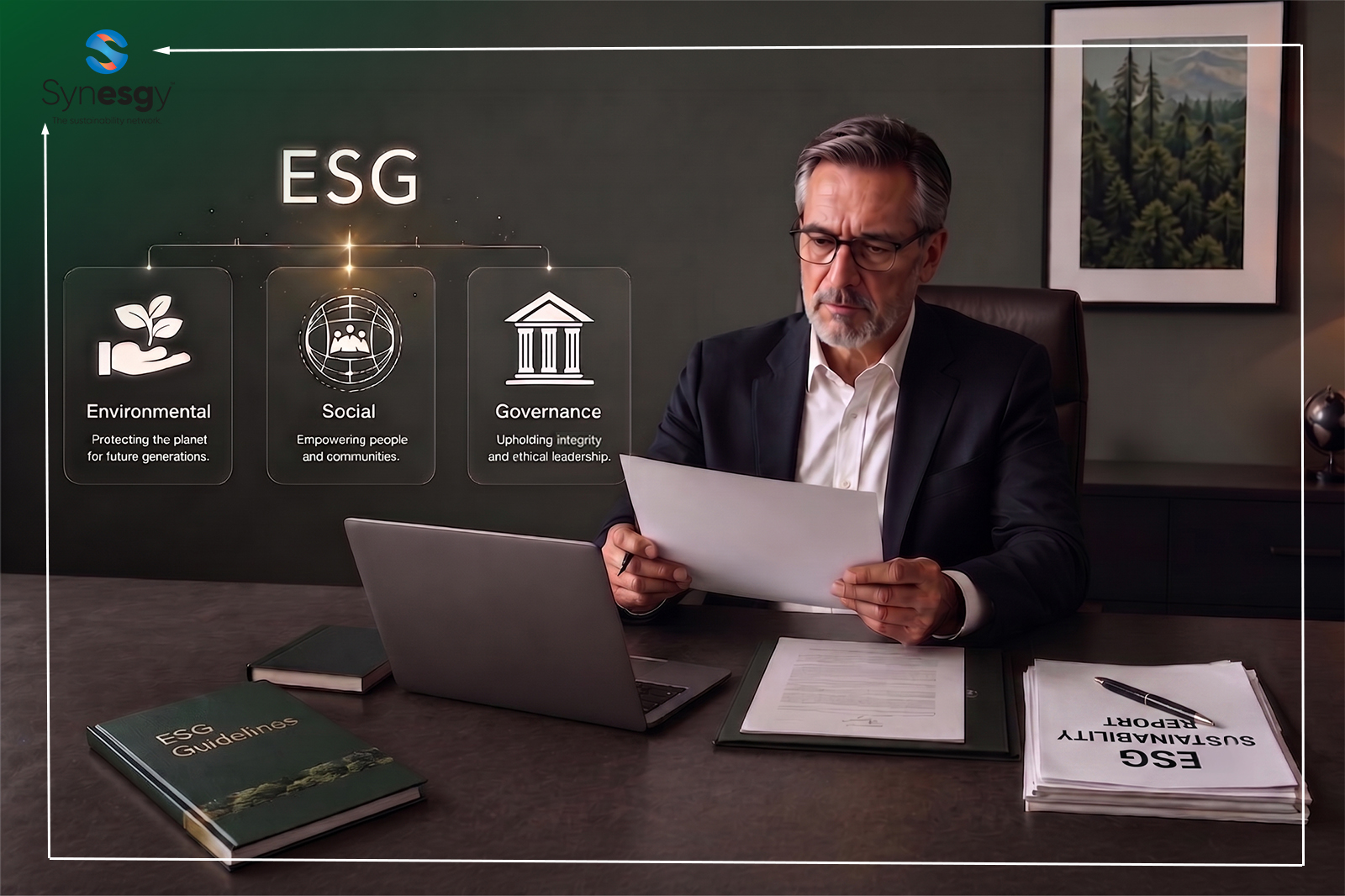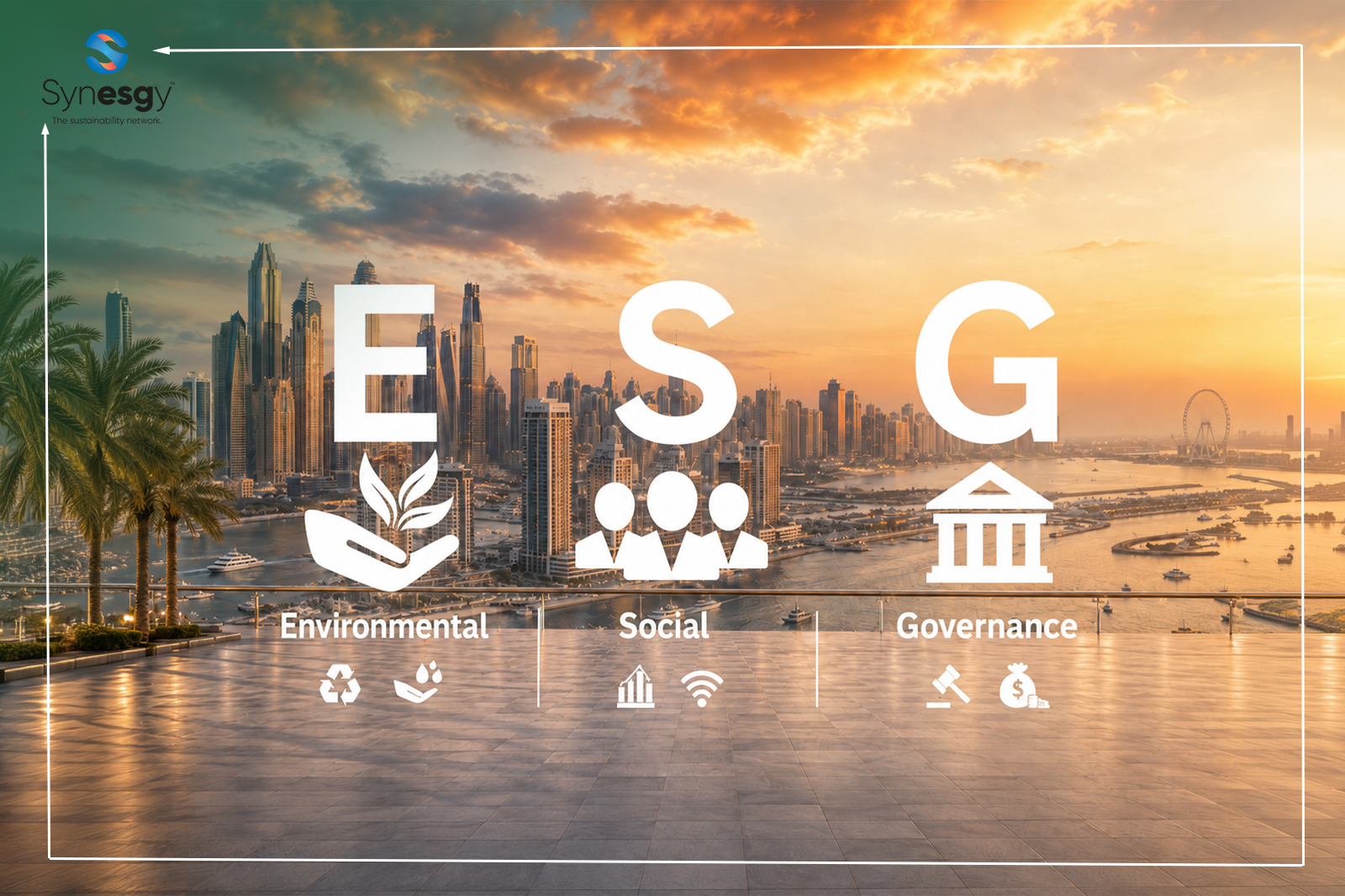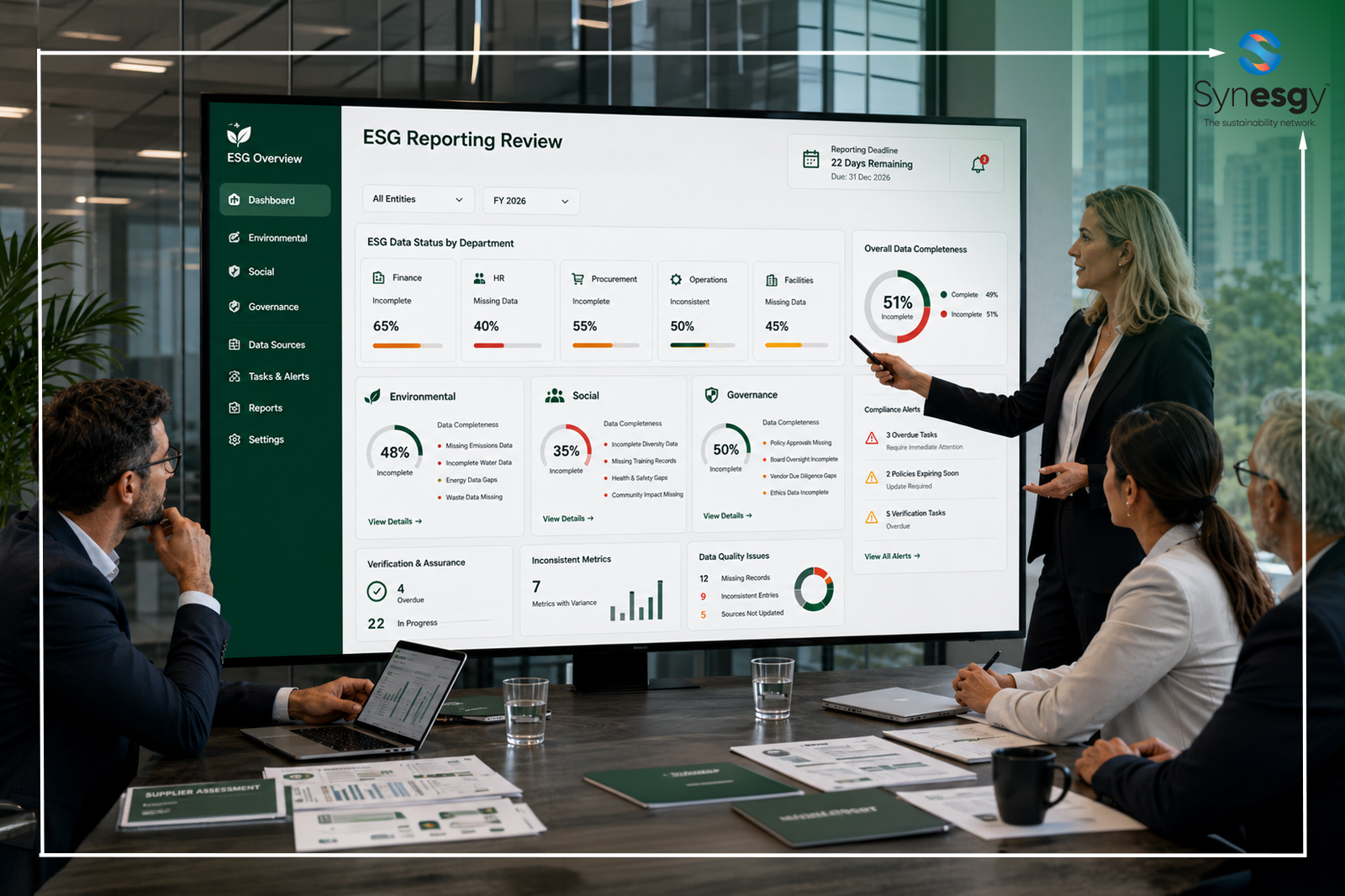
ESG reporting has moved from a voluntary add-on to a business expectation. Regulators, investors, and business partners increasingly want to see structured, verifiable data on how a company manages environmental, social, and governance performance. For companies trying to handle this internally without professional support, the process often becomes harder and riskier than expected.
This article looks at the common challenges companies face when they attempt ESG reporting without professional ESG reporting services, why these challenges tend to compound over time, and what it takes to avoid them.
If your team is finding ESG reporting harder to manage than expected, Synesgy’s platform is built to simplify the process from data collection through to final reporting.
What Happens Without Proper ESG Reporting
When ESG reporting is treated as an afterthought, the effects show up gradually rather than all at once. Data gets collected inconsistently. Reports take longer to prepare than planned. Disclosures end up incomplete or vague in places where stakeholders expect specifics.
Over time, this creates a pattern where the company is always reacting to ESG requests rather than being prepared for them. Investors ask for data that isn’t readily available. Regulatory deadlines arrive faster than the internal process can support. Without proper structure, ESG reporting becomes a recurring source of pressure rather than a routine business function.
What Does Professional ESG Reporting Involve
Professional ESG reporting typically involves structured data collection across departments, standardized frameworks for measuring environmental, social, and governance performance, and a consistent process for turning that data into reports that meet regulatory or stakeholder expectations.
This differs from ad hoc, in-house efforts in a key way: professional ESG reporting is built around repeatable processes rather than one-off documentation exercises. It usually includes ongoing data verification, benchmarking against industry standards, and reporting formats that align with what regulators and investors expect to see.
What Are the Common Challenges of ESG Reporting
Companies attempting ESG reporting without professional support tend to run into a similar set of challenges, regardless of industry. These generally fall into a few categories, explored below.
-
Data Challenges
Sustainability data is often scattered across departments, in different formats, with no single owner responsible for accuracy. This makes it difficult to assemble a complete, reliable picture when reporting time arrives.
-
Expertise Challenges
ESG frameworks and disclosure requirements are specialized enough that most internal teams were never trained to manage them. Without dedicated expertise, companies often struggle to apply the right methodology or interpret evolving standards correctly.
-
Compliance Challenges
Regulatory expectations around ESG disclosure continue to shift, and internal teams often struggle to keep reporting aligned with current requirements. This creates ongoing exposure to non-compliance, even when the intent to report accurately is there.
-
Consistency Challenges
Producing reports that hold up to comparison year over year is difficult when methodology and data quality change between reporting cycles. This inconsistency weakens the credibility of ESG disclosures over time.
Why Do Companies Struggle With ESG Reporting on Their Own
Most companies were not built with ESG reporting infrastructure in mind. Sustainability data collection is often layered onto existing roles rather than assigned to a dedicated function, which means it competes with other responsibilities for time and attention.
This creates a structural problem. ESG reporting requires consistent methodology, ongoing data tracking, and familiarity with evolving disclosure standards. Without a team or partner whose primary focus is ESG reporting, these requirements tend to get deprioritized whenever other business pressures take precedence, which is exactly when reporting quality starts to slip.
What Causes Inconsistent ESG Data Across Departments
Inconsistent ESG data usually stems from a lack of shared ownership and standardized data collection processes. One department might track energy use in one format, while another records waste data differently, with no unified system connecting the two.
Ownership gaps make this worse. When no single team is accountable for sustainability data across the business, information tends to be collected only when someone asks for it, rather than tracked consistently throughout the year. This makes it difficult to produce a complete, accurate picture when reporting deadlines arrive.
How Does Inconsistent ESG Data Affect a Business
Inconsistent ESG data creates problems well beyond the reporting document itself. It slows down the reporting process, since teams have to reconcile mismatched data before a report can even be drafted. It weakens the credibility of the final report, since inconsistencies are often visible to investors or regulators reviewing the disclosure closely.
It can also affect decision-making internally. If sustainability data is unreliable, it becomes harder for leadership to track genuine progress or identify where performance actually needs improvement, since the underlying numbers cannot be fully trusted.
Why Do Companies Find ESG Reporting Time-Consuming
ESG reporting touches multiple departments, often including operations, HR, finance, and facilities management, each of which needs to contribute data in a usable format. Coordinating this across teams that are not used to working together on a shared reporting cycle takes considerable time, particularly when there is no standardized process guiding the effort.
Verification adds further time. Data needs to be checked for accuracy before it goes into a report, and without a structured system, this often happens manually, department by department, late in the reporting cycle rather than throughout the year.
This is one of the clearest areas where professional support changes the equation. Synesgy’s platform is designed to standardize data collection across departments from the outset, reducing the scramble that typically happens close to reporting deadlines.
What Are Common Mistakes Companies Make in ESG Reporting
Companies managing ESG reporting without professional support often make several recurring mistakes:
-
Reporting only easy-to-measure data: Companies may focus on readily available metrics while leaving more complex environmental, social, or governance areas vague or unaddressed.
-
Treating reporting as an annual exercise: Collecting data only when a report is due often results in incomplete information, rushed reviews, and inconsistent disclosures.
-
Using inconsistent methodologies: Different departments may collect and calculate ESG data in different ways, making the final report difficult to verify or compare.
-
Failing to assign clear responsibilities: Without defined ownership, reporting tasks may be delayed, duplicated, or overlooked entirely.
-
Overstating sustainability progress: Companies may publish claims that are not fully supported by reliable data or internal verification.
-
Ignoring data gaps: Missing information is sometimes excluded without explanation instead of being identified, addressed, and monitored.
These mistakes can reduce reporting credibility and create regulatory, financial, and reputational risks when sustainability claims are questioned by investors, customers, regulators, or the public.
How Synesgy Helps With ESG Reporting Challenges
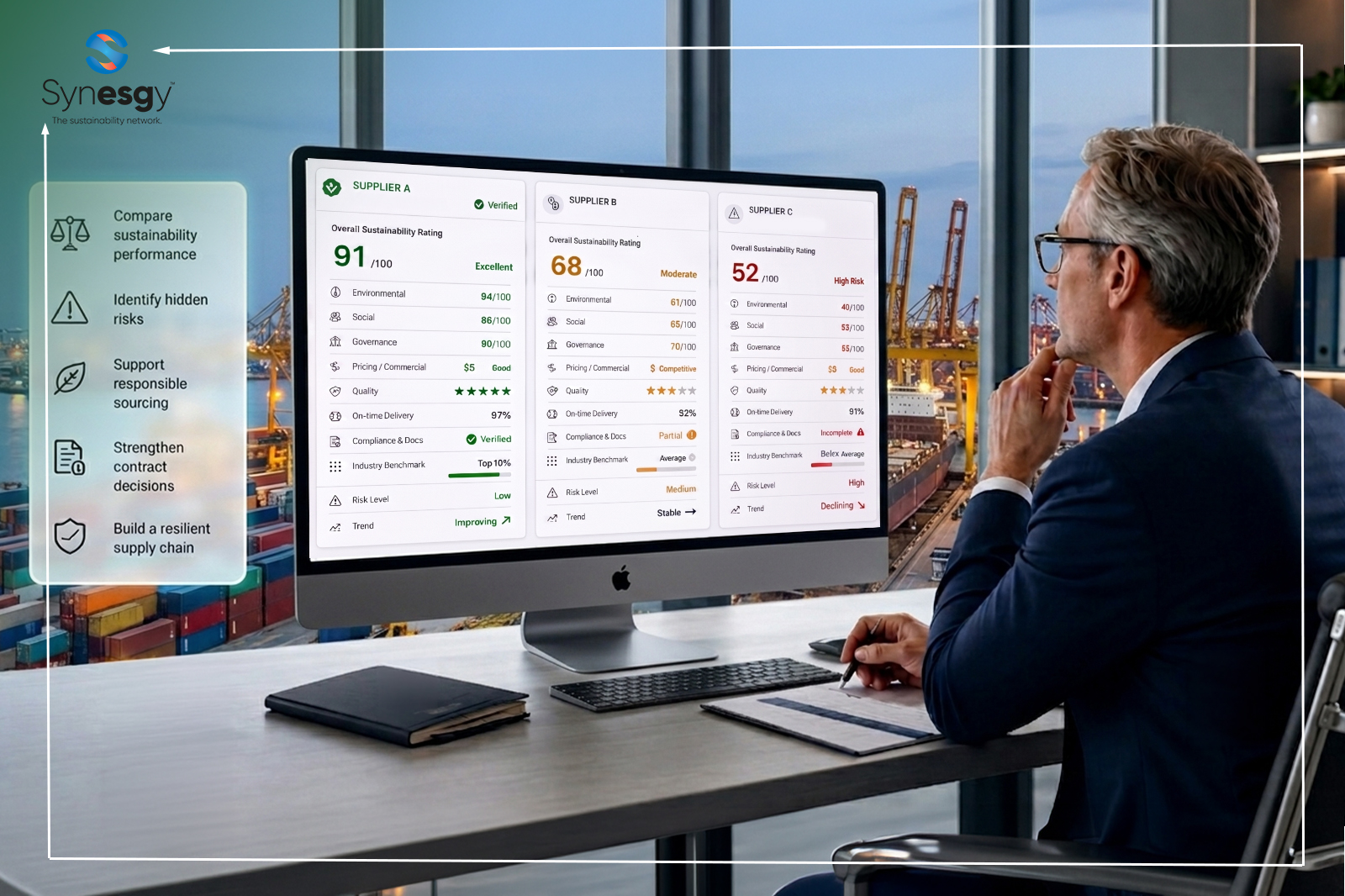
Synesgy helps companies overcome common ESG reporting challenges by replacing fragmented spreadsheets, emails, and manual follow-ups with a structured and repeatable assessment process. Instead of relying on individual departments to collect and interpret sustainability information in different ways, the platform creates a consistent framework for managing ESG data across the organisation.
Synesgy supports companies by helping them:
-
Standardise ESG data collection: The platform provides a consistent method for gathering environmental, social, and governance information from internal teams, business units, and suppliers.
-
Improve data accuracy and consistency: Structured questionnaires and assessment criteria reduce the risk of missing information, conflicting figures, and inconsistent reporting methods.
-
Reduce manual coordination: Companies can spend less time requesting documents, following up with departments, and consolidating information from multiple spreadsheets.
-
Identify reporting gaps: Synesgy helps businesses recognise where ESG information is incomplete, outdated, or unsupported before it becomes part of a formal report.
-
Monitor ESG performance over time: Rather than treating reporting as a once-a-year activity, companies can track progress, compare assessment results, and identify areas requiring improvement.
-
Support stakeholder requests: A more organised ESG data process makes it easier to respond to questions from investors, customers, procurement teams, financial institutions, and regulatory bodies.
-
Strengthen reporting credibility: Clear assessment criteria and consistent data collection help companies produce sustainability information that is more reliable, transparent, and easier to verify.
Because the process is designed for ongoing use, companies working with Synesgy are better positioned to manage regulatory deadlines, investor requests, customer expectations, and internal performance reviews. They do not need to reconstruct ESG information from the beginning every time a report or disclosure is required.
This shifts ESG reporting from a recurring source of pressure into a manageable part of normal business operations. It also allows internal teams to focus on improving sustainability performance rather than spending most of their time searching for data and correcting inconsistencies.
Conclusion
ESG reporting has become too important to leave to chance. Companies that try to manage it without professional support often find themselves dealing with inconsistent data, missed deadlines, and reporting quality that does not hold up to scrutiny. These are not minor inconveniences. They carry real regulatory, financial, and reputational consequences.
Professional ESG reporting services exist to close this gap, turning a difficult, fragmented process into a structured and reliable one. Talk to Synesgy to see how a structured approach to ESG reporting can reduce the burden on your internal teams while improving the quality of what you report.
FAQs
Q: What is ESG reporting?
A: ESG reporting is the process of measuring and disclosing a company’s performance across environmental, social, and governance factors. It typically covers areas such as energy use, labor practices, and governance structures, presented in a format that regulators, investors, and other stakeholders can review and assess.
Q: What are the consequences of ESG non-compliance?
A: Non-compliance can result in regulatory penalties, restricted access to certain contracts or financing, and reputational damage if gaps become public. In some markets, non-compliance can also affect a company’s ability to participate in specific tenders or investor relationships.
Q: Can poor ESG reporting lead to regulatory penalties?
A: Yes. As ESG disclosure requirements become more formalized across the UAE and GCC, companies that fail to meet reporting standards risk financial penalties and increased regulatory scrutiny going forward. Synesgy can help ensure your reporting stays aligned with current requirements.
Q: How does weak ESG reporting increase greenwashing risk?
A: When ESG claims are not backed by consistent, verifiable data, companies risk making statements that cannot be substantiated. This is often described as greenwashing, and it exposes companies to reputational and regulatory consequences if claims are challenged.
Q: Can inaccurate ESG reporting affect a company’s reputation?
A: Yes. Inaccurate or inconsistent ESG reporting can damage stakeholder trust once discrepancies come to light, and can be more damaging than not reporting at all, since it raises questions about the company’s overall transparency.
Q: Is it better to outsource ESG reporting or build an in-house team?
A: This depends on company size and resources, but many companies find that outsourcing to a professional ESG reporting service provides more consistent results than building an in-house function from scratch, particularly in the early stages of formalizing ESG reporting. Synesgy’s platform offers a structured alternative to building this capability internally.
Q: How do professional ESG reporting services reduce these common challenges?
A: Professional services standardize data collection, apply consistent frameworks, and reduce the manual burden of reconciling data across departments. This directly addresses the inconsistency, time, and compliance challenges that most commonly affect companies managing ESG reporting on their own.