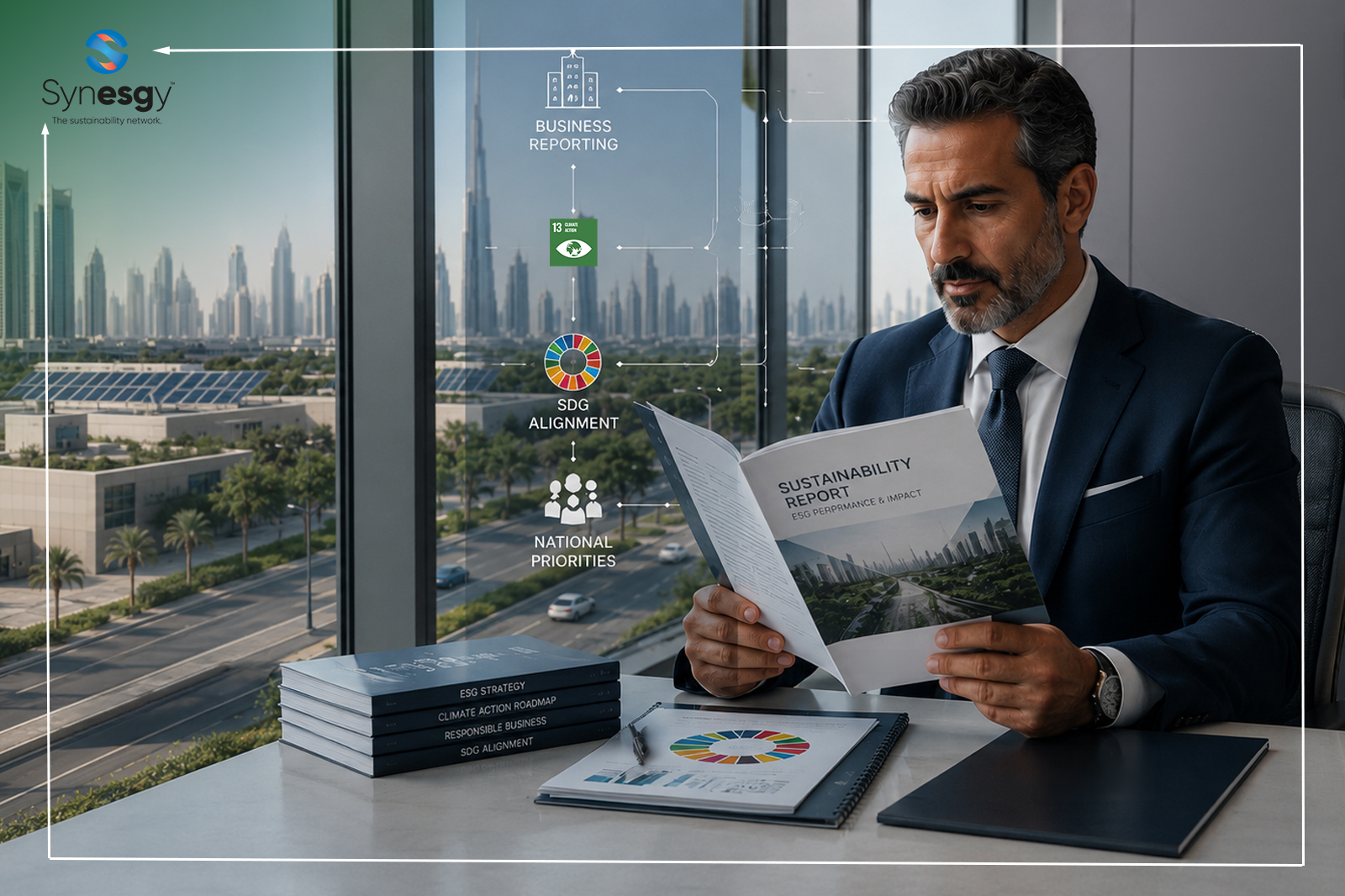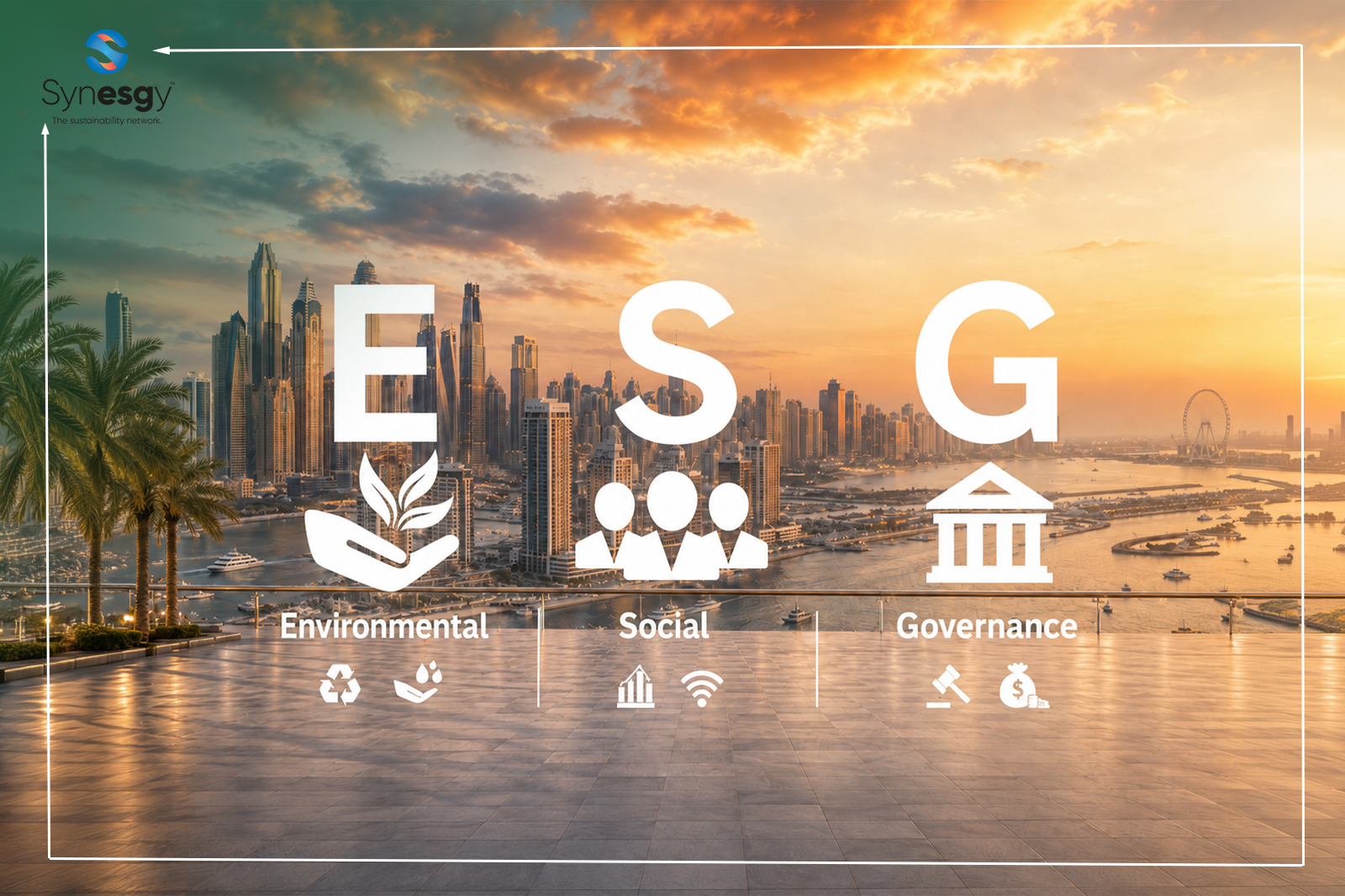
Environmental, social, and governance practices have moved quickly from a reputational add-on to a core part of doing business in the UAE. What was once a voluntary gesture toward sustainability is now shaping how companies raise capital, choose suppliers, and report performance to regulators and investors alike. For businesses operating in the UAE, understanding ESG trends in the UAE is no longer optional groundwork. It is quickly becoming a condition for staying competitive.
A mix of forces is driving this shift: tightening ESG regulations UAE authorities are introducing, growing investor appetite for sustainable finance, and a broader national push toward economic resilience. Businesses that treat ESG as a strategic priority today will be better positioned for the compliance and market expectations of tomorrow. This article looks at where ESG in the UAE is heading, what is changing, and how companies can prepare. If your organization needs a clear picture of where it currently stands, a structured ESG assessment is a practical starting point before new requirements take effect.
Start preparing for future ESG requirements. Request a Synesgy ESG assessment to identify your current strengths, risks, and improvement opportunities.
Why ESG Is Becoming A Business Priority In The UAE
ESG has moved up the priority list for UAE businesses for reasons that go well beyond compliance. Investors, both regional and international, increasingly factor ESG performance into funding decisions. Banks and financial institutions are beginning to link lending terms to sustainability metrics, making corporate sustainability a factor in access to capital rather than just a public relations consideration.
At the same time, the UAE's broader economic strategy has placed sustainability at the center of its long-term vision. Initiatives tied to net zero targets, green economy development, and diversification away from carbon-intensive sectors have created a policy environment where ESG performance is expected to align with national priorities. For businesses, this means ESG is no longer separate from commercial strategy. It is becoming part of how companies are evaluated by regulators, partners, and financial institutions alike.
Consumer and stakeholder expectations are shifting too. Business partners increasingly ask about supply chain practices, labor standards, and environmental impact before entering into agreements. Companies that can demonstrate strong governance and sustainability practices are finding it easier to win larger contracts, particularly with government-linked entities and multinational partners operating in the UAE.
Key ESG Regulations Shaping The UAE Market
The regulatory landscape around ESG disclosure in the UAE is still developing, but the direction is clear. Reporting requirements that were once limited to listed companies or specific sectors are gradually widening in scope. Businesses should expect a steady move toward more standardized climate reporting and sustainability disclosure across a wider range of company sizes.
Much of this is being shaped by alignment with international disclosure frameworks. UAE regulators have shown a clear intent to bring local reporting standards closer to globally recognized ESG disclosure norms, making it easier for UAE-based companies to be assessed by international investors and trading partners. This includes clearer expectations around emissions reporting, governance disclosures, and social impact metrics.
For now, many of these requirements remain voluntary or apply only to larger, publicly listed entities. However, the pattern seen in other markets suggests that voluntary frameworks often become mandatory within a few years once adoption reaches a critical mass. Businesses that begin building ESG disclosure practices now, even ahead of formal requirements, will avoid the scramble that typically comes with sudden regulatory shifts.
Do not wait for reporting requirements to become mandatory. Begin building your ESG data and disclosure framework with a structured Synesgy assessment.
The UAE's National Push For Supply Chain Resilience
One of the clearest signals of how seriously the UAE is treating structural economic resilience came with a major supply chain initiative. His Highness Sheikh Mohammed bin Rashid Al Maktoum, Vice President and Prime Minister of the UAE and Ruler of Dubai, approved the launch of a national programme aimed at strengthening supply chain resilience across the country. The announcement, detailed by the UAE Cabinet, positions supply chain continuity as a strategic economic priority rather than a purely operational concern.
This matters directly for ESG because supply chain resilience and ESG risk management are deeply connected. Businesses that assess suppliers on governance, environmental impact, and labor practices are, in effect, already building the kind of resilience the national programme is designed to encourage. A supplier ESG assessment does more than reduce reputational risk. It identifies operational vulnerabilities, such as reliance on a single supplier with weak governance practices, that could disrupt business continuity in the event of regulatory change, financial instability, or environmental disruption.
For UAE businesses, this national direction signals that vendor risk management and supplier evaluation are no longer just internal best practices. They are increasingly aligned with government economic policy. Companies that build strong ESG-based supplier assessment processes now are positioning themselves ahead of a trend that is likely to become an expectation rather than a differentiator.
What New Sustainability Regulations Are Expected
Looking ahead, several areas are likely to see increased regulatory attention. Climate-related financial disclosure is expected to expand, requiring more companies to report on emissions, energy use, and climate risk exposure in a standardized format. This aligns with a broader global movement toward mandatory climate reporting, and the UAE has shown clear intent to keep pace with international peers rather than lag.
Sustainable finance is another area likely to see formalized standards. As green bonds, sustainability-linked loans, and ESG-focused investment vehicles grow in the UAE market, clearer criteria for what qualifies as a legitimate sustainable finance instrument are expected to emerge. This will help prevent greenwashing while giving investors more confidence in ESG-labeled financial products.
Supply chain due diligence requirements may also expand, building on the national resilience programme discussed above. Businesses may increasingly be expected to demonstrate not just their own ESG performance, but visibility into the practices of their key suppliers and partners.
How ESG Is Evolving Across The GCC
The UAE's ESG trajectory does not exist in isolation. Across the GCC, a similar pattern is emerging, with Saudi Arabia, Qatar, and other Gulf states introducing their own sustainability strategies and disclosure expectations. Much of this is tied to shared regional priorities: economic diversification, reduced dependence on hydrocarbon revenue, and a desire to attract international investment that increasingly comes with ESG expectations attached.
What sets the UAE apart within this regional shift is the speed at which it has moved to formalize sustainability strategy at a national level, paired with initiatives like the supply chain resilience programme that connect ESG principles to broader economic policy. Businesses operating across multiple GCC markets should expect ESG expectations to keep converging, but with the UAE likely to continue setting the pace on implementation.
If your business operates across the region, building an ESG assessment framework flexible enough to meet UAE requirements while remaining adaptable to other GCC markets will save considerable time as regulations continue to develop.
How Businesses Should Prepare For These Changes
Preparing for the future of ESG in the UAE does not require an overnight transformation, but it does require a deliberate starting point. The first step for most businesses is establishing reliable internal data collection processes. Companies cannot report on emissions, governance practices, or social impact metrics they are not currently tracking. Building this data infrastructure now, ahead of mandatory requirements, avoids the compliance rush that tends to follow sudden regulatory announcements.
Reviewing supplier relationships through an ESG lens is equally important, particularly given the national direction toward supply chain resilience discussed earlier. A structured supplier ESG assessment can highlight both risks and opportunities, identifying which vendor relationships align with the direction of UAE policy and market expectations.
Governance structures also deserve attention. Many businesses focus heavily on environmental metrics while underinvesting in governance practices, such as board oversight of sustainability strategy or clear accountability for ESG performance. Since ESG disclosure frameworks increasingly weight governance alongside environmental and social factors, this is an area worth addressing early.
Finally, businesses should treat ESG preparation as an ongoing process rather than a one-time compliance exercise. Regulations will continue to evolve, and companies that build flexible, well-documented ESG practices now will find it far easier to adapt as new requirements are introduced.
Build a practical ESG improvement roadmap based on your current performance. Speak with Synesgy about the next steps for your business.
Why ESG Will Continue To Matter For UAE Businesses
The future of ESG in the UAE points toward deeper integration into how businesses are evaluated, financed, and contracted. What began as a set of voluntary best practices is steadily becoming embedded in access to capital, supplier relationships, and regulatory standing. Businesses that treat ESG performance as core to long-term strategy, rather than a compliance checkbox, will be better positioned as reporting requirements expand and sustainable finance becomes a larger part of how capital moves through the UAE market.
The connection between ESG and broader national priorities, such as the supply chain resilience program discussed above, suggests this trend is unlikely to slow down. As the UAE continues positioning itself as a regional leader in sustainable economic development, ESG performance will likely become less of a differentiator and more of a baseline expectation for doing business in the market.
Businesses that want a clear understanding of where they currently stand, and what gaps need addressing before requirements tighten further, should consider a structured ESG assessment as a practical next step.
Conclusion
ESG in the UAE is no longer a future consideration. It is already reshaping how businesses access capital, select suppliers, and demonstrate accountability to regulators and partners. From tightening disclosure expectations to the national push for supply chain resilience, ESG performance is becoming a baseline requirement for doing business in the UAE, not a differentiator reserved for large or listed companies.
Businesses that get ahead of these changes stand to gain more than reduced risk. They build stronger supplier relationships, more resilient operations, and greater credibility with investors and government-linked partners who are already factoring ESG into their decisions. Preparing now, through reliable data collection, supplier reviews, and stronger governance practices, means shaping ESG strategy on your own terms rather than reacting under pressure once requirements become mandatory.
If your business needs a clear view of where it currently stands and what to prioritize next, Synesgy's ESG assessment can help identify gaps and build a practical roadmap aligned with where UAE regulations are heading.
Get in touch to start your ESG assessment today.
FAQs
Q: How does the UAE's supply chain resilience programme connect to ESG requirements?
A: The national programme approved by Sheikh Mohammed bin Rashid Al Maktoum focuses on strengthening supply chain continuity across the UAE. This connects directly to ESG because supplier assessments based on governance, environmental practices, and labor standards help identify the same vulnerabilities the resilience programme is designed to address. Businesses building ESG-based supplier evaluation processes are, in effect, already aligning with this national direction.
Q: Will ESG reporting become mandatory for all businesses in the UAE?
A: Many ESG disclosure requirements currently apply mainly to larger or listed companies, but the broader regulatory pattern suggests wider mandatory reporting is likely over time. Businesses that begin building disclosure practices ahead of formal requirements will be better prepared when reporting scope expands.
Q: What is the most practical first step for a business starting its ESG strategy?
A: Establishing reliable internal data collection is usually the most practical starting point, since accurate reporting depends on having consistent data on emissions, governance practices, and social impact already in place before requirements tighten.
Q: How is ESG different across GCC countries compared to the UAE?
A: While GCC countries are broadly moving in a similar direction, driven by economic diversification and investor expectations, the UAE has moved faster to formalize sustainability strategy at a national level, including initiatives tied directly to economic resilience.
Q: Why should supplier relationships be reviewed through an ESG lens?
A: Supplier practices directly affect a company's own ESG performance and risk exposure. A supplier with weak governance or environmental practices can create reputational and operational risk for the businesses they work with, which is why supplier ESG assessment has become a growing focus alongside the UAE's supply chain resilience priorities.