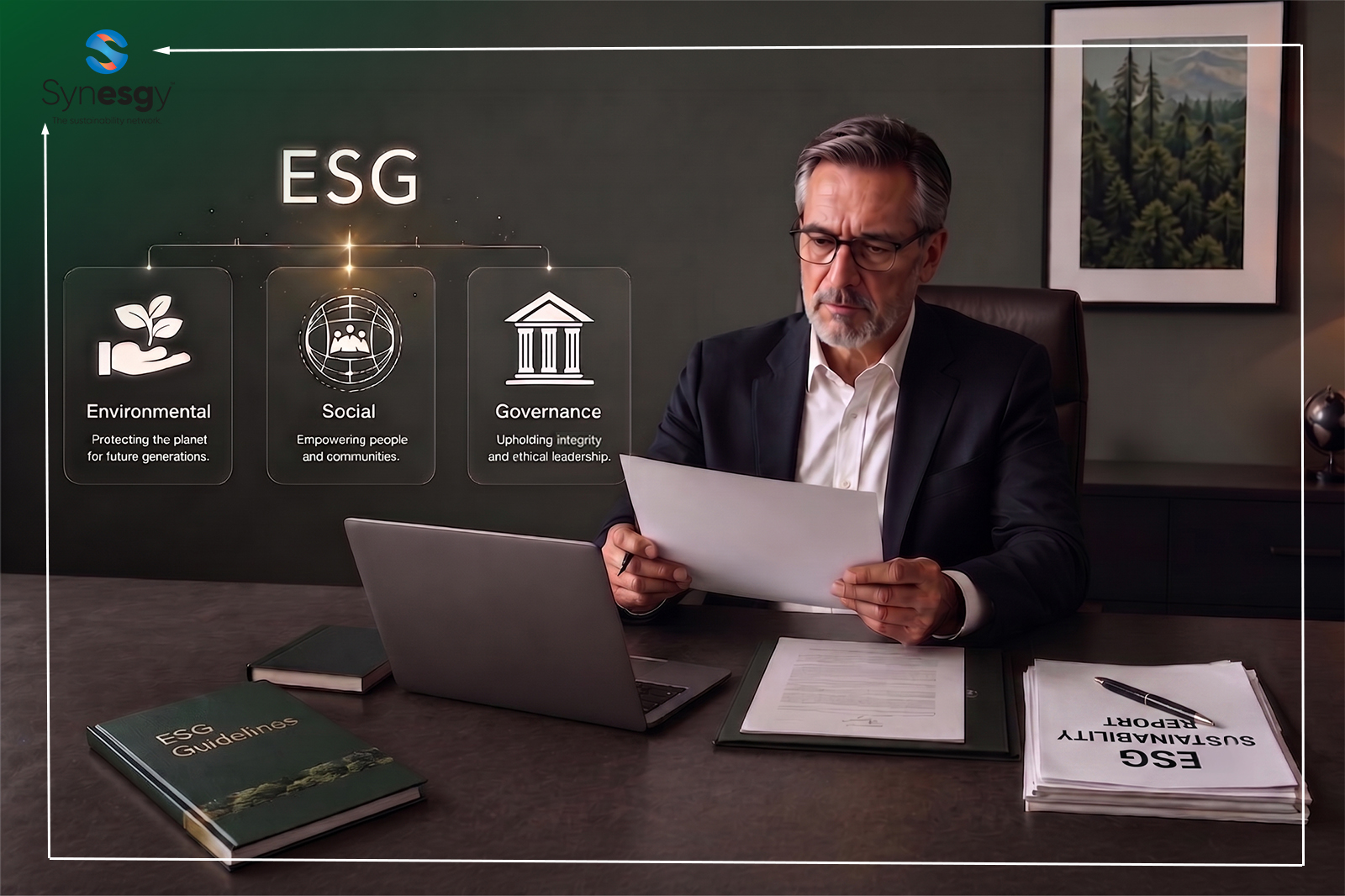
For many companies, ESG rating platform investment gets evaluated the way any new software purchase does: as a line item to justify against a budget. That framing misses the point. An ESG rating platform is not just a reporting tool. It is a way to manage risk, support financing conversations, and meet expectations that are increasingly coming from buyers, investors, and regulators rather than internal preference.
This article looks at what an ESG rating platform actually costs, what it delivers in return, and how to decide whether the investment makes sense for your business specifically, rather than relying on a generic yes or no answer.
If you are weighing this decision for your own organization, Synesgy’s ESG assessment platform is built to make that calculation more straightforward, with transparent scope and no guesswork on what you are paying for.
What Is an ESG Rating Platform
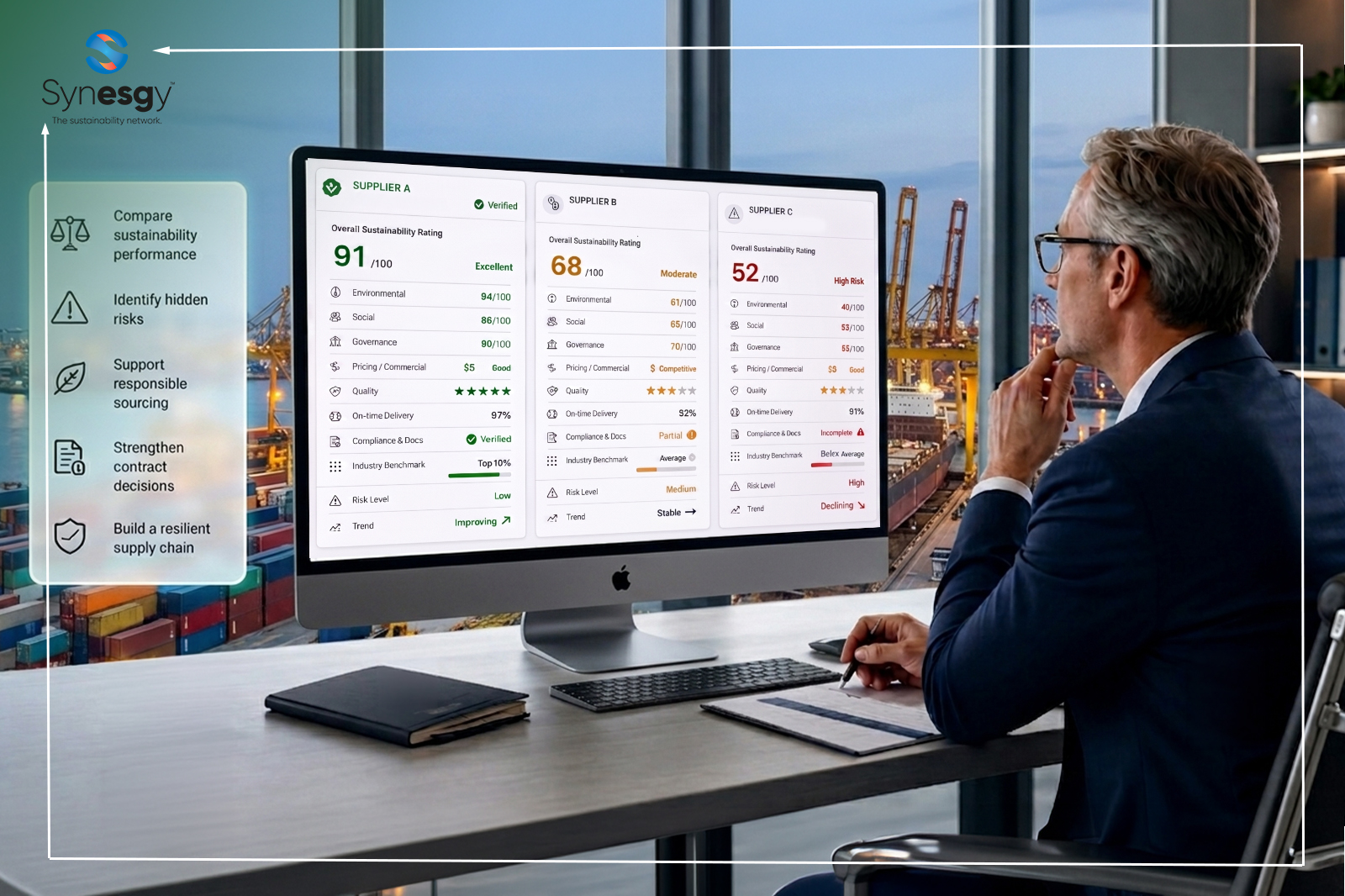
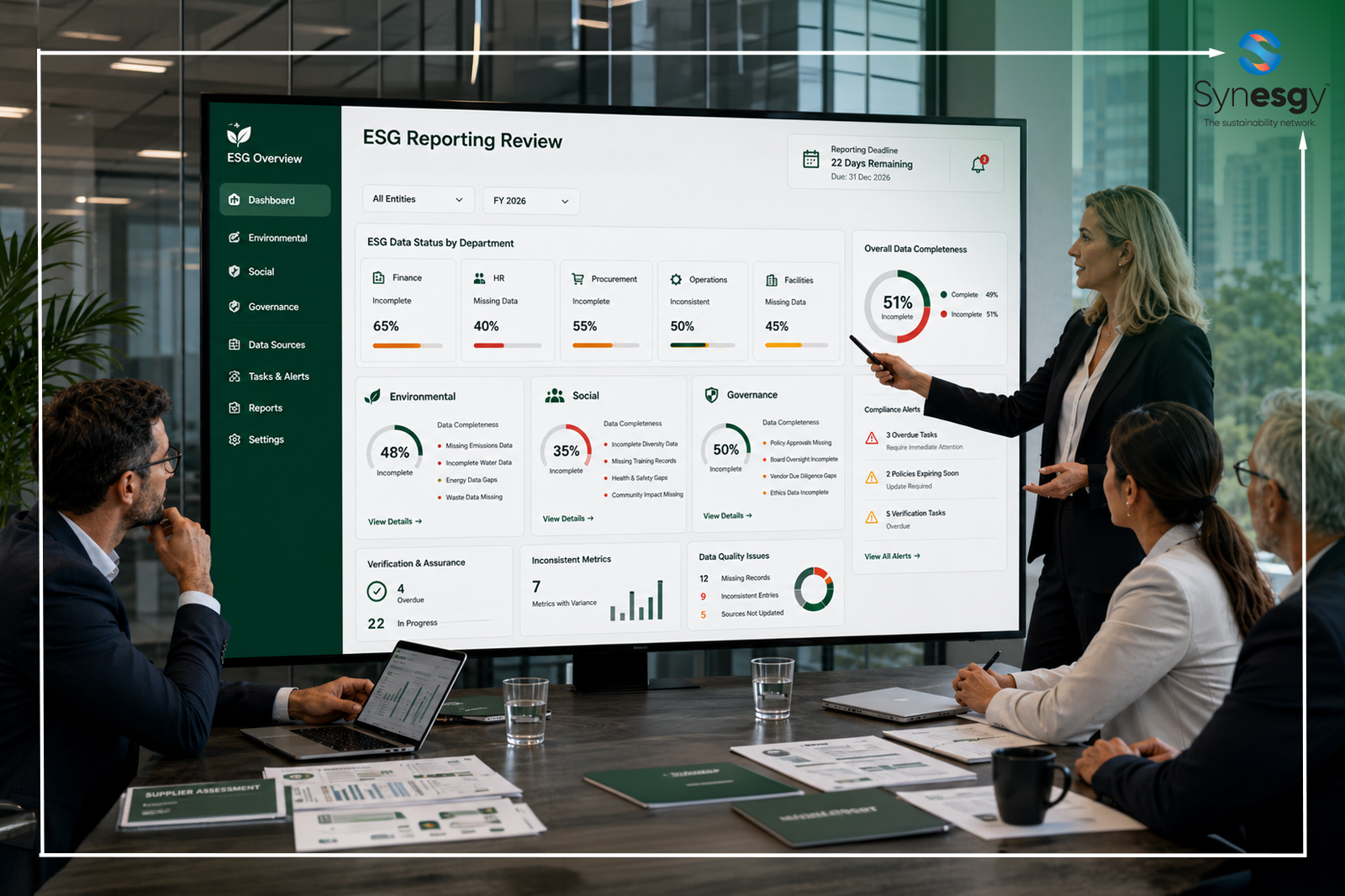
An ESG rating platform is a structured system for collecting, scoring, and tracking a company’s environmental, social, and governance performance. Rather than relying on ad hoc reporting or one-off consulting reviews, an ESG assessment platform standardizes the process so results are comparable over time and across suppliers, competitors, or industry peers.
For most businesses, the appeal is less about the score itself and more about what the score enables: cleaner conversations with investors, stronger positioning with buyers who require ESG data, and a documented trail for regulators asking about sustainability oversight.
What Does an ESG Rating Platform Cost
ESG rating platform cost varies depending on a few factors: the scope of the assessment, company size, how frequently the rating is updated, and whether the platform includes ongoing monitoring or a single point-in-time score. Larger companies with more complex supply chains typically face a broader assessment scope, while smaller businesses can often start with a narrower, more focused evaluation.
It is worth separating one-time costs from ongoing ones. An initial assessment establishes a baseline, but ESG rating platform investment usually works best as a recurring commitment, since a single outdated score loses relevance quickly as buyer and investor expectations shift. Companies evaluating cost should think in terms of an annual commitment rather than a one-time purchase.
Do ESG Ratings Improve Business Performance
This is the core question behind any investment decision, and the answer depends on how performance is defined. ESG ratings are not a direct revenue driver in the way a marketing campaign might be. Instead, they influence performance indirectly, through channels that increasingly matter to the bottom line.
A strong ESG rating can improve access to financing, since lenders and investors are factoring sustainability performance into risk assessments more than before. It can also affect contract eligibility, particularly with larger buyers who now require ESG data from their supplier base before awarding or renewing agreements. And it can support reputational positioning, giving a company a defensible, data-backed answer when customers or partners ask about sustainability practices.
None of this shows up as an immediate revenue line. Still, over a longer horizon, companies with strong ESG ratings tend to face fewer disruptions, lower financing costs, and better access to buyers who are tightening their own supplier requirements.
Is ESG Rating Worth It for Small Companies
Cost sensitivity is usually the real objection behind this question, and it is a fair one. Smaller companies often assume ESG rating platforms are built for large enterprises with dedicated sustainability teams and bigger budgets.
In practice, ESG rating tools have become more accessible to smaller businesses, particularly as more platforms offer scoped assessments that match a company’s size and complexity rather than a one-size-fits-all evaluation. For small companies, the value case often centers less on brand positioning and more on practical outcomes: qualifying for contracts with larger buyers who now require ESG data, or avoiding being excluded from opportunities where a rating has become a minimum requirement rather than a bonus.
Framed this way, the question shifts from “can we afford an ESG rating platform” to “can we afford to be excluded from contracts and financing options that increasingly require one.”
What Factors Determine If an ESG Rating Platform Is Worth It
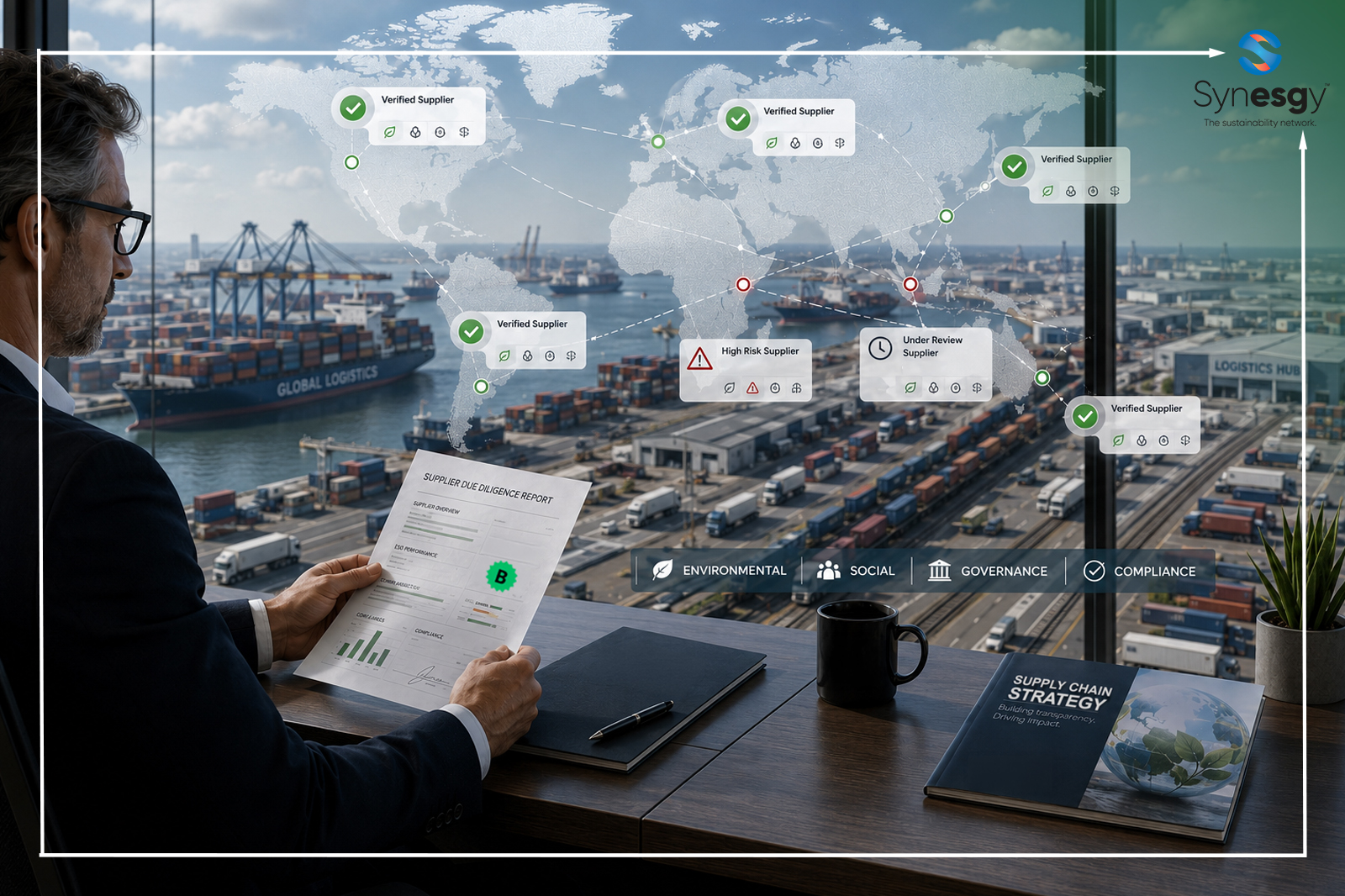
A few factors tend to determine whether the investment makes sense for a given company. Industry exposure matters. Sectors like manufacturing, construction, and logistics face more direct environmental scrutiny and are more likely to see ESG rating tied to contract eligibility. Supply chain complexity matters too, since companies with multiple suppliers and subcontractors face more pressure to demonstrate oversight.
Investor and buyer expectations are another factor. If key customers or investors have already started asking for ESG data, the decision becomes less about whether to invest and more about how quickly to move. Regulatory pressure rounds out the picture, particularly for companies operating across the UAE and GCC where sustainability disclosure expectations are tightening.
Where Synesgy Fits In
Synesgy is built to make ESG rating platform investment easier to justify by removing much of the friction that makes ESG assessment feel expensive or complicated. The platform standardizes data collection, generates clear and comparable ratings, and supports ongoing reassessment, so companies do not have to start from scratch each cycle.
For businesses unsure where to start, Synesgy scopes assessments to match company size and industry, so smaller businesses are not paying for enterprise-level complexity they do not need. This makes the investment decision less about committing to an open-ended cost and more about choosing a level of engagement that fits current business needs, with room to scale as those needs grow.
Conclusion
Whether an ESG rating platform is worth the investment depends less on a fixed dollar figure and more on exposure: industry pressure, supply chain complexity, and how quickly buyers and investors in your space are tightening ESG expectations. For companies already facing these pressures, the cost of not having a rating is often higher than the cost of the platform itself.
The businesses that get the most value tend to be the ones that treat ESG rating as an ongoing part of how they operate, rather than a one-time compliance exercise.
FAQs
Q: Does an ESG rating platform pay for itself?
A: Not in a direct revenue sense, but indirectly through reduced risk exposure, improved financing terms, and stronger eligibility for contracts that increasingly require ESG data.
Q: Is it cheaper to use an ESG rating platform or hire a consultant?
A: For ongoing, repeatable assessment, a platform is typically more cost-effective. A consultant tends to make more sense for a one-off, highly customized review rather than continuous tracking.
Q: Are ESG rating platforms just a marketing expense?
A: No. Rating outcomes are increasingly tied to concrete business decisions like financing terms and procurement eligibility, not just brand positioning. Synesgy can help you see how a rating connects to these decisions specifically for your business.
Q: Is ESG rating platform investment a one-time cost or ongoing?
A: It works best as an ongoing commitment. A single assessment establishes a baseline, but ratings lose relevance over time as buyer and investor expectations shift, so periodic reassessment is where the real value lies.
Q: How do I know if my company needs an ESG rating platform?
A: Look at a few signals: whether key buyers or investors have started requesting ESG data, how complex your supply chain is, and whether your industry faces tightening regulatory disclosure requirements. If any of these apply, the question is less about need and more about timing.