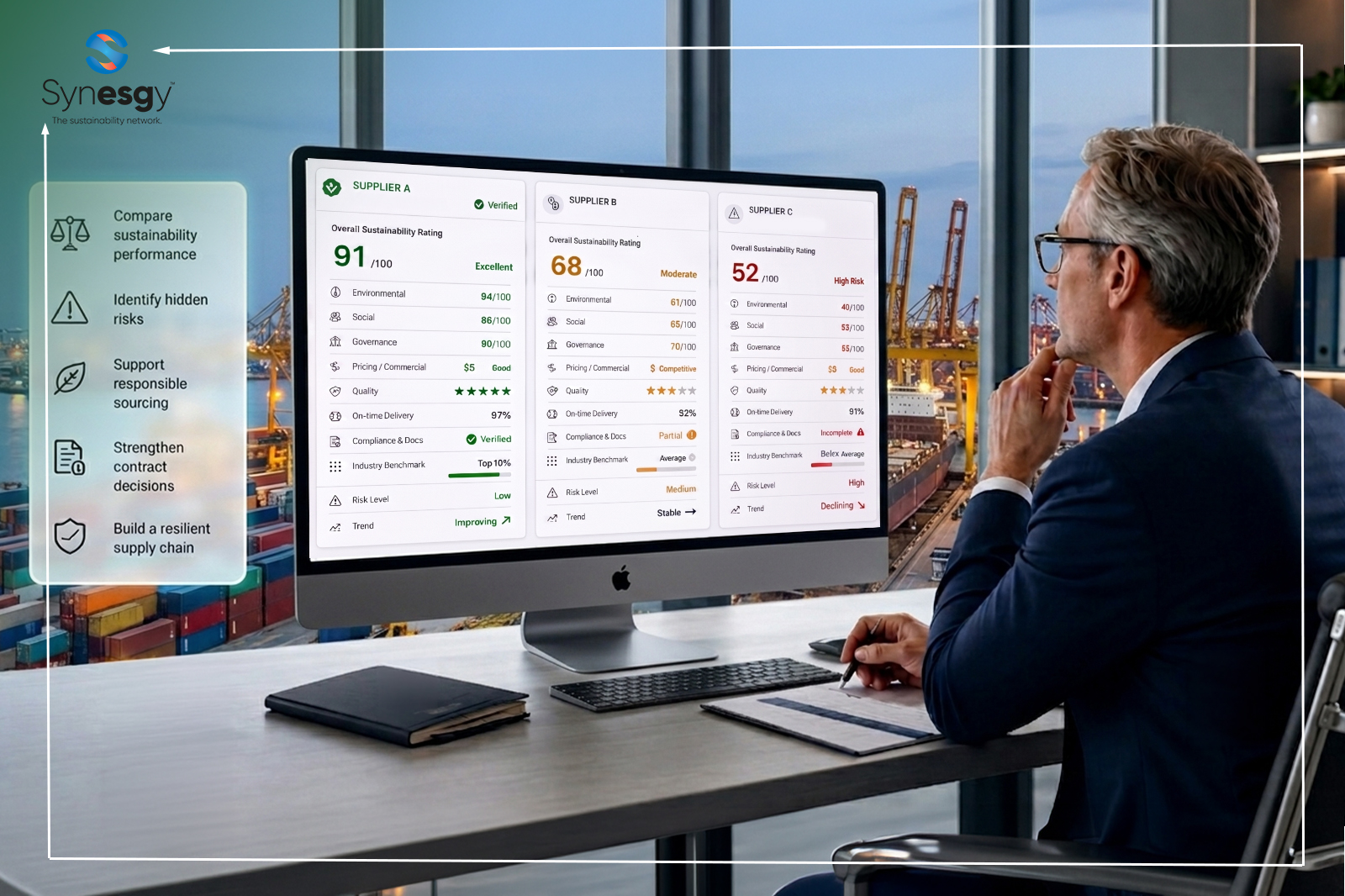
Procurement has always been about balancing cost, quality, and reliability. That balance is shifting. Buyers, regulators, and investors now expect procurement teams to account for a fourth factor: sustainability. A supplier’s environmental, social, and governance performance is no longer a side conversation. It is becoming a core part of how contracts are awarded, renewed, and monitored.
This is where a sustainability rating becomes useful. Rather than relying on informal impressions or one-off supplier claims, a sustainability rating gives procurement teams a structured, comparable way to assess supplier performance. This article explains why that matters, how ratings influence vendor decisions, and what procurement managers need to know to use this data effectively.
If your team is looking to build sustainability criteria into supplier evaluation, Synesgy’s assessment platform can help you get there with a structured, data-backed approach.
Why Do Procurement Teams Need Sustainability Data
Procurement decisions used to rest on three questions: Can this supplier deliver on time, at the right quality, and at the right price? Those questions still matter, but they no longer capture the full picture of supplier risk.
Regulators across the UAE and GCC are tightening expectations around supply chain accountability. Customers and investors are asking companies to demonstrate responsible sourcing. And procurement teams are increasingly held accountable not just for what they buy, but from whom.
Sustainability data fills a gap that traditional vendor scorecards were never built to cover. Procurement sustainability criteria now sit alongside price and delivery performance as part of a complete supplier profile. Without this data, procurement teams are making decisions with an incomplete picture, and often discovering supplier risk only after it becomes a problem.
What Is a Supplier Sustainability Rating?
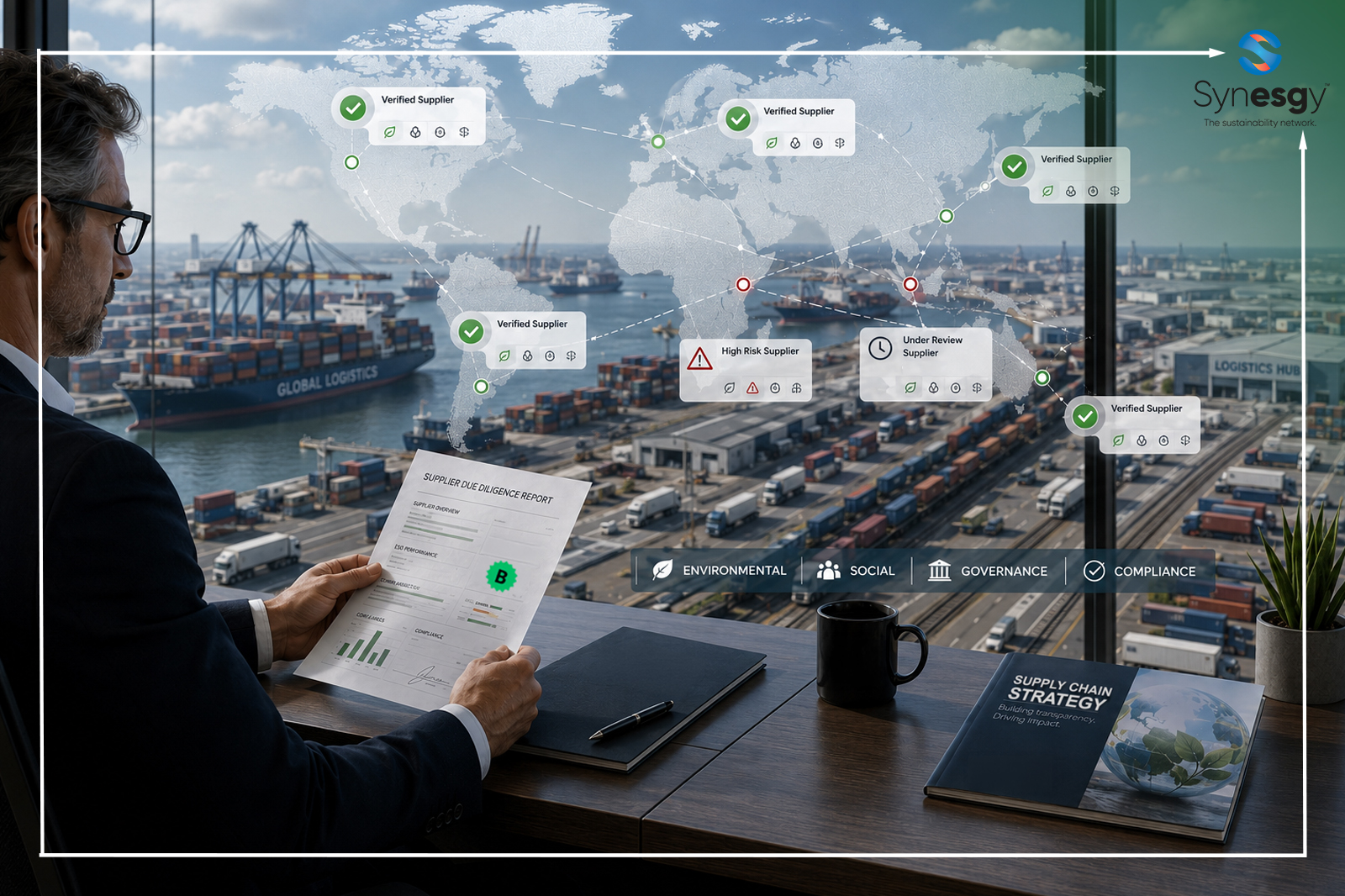
A supplier sustainability rating is a structured score or assessment that reflects how a supplier performs across environmental, social, and governance factors. It typically draws on data the supplier provides, combined with third-party or industry benchmarks, to produce a comparable measure of sustainability performance.
Unlike a simple compliance checklist, a sustainability rating for suppliers is designed to be comparative. It allows procurement teams to place suppliers side by side and understand relative performance, not just pass or fail status.
What Does a Sustainability Rating Measure in Procurement?
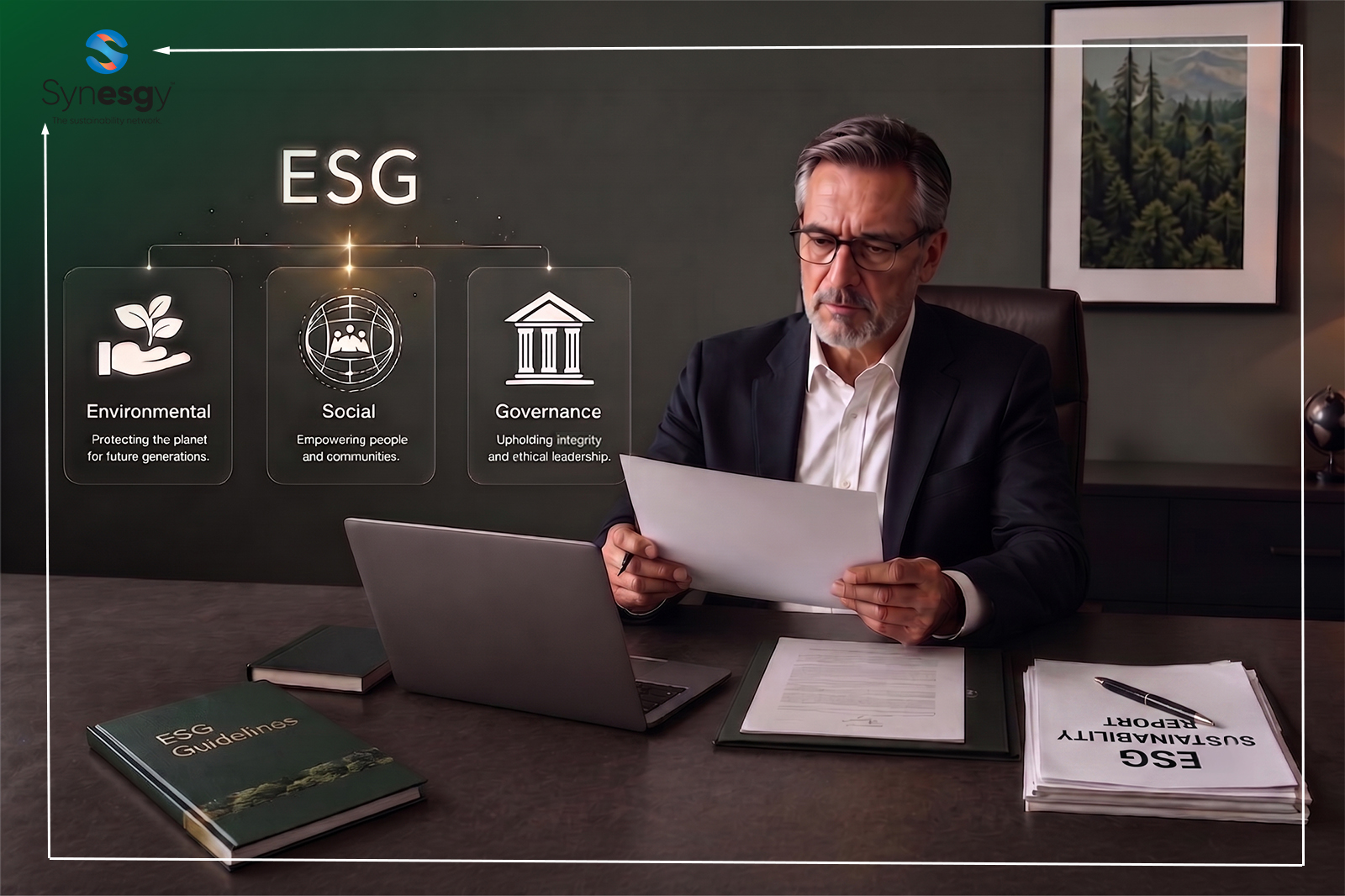
A sustainability rating generally looks at several categories of supplier practice. Environmental factors include energy use, waste management, and emissions reporting. Social factors cover labor practices, worker safety, and community impact. Governance factors examine business ethics, transparency, and accountability structures.
Together, these categories form a supplier sustainability assessment that goes beyond financial or operational metrics. For procurement teams, this means a rating can flag risks that would otherwise stay invisible until a supplier is already under contract, such as poor labor practices in a lower tier of the supply chain or weak governance controls that could expose the buyer to reputational risk.
How Is a Supplier Sustainability Rating Different From an Audit?
Procurement teams sometimes treat ratings and audits as interchangeable, but they serve different purposes. An audit is typically a point-in-time verification. It checks whether a supplier meets specific standards at the moment of review, often through document checks or site visits.
A sustainability rating is broader and more continuous. It reflects an ongoing assessment of performance, updated periodically, and designed for comparison across suppliers rather than a single pass or fail outcome. Audits confirm compliance. Ratings inform decisions. Procurement teams benefit most when they use both, with audits verifying specific claims and ratings supporting broader vendor comparison.
Why Is Supplier Sustainability Important in Procurement Decisions?
Sustainable procurement practices are no longer a separate initiative running parallel to core purchasing decisions. They are becoming part of the decision itself. A supplier’s sustainability performance can affect contract eligibility, pricing negotiations, and long-term partnership potential.
This shift is also reflected in how companies formalize expectations. Many organizations are now building a sustainable procurement policy directly into vendor management frameworks, setting minimum sustainability thresholds that suppliers must meet before they can be considered for certain contracts.
How Sustainability Ratings Affect Vendor Selection
In practice, sustainability ratings show up at several points in the vendor selection process. During initial screening, a rating can help filter out suppliers who fall below a minimum threshold before further evaluation begins. During shortlisting, ratings allow procurement teams to compare suppliers who are otherwise similar on cost and capability. And during final selection, a strong rating can serve as a tiebreaker or a value add that justifies a slightly higher price point.
Ratings also support renewal decisions. A supplier whose sustainability rating has declined since the last review cycle may prompt a conversation, a corrective action plan, or in some cases a decision not to renew. This turns sustainability from a one-time checkbox into an ongoing part of vendor relationship management. Building sustainability criteria into a formal scoring process does not need to be complicated. Synesgy’s platform is designed to give procurement teams a clear, structured rating they can plug directly into existing vendor evaluation workflows.
What Procurement Managers Should Know About Supplier ESG
Procurement managers do not need to become sustainability experts, but a working understanding of ESG fundamentals is increasingly part of the job. This includes knowing what categories a rating covers, how to interpret a score in context, and how to have informed conversations with suppliers about gaps in their performance.
It also means understanding that ESG expectations vary by industry and geography. A sustainability rating that works well for a manufacturing supplier may need different weighting for a services provider. Procurement managers who understand these nuances are better positioned to use ratings as a genuine decision-making tool rather than a static number attached to a supplier file.
How to Evaluate a Supplier’s Sustainability Profile
Evaluating a supplier’s sustainability profile starts with gathering the right documentation. This typically includes environmental policies, labor practice records, health and safety data, and governance disclosures. Procurement teams should also look at how consistently a supplier reports this information over time, since a single strong data point means less than a demonstrated track record.
Beyond documentation, it helps to look at how a supplier’s sustainability performance compares within its own industry and region. A rating that looks strong in isolation may be less impressive when benchmarked against similar suppliers. Finally, procurement teams should treat the evaluation as a starting point for dialogue rather than a final verdict, using the results to guide supplier improvement conversations where gaps exist.
Why Should Companies Rate Their Suppliers on Sustainability
The business case for rating suppliers goes beyond ethical positioning. Sustainability ratings function as an early warning system for risk. A supplier with weak environmental controls or poor labor practices is more likely to face disruptions, regulatory penalties, or reputational incidents that can affect the buyer as well.
Rating suppliers also protects long-term value. Companies that build sustainability criteria into procurement decisions early are better positioned as regulations tighten and customer expectations rise, rather than scrambling to retrofit compliance later.
What are the Risks of Ignoring Supplier Sustainability in Procurement?
Ignoring supplier sustainability carries risks that extend well beyond a single vendor relationship. Reputational risk is one of the most visible, since a supplier’s poor practices can become a buyer’s problem in the eyes of customers and media. Regulatory risk is growing as well, with more jurisdictions requiring companies to demonstrate oversight of supply chain practices.
There is also operational risk. Suppliers with weak sustainability practices are often more exposed to disruptions, whether from regulatory action, resource shortages, or reputational damage that affects their own business continuity. For procurement teams, ignoring this dimension does not remove the risk. It simply means the risk goes unmanaged until it surfaces as a bigger problem.
How Synesgy Helps
Synesgy supports procurement teams by turning sustainability assessment into a structured, repeatable process rather than a manual, inconsistent one. The platform helps companies collect standardized sustainability data from suppliers, generate clear and comparable ratings, and track performance over time as part of an ongoing vendor management cycle.
For procurement teams working across multiple suppliers, industries, and regions, this means less time spent chasing inconsistent documentation and more time spent making informed sourcing decisions. Synesgy’s approach is built to integrate into existing procurement workflows, so sustainability rating becomes part of how vendors are evaluated day to day, not a separate initiative running on its own timeline.
Conclusion
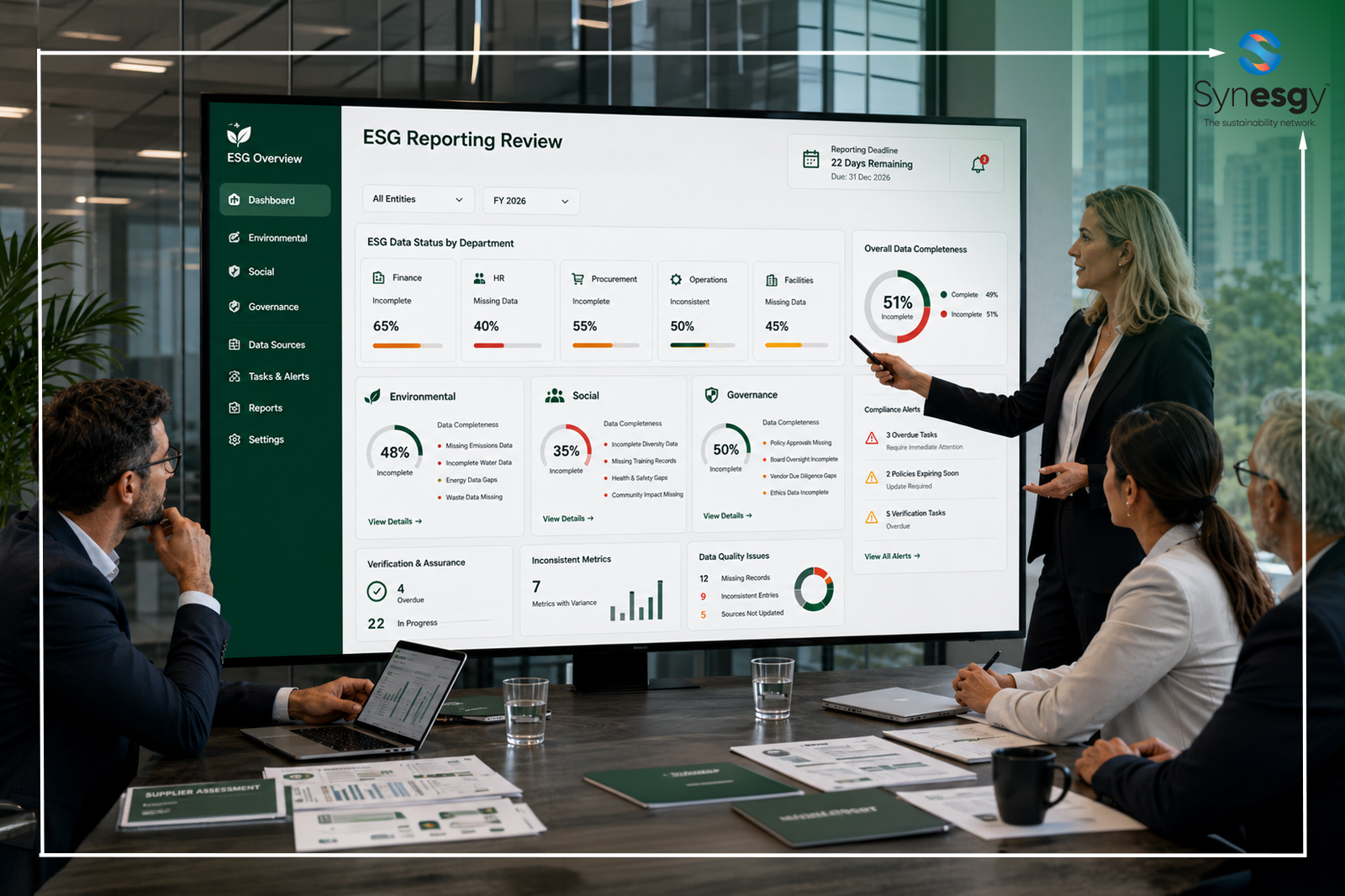
ESG reporting requires more than informal processes and last-minute coordination. Without the right systems and expertise, companies risk inconsistent data, missed deadlines, unclear responsibilities, and disclosures that may not meet stakeholder expectations.
A structured ESG reporting approach improves data accuracy, strengthens compliance, supports investor and customer trust, and helps businesses monitor sustainability performance more effectively. It also enables organisations to identify reporting gaps, set measurable priorities, and communicate their ESG progress with greater transparency and confidence.
FAQs
Q: Can a low sustainability rating disqualify a supplier from a contract?
A: It can, depending on a company’s internal policy and risk tolerance. In most cases, a low rating works alongside other selection criteria rather than serving as an automatic disqualifier, but it can be enough to eliminate a supplier during early screening or block contract renewal.
Q: Is supplier sustainability rating the same as a certification?
A: No. A sustainability rating is typically an ongoing, data-driven score that reflects performance across environmental, social, and governance factors. A certification is a separate, formally issued credential. The two can complement each other, but they are not interchangeable.
Q: What is the financial risk of working with non-sustainable suppliers?
A: Non-sustainable suppliers carry higher exposure to supply disruption, regulatory penalties, and reduced access to financing tied to sustainability performance. These risks can translate into higher costs for the buyer as well, particularly if a disruption affects downstream delivery commitments.
Q: How does supplier sustainability rating compare across industries?
A: Expectations vary. Manufacturing suppliers are often assessed heavily on environmental factors like emissions and waste, while service-based suppliers may be weighted more toward governance and labor practices. Retail and construction suppliers frequently sit somewhere in between, with supply chain traceability playing a larger role.
Q: How long does it take to complete a supplier sustainability assessment?
A: Timelines vary depending on the supplier’s size and the completeness of their existing documentation, but most assessments can be completed within a few weeks once the required data is submitted.
Q: Can procurement teams track supplier sustainability ratings over time?
A: Yes. Sustainability ratings are designed to be reassessed periodically rather than treated as a one-time result, allowing procurement teams to monitor whether a supplier’s performance is improving, declining, or staying consistent across review cycles.
Q: Do smaller suppliers need a sustainability rating as much as larger ones?
A: Increasingly, yes. As larger buyers extend sustainability requirements down through their supply chains, smaller suppliers are being asked to demonstrate the same level of transparency, even if their overall environmental footprint is smaller. Get in touch with Synesgy if you need a rating approach that scales across suppliers of different sizes.