A business applies for a sustainability assessment expecting a strong result. The application is submitted, the audit completed, and then the score arrives lower than anticipated. This is one of the most common experiences for UAE businesses going through ESG and sustainability evaluations, and it rarely reflects poor intent or weak performance. More often, it points to gaps in documentation, data, or process that the assessment is specifically designed to surface. A sustainability score is built from evidence, not effort, which means well-established practices can still score poorly if they are not properly documented or supported by consistent data.
Understanding why this gap happens is the first step toward closing it. This article looks at the most common reasons behind an unexpected sustainability score, what scoring frameworks are actually evaluating, and the practical steps UAE businesses can take to bring their score closer in line with their real performance.
If your sustainability score does not reflect your actual efforts, the issue may be in the evidence, not the performance. Get assessed with Synesgy to identify the gaps before your next evaluation.
What a Sustainability Score Actually Measures
A sustainability score is not a reflection of internal intentions, verbal commitments, or general goodwill toward environmental and social responsibility. It is a structured measurement based on documented evidence, verifiable data, and consistent practices across defined criteria.
This is where the difference between sustainability score vs actual performance becomes important. A business may genuinely follow sound environmental, social, and governance practices day to day, but if those practices are not captured, recorded, or evidenced in a way the assessment can verify, they will not be reflected in the final score. Sustainability score calculation relies on what can be demonstrated, not what is assumed or implied.
This distinction explains why two businesses with similar real-world practices can end up with noticeably different sustainability scores. The difference usually lies not in what they do, but in how well that activity is documented and presented.
Reason 1: Incomplete or Missing Documentation
The most common driver of a low sustainability score is incomplete documentation. Many businesses have policies, procedures, or practices in place but never formalise them into accessible records. Without written policies, audit trails, or supporting evidence, an assessment has no way to confirm that a practice exists or is being followed consistently.
This includes gaps such as missing environmental policies, undocumented health and safety procedures, absent records of employee training, or a lack of formal governance documentation. Even strong sustainability practices will not register fully in a score if they exist only informally within the organisation.
Reason 2: Outdated or Inconsistent Data
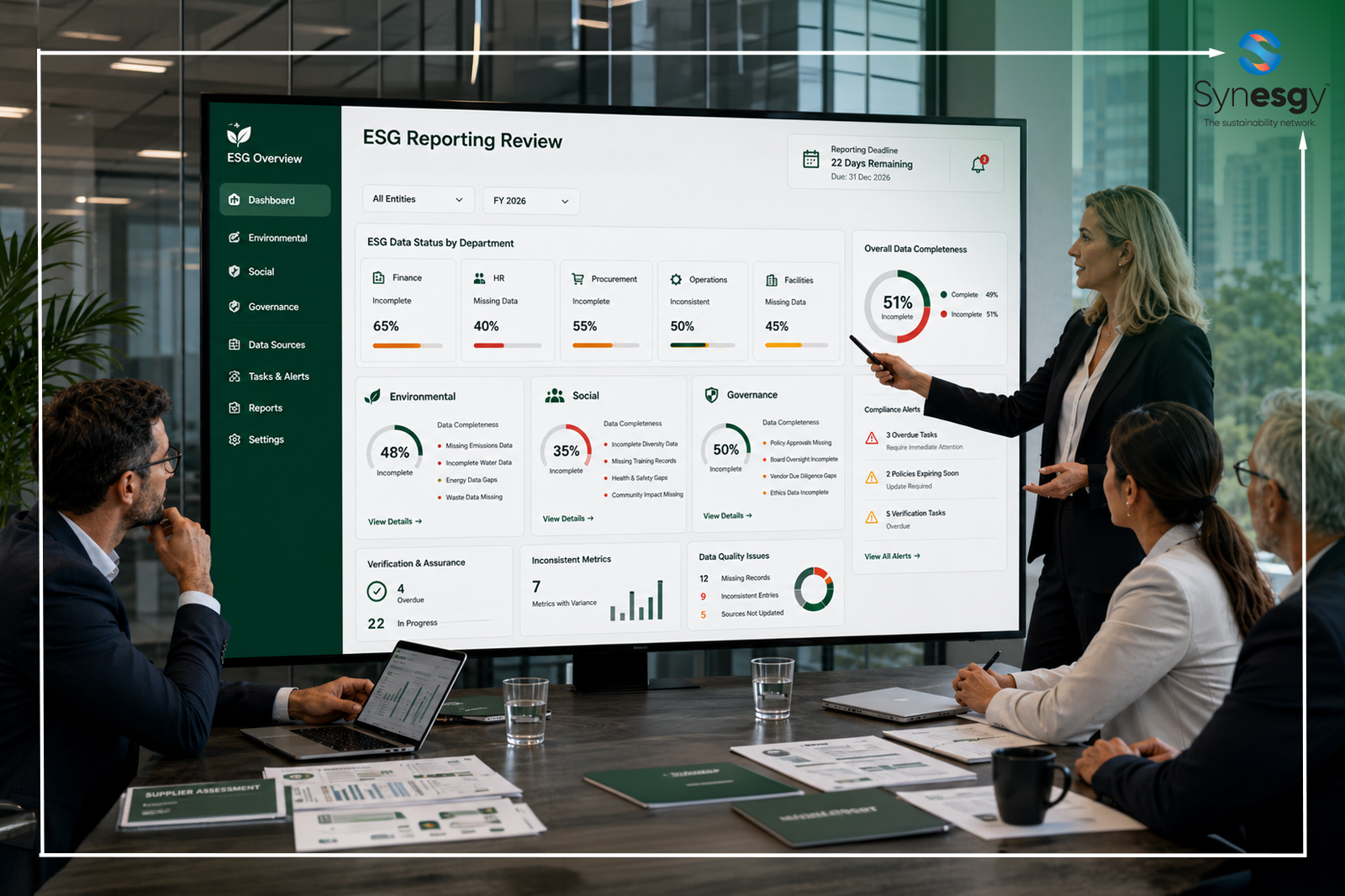
Sustainability score accuracy depends heavily on the quality and consistency of the data submitted. Businesses sometimes use outdated figures, mix reporting periods, or submit data that varies between departments because there is no centralised system for tracking sustainability-related information.
For example, energy consumption figures from one year might be paired with workforce data from a different reporting period, or different departments might report slightly different numbers for the same metric. These inconsistencies create sustainability scoring mistakes that are entirely avoidable with better internal data coordination, even when the underlying performance is solid.
Inconsistent sustainability data can weaken your score even when your practices are strong. Use Synesgy to bring more structure and clarity to your ESG assessment process.
Reason 3: Misunderstanding Assessment Criteria
Another frequent issue is a mismatch between what a business assumes is being asked and what the assessment criteria actually require. Businesses sometimes answer based on general practice rather than the specific evidence or scope the question is targeting, which can result in answers that appear weaker than the business’s actual position.
This is a major reason why sustainability score is low even for businesses that consider themselves sustainability-conscious. Carefully reviewing what each criterion is actually asking, rather than answering based on assumption, often reveals that the business has more relevant evidence available than it initially submitted.
Reason 4: Weak Governance and Accountability Structures
Environmental performance is only one part of a sustainability score. Governance criteria, including clear ownership, accountability, and policy enforcement, carry significant weight. Businesses that have strong environmental practices but no designated person or team responsible for sustainability oversight often see this reflected as a gap in their score.
Without clear accountability structures, it becomes difficult to demonstrate that sustainability practices are actively managed and enforced, rather than informally maintained. This is a common blind spot, since governance gaps are not always visible to a business until they are scored against a structured framework.
Reason 5: Supply Chain and Third-Party Gaps
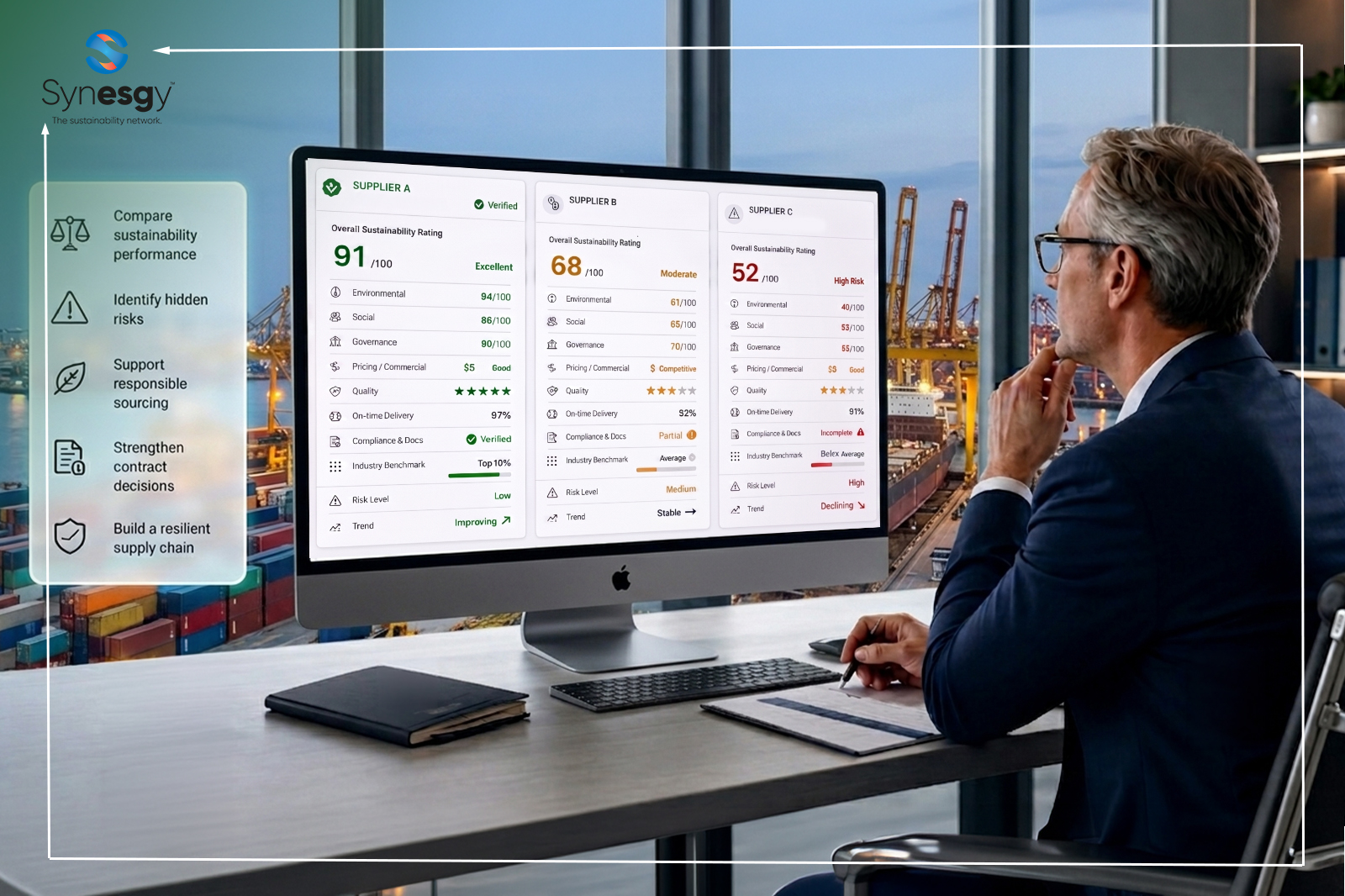
A business’s own internal practices may be well managed, but sustainability scores increasingly account for supply chain and third-party factors as well. If key suppliers or vendors have not provided their own sustainability data, or if their practices have not been assessed, this can pull down the overall score even when the core business performs well.
This connects directly to sustainability score and procurement. As more UAE businesses use sustainability scores to vet suppliers and partners, gaps in supply chain visibility are becoming one of the more significant and overlooked contributors to a lower-than-expected result.
Reason 6: One-Time Effort Instead of Ongoing Practice
Some businesses treat sustainability as a single initiative, such as a one-time certification, a single audit, or a short-term campaign, rather than an ongoing, measurable practice. Assessment frameworks are designed to evaluate consistency and continuity, not isolated efforts.
A single positive action does not carry the same weight as a sustained, documented practice maintained over time. Businesses that have only recently started formalising their sustainability approach, or that have let earlier initiatives lapse, often see this reflected in a lower score, even if their intentions remain strong.
The Business Impact of a Low Sustainability Score
A lower-than-expected sustainability score is not just a number. It can have real downstream consequences, particularly in B2B and supply chain relationships across the UAE. A weak score can reduce credibility with partners, customers, and investors who increasingly factor sustainability performance into their decision-making.
It can also create practical barriers. Many procurement processes now use sustainability scores as part of supplier qualification, meaning a low score can directly limit access to certain contracts or partnerships. There is also a reputational risk tied to a low sustainability score, particularly if competitors or partners in the same sector are scoring more strongly, even where the underlying difference in actual practice is small.
Do not let a low sustainability score affect supplier approvals, investor confidence, or tender opportunities. Strengthen your ESG readiness with Synesgy.
How to Close the Sustainability Score Gap
Closing the gap between actual performance and a sustainability score result is usually achievable with focused, practical steps:
-
Conduct an internal documentation audit before undertaking an assessment, to identify where practices exist but are not formally recorded
-
Align data collection across departments and ensure consistent reporting periods and definitions
-
Review assessment criteria closely before submitting responses, rather than answering based on assumption
-
Assign clear internal ownership for sustainability practices, with a designated team or individual accountable for oversight
-
Extend sustainability expectations to key suppliers and request relevant data as part of vendor management
-
Treat sustainability as an ongoing, continuously managed practice rather than a one-time project or certification
These steps do not require a complete overhaul of a business’s sustainability approach. In most cases, they involve formalising and better documenting practices that already exist, which can meaningfully close the gap between perceived and scored performance.
Conclusion
A lower-than-expected sustainability score is rarely a reflection of poor sustainability performance. More often, it points to gaps in documentation, data consistency, governance structure, or supply chain visibility that are entirely addressable. Businesses that take the time to understand how sustainability score calculation actually works, and that invest in closing these gaps, are better positioned to achieve a result that genuinely reflects their efforts.
As UAE businesses face growing pressure from partners, regulators, and procurement processes to demonstrate credible sustainability performance, a strong and accurate sustainability score is becoming a long-term asset rather than a one-time achievement. Addressing the common pitfalls outlined here is a practical starting point for any business looking to close that gap.
If your sustainability score is lower than expected, the next step is not guesswork. Start with a structured ESG assessment that helps identify gaps, improve documentation, and strengthen your sustainability position. Get Assessed with Synesgy.