ESG assessment is becoming a standard requirement for businesses operating in the UAE, whether it is driven by buyer requirements in a supply chain, investor due diligence, or broader regulatory expectations tied to the country’s sustainability agenda. Yet despite growing awareness of ESG, a large number of businesses still struggle to perform well when it comes time to actually complete an assessment.
The reason is rarely a lack of effort. In most cases, businesses approach ESG assessment as a one-time form-filling exercise rather than a structured, ongoing process. This leads to weak scores, incomplete data, and missed opportunities, even when the underlying business practices are reasonably sound. This article looks at why most ESG assessments fail, the common pitfalls behind those failures, and what businesses can do to fix them.
Before your next ESG assessment, make sure your policies, data, and documentation are ready to stand up to buyer, investor, and compliance review. Get Assessed with Synesgy.
What an ESG Assessment Is Actually Measuring
Before looking at why assessments fail, it helps to clarify what an ESG assessment is actually evaluating. A proper ESG assessment looks at environmental practices, social responsibility, and governance structures across a business, but it does not stop at whether these areas exist on paper.
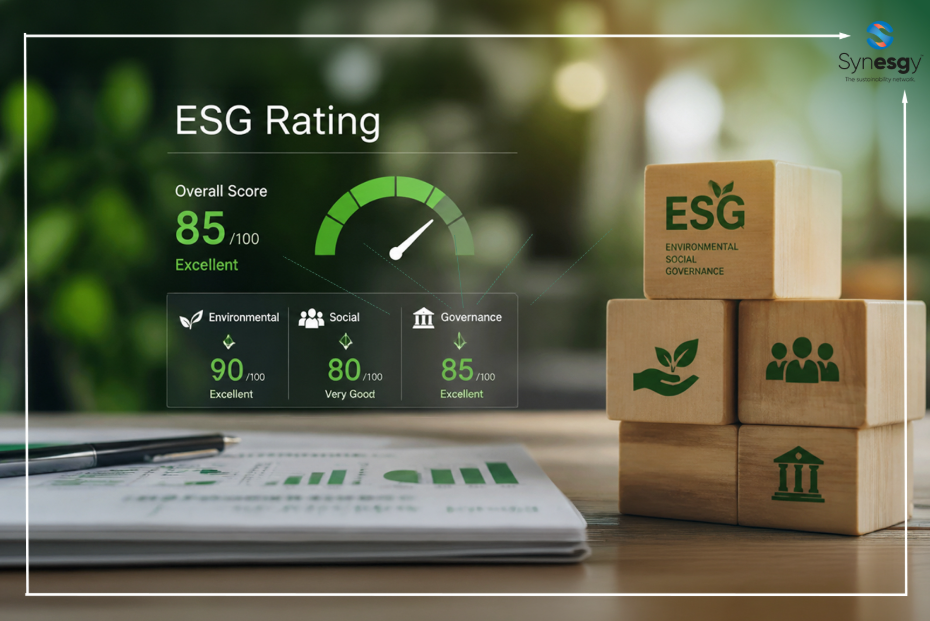
An ESG assessment framework typically evaluates four things: whether relevant policies exist, whether those policies are actually implemented, whether there are measurable outcomes tied to them, and whether the business can document and evidence all of this clearly. In other words, an ESG assessment is not measuring good intentions. It is measuring proof. This distinction is where many businesses begin to run into trouble.
Common Pitfalls
-
Treating ESG Assessment as a One-Time Exercise
One of the most frequent causes of ESG assessment failure is treating the process as something to complete only when prompted, such as when a client requests it, a tender requires it, or an audit is scheduled. When ESG assessment is approached this way, businesses scramble to pull together data at the last minute, often relying on whatever information is easiest to find rather than what is most accurate or complete.
This reactive approach tends to produce inconsistent results across assessment cycles. A business might score reasonably well in one assessment and poorly in the next, not because its practices have changed, but because the quality and completeness of the submitted information varied depending on how much time was available to prepare it.
-
Incomplete or Inconsistent Data
Missing documentation is one of the most common and most avoidable causes of ESG scoring issues. Many businesses genuinely have reasonable environmental, social, and governance practices in place, but they are unable to evidence them clearly during an assessment. Figures may be inconsistent across departments, supporting documents may be outdated or missing, and data may exist in scattered formats that are difficult to consolidate quickly.
This creates a gap between what a business actually does and what it can prove during an ESG compliance assessment. Assessors and buyers cannot score practices they cannot verify, which means incomplete data often results in a lower score than the business’s actual performance would justify.
-
Vague or Generic Policy Statements
Another recurring issue is the use of broad, generic language in place of specific commitments. Statements such as “we are committed to sustainability” or “we value our employees” carry little weight in an ESG assessment unless they are backed by defined policies, measurable targets, and evidence of implementation.
Assessors increasingly look past general statements of intent and expect specific detail: what the policy actually states, when it was implemented, who is responsible for it, and what outcomes have resulted from it. Businesses that rely on generic language without supporting specifics consistently underperform in ESG assessments, even when their underlying practices may be reasonably solid.
-
Lack of Internal Ownership
ESG assessments often fail not because the information does not exist, but because no single person or team is responsible for managing the process. When ESG-related responsibilities are split across departments such as HR, operations, finance, and compliance without clear coordination, gaps naturally form between what each department reports.
This lack of ownership tends to surface most clearly during an assessment, when inconsistencies between departments become visible all at once. Without a designated owner for ESG data collection and reporting, businesses struggle to present a coherent, accurate picture of their practices.
-
Misunderstanding What Assessors Are Looking For
A less obvious but equally common pitfall is a mismatch between what businesses believe will improve their score and what assessors actually weigh. Many businesses assume that certifications, awards, or general statements about sustainability values will carry significant weight. In reality, assessors are typically looking for documented processes, measurable outcomes, a clear governance structure, and evidence of risk management.
This misunderstanding leads to repeated ESG assessment mistakes across multiple cycles, where businesses continue investing effort into the wrong areas rather than addressing the specific gaps that are actually affecting their score.
An ESG assessment is only as strong as the evidence behind it. Start building a clearer ESG compliance position with Synesgy.
How These Pitfalls Translate Into Real Business Risk
The consequences of a weak or failed ESG assessment extend beyond a low score on paper. In the UAE market, ESG performance is increasingly tied to supplier qualification, tender eligibility, and investor confidence. A poor assessment outcome can result in lost contracts, exclusion from supply chains that require ESG compliance, and weaker standing with investors who are factoring ESG performance into their decisions.
These are not abstract risks. As more UAE businesses, particularly larger corporates and financial institutions, build ESG requirements into their procurement and investment criteria, the practical cost of a failed ESG assessment becomes a real commercial disadvantage rather than just a compliance formality.
How to Fix Common ESG Assessment Failures
Most ESG assessment failures come down to a small number of preventable issues, which means most of them can be addressed with a structured approach. Businesses looking to improve their ESG assessment outcomes should consider the following steps.
-
Build a structured ESG compliance assessment process rather than a reactive one. This means treating ESG assessment as a regular internal activity rather than something prepared only when requested externally.
-
Assign clear internal ownership for ESG data collection and reporting. A single accountable person or small team should be responsible for coordinating information across departments and ensuring consistency.
-
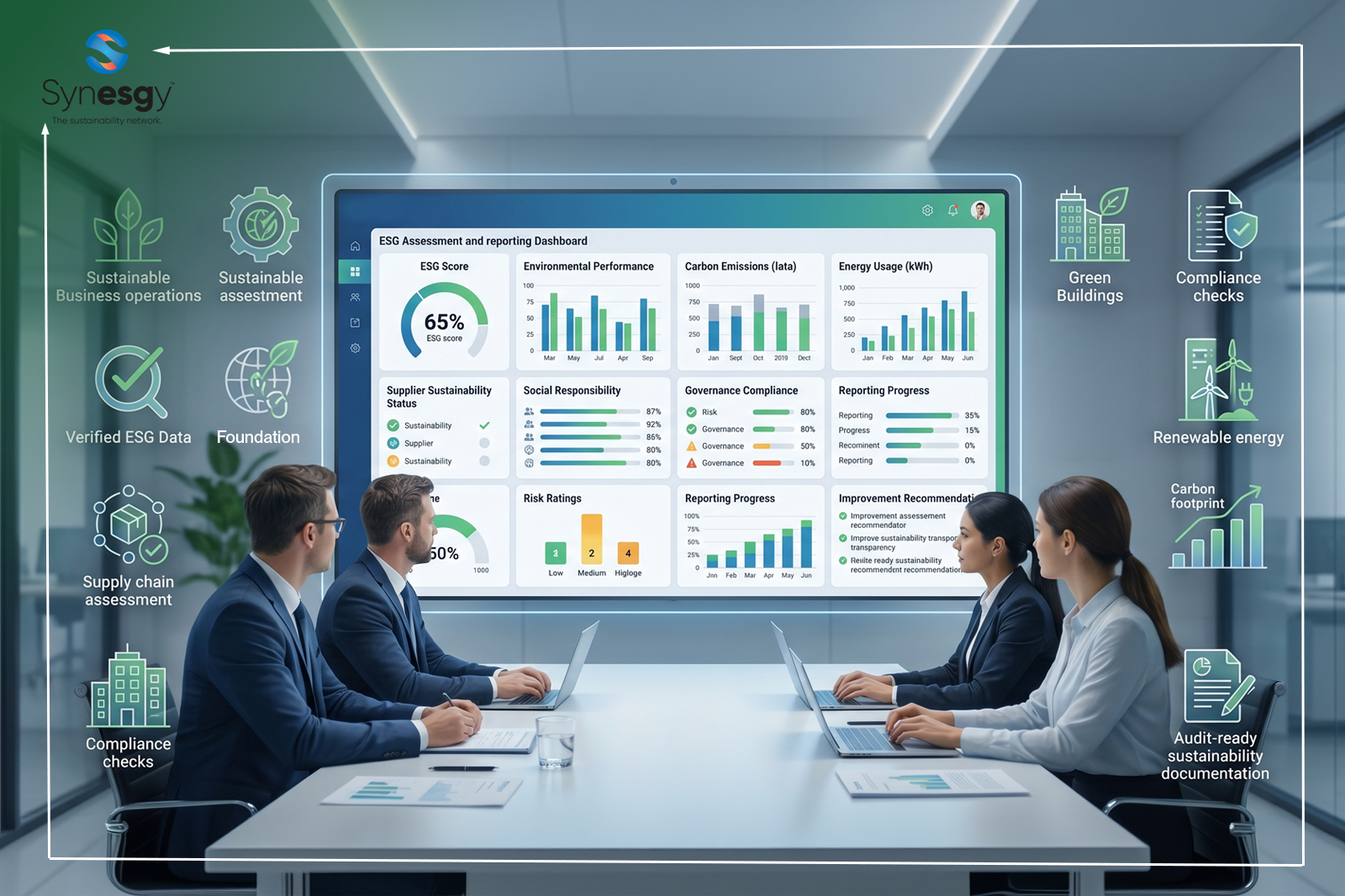
Maintain organized, audit-ready documentation throughout the year. Rather than searching for evidence at the last minute, businesses should keep policies, data, and supporting records updated and easily accessible at all times.
-
Replace generic policy statements with specific, measurable commitments. Policies should clearly state what is being done, by when, and how progress will be tracked, rather than relying on broad language.
-
Align internal practices with a recognised ESG assessment framework. This gives businesses a clear structure to follow and reduces the guesswork around what assessors are actually evaluating.
-
Conduct periodic internal reviews before formal assessments are due. Reviewing ESG data and documentation ahead of time allows businesses to identify and close gaps before they affect a formal assessment outcome.
Use assessment feedback to close gaps rather than treating scores as final. Every assessment cycle provides useful information about where a business is falling short. Treating this feedback as a starting point for improvement, rather than a final verdict, is one of the most effective ways to strengthen future results.
Building Long-Term ESG Assessment Readiness
Fixing individual pitfalls is useful, but the more sustainable approach is shifting ESG assessment from a periodic obligation into an ongoing operational function. This means building regular internal audits into the business calendar, keeping documentation continuously updated rather than refreshed only before an assessment, and using each assessment cycle as an opportunity for incremental improvement rather than a one-time hurdle to clear.
UAE businesses that adopt this mindset tend to see more consistent ESG assessment outcomes over time, since they are not relying on last-minute effort to compensate for gaps that built up between assessment cycles.
Conclusion
Most ESG assessment failures are preventable. They tend to stem from a small set of recurring issues: treating ESG assessment as a one-time task, submitting incomplete or inconsistent data, relying on vague policy language, lacking clear internal ownership, and misunderstanding what assessors are actually evaluating.
Businesses that address these pitfalls directly, by building a structured ESG compliance assessment process, assigning clear ownership, and maintaining strong documentation, are far better positioned to perform well in future assessments. As ESG expectations continue to grow across UAE supply chains, tenders, and investment decisions, a strong and consistent ESG assessment outcome is becoming a genuine competitive advantage rather than just a compliance checkbox.
FAQs
Q: Why is my ESG score low?
A: A low ESG score is usually the result of missing documentation, generic policies without measurable targets, or an inability to evidence existing practices clearly, rather than a true reflection of poor environmental, social, or governance performance.
Q: How can a failed ESG assessment be fixed?
A: A failed ESG assessment can be fixed by identifying the specific gaps flagged in the results, updating documentation and policies to address them directly, assigning clear ownership for future reporting, and using the feedback to build a more structured ongoing process rather than treating it as a one-time correction.
Q: What causes a low ESG score?
A: A low ESG score is typically caused by insufficient evidence to support stated practices, weak or undefined policies, inconsistent data across business functions, and gaps between what assessors expect and what businesses submit.
Q: How can ESG compliance gaps be fixed?
A: ESG compliance gaps can be addressed by reviewing assessment feedback to identify specific weak areas, updating policies and documentation accordingly, and establishing ongoing monitoring so gaps are caught and corrected before they affect future assessments.
Q: Why do UAE companies fail ESG assessments?
A: UAE companies often fail ESG assessments due to incomplete documentation, generic policy language, lack of internal coordination on ESG reporting, and a gap between what businesses prepare and what assessors are specifically evaluating.
Q: What ESG score requirements exist for UAE tenders?
A: ESG score requirements for UAE tenders vary depending on the buyer or procuring entity, but generally require businesses to demonstrate documented ESG practices and measurable performance as part of supplier qualification criteria.