If you have spent any time researching sustainability for your business, you have likely come across the terms ESG certification, sustainability certification, and sustainability framework used almost interchangeably. They are not the same thing. They serve different purposes, signal different things to different audiences, and belong at different stages of your sustainability journey.
The confusion is understandable. Both sit under the broad umbrella of ESG sustainability. Both are used to demonstrate that a business is taking its environmental and social responsibilities seriously. But choosing the wrong one at the wrong time can mean investing significant resources into something that does not actually move your strategy forward.
This article clears up the difference, explains where the two overlap, and gives you a practical way to decide which one your business should pursue first.
What this article covers:
-
What sustainability certification is and what it actually proves
-
What ESG certification means and why the term is widely misunderstood
-
The key differences between a sustainability certification and an ESG framework
-
Where the two overlap and how they strengthen each other
-
A decision framework to help you choose the right starting point
-
How Synesgy helps businesses navigate both
What Is a Sustainability Certification?
A sustainability certification is a third-party verified credential that confirms a business meets a specific, defined environmental or operational standard. Each certification is scoped to one area of performance, whether that is energy management, building design, supply chain practices, or overall business conduct.
Sustainability certifications exist across a wide range of industries and operational areas. Some focus on how a business manages its environmental footprint at a systems level. Others assess the sustainability credentials of physical infrastructure, such as buildings and facilities. Some evaluate broader business conduct across social and governance dimensions alongside environmental performance.
What they share is a common structure: an independently audited process, a defined standard to meet, and a verifiable credential issued upon passing. The outcome is binary. You either meet the standard or you do not.
If you do, you receive a certificate that can be used in procurement bids, client proposals, regulatory submissions, and public-facing communications. It is a credibility signal with a clear audit trail and a defined renewal cycle.
Sustainability certifications are particularly valuable when a client, investor, or regulator is asking for proof of performance in a specific area. They answer a very specific question: Can you demonstrate that you meet this standard?
What Is ESG Certification?
This is where most of the confusion starts. ESG certification is one of the most commonly searched terms in this space, but what most businesses are actually looking for is an ESG framework, an ESG assessment, or an ESG rating.
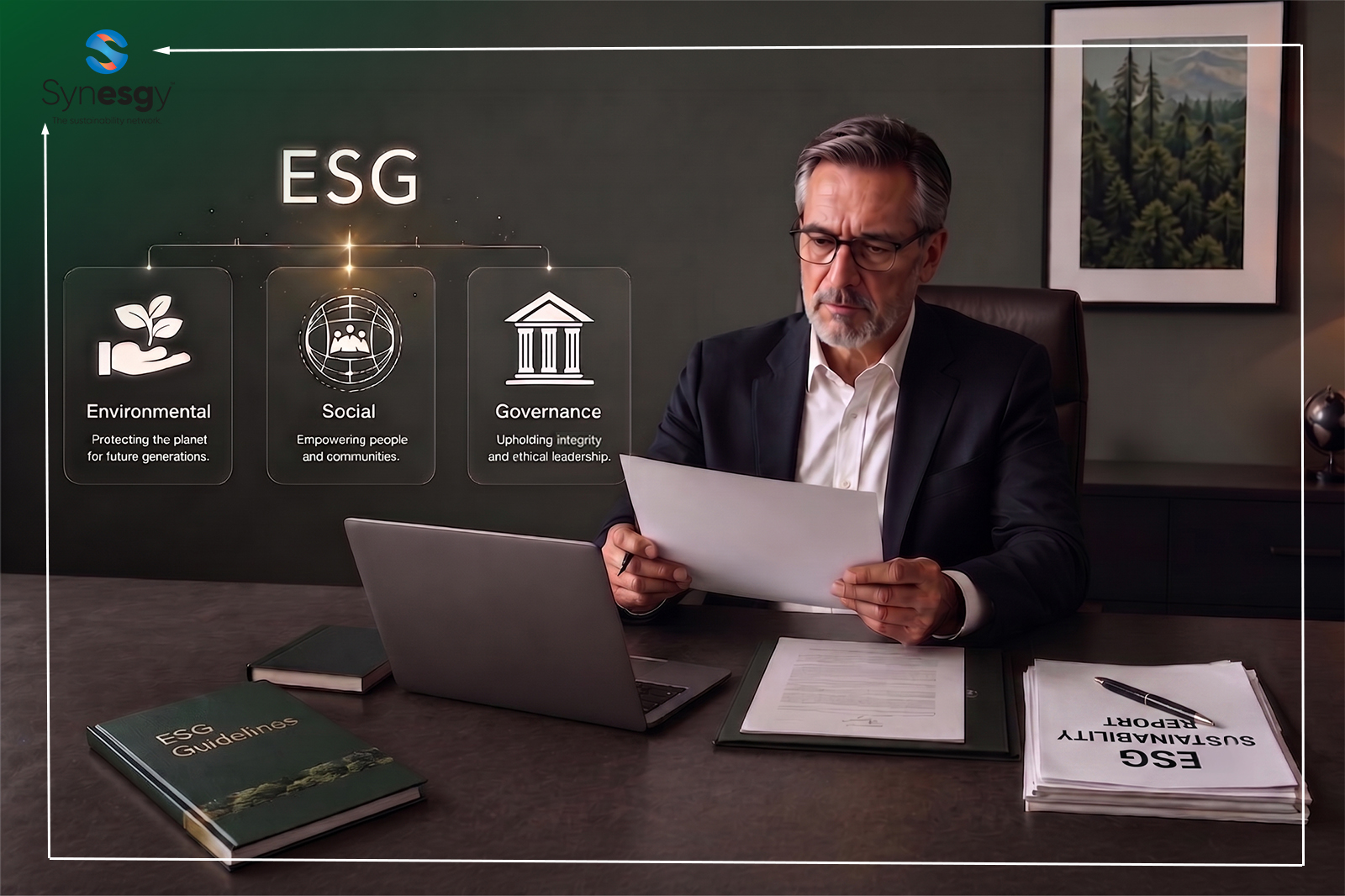
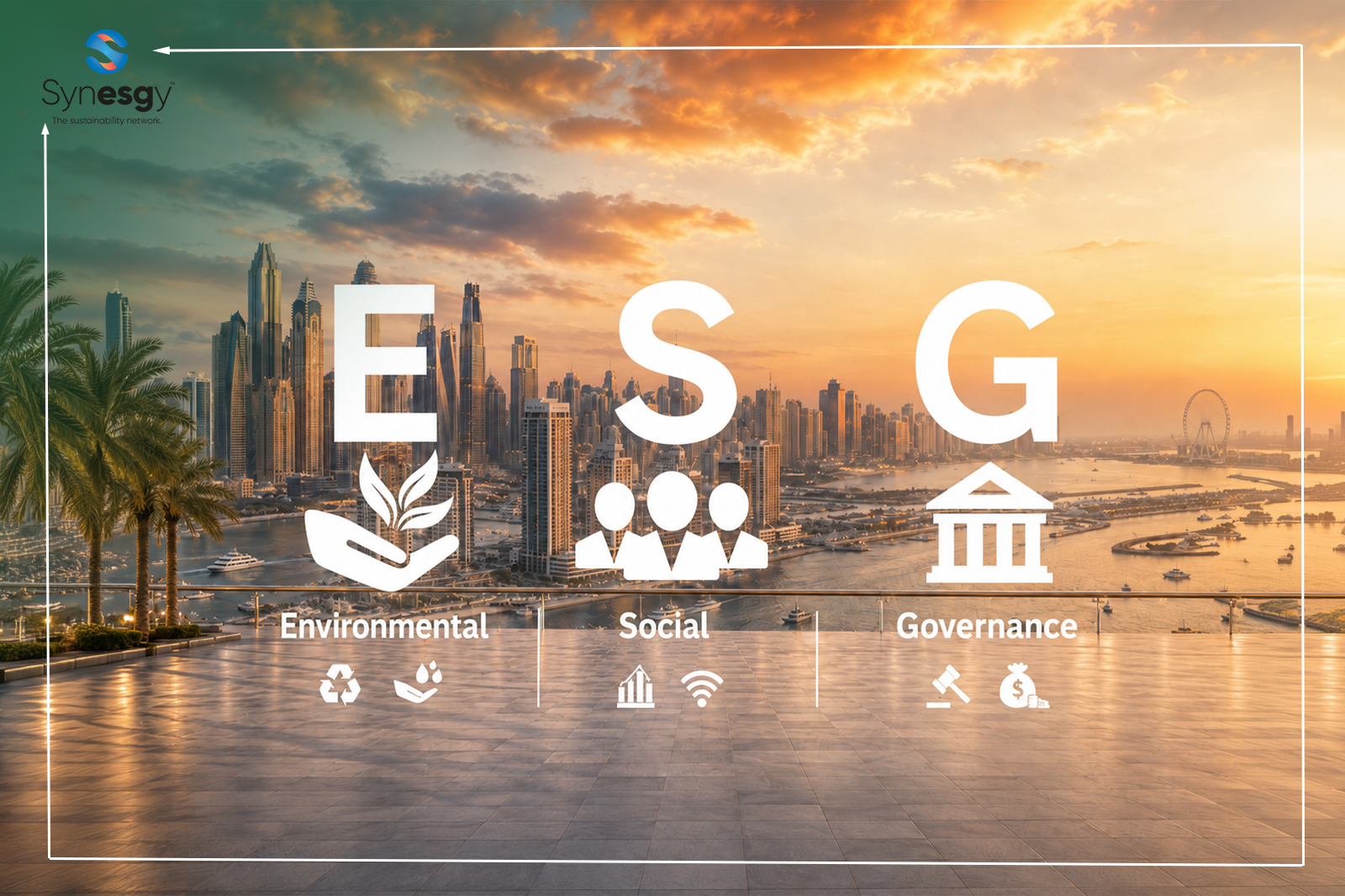
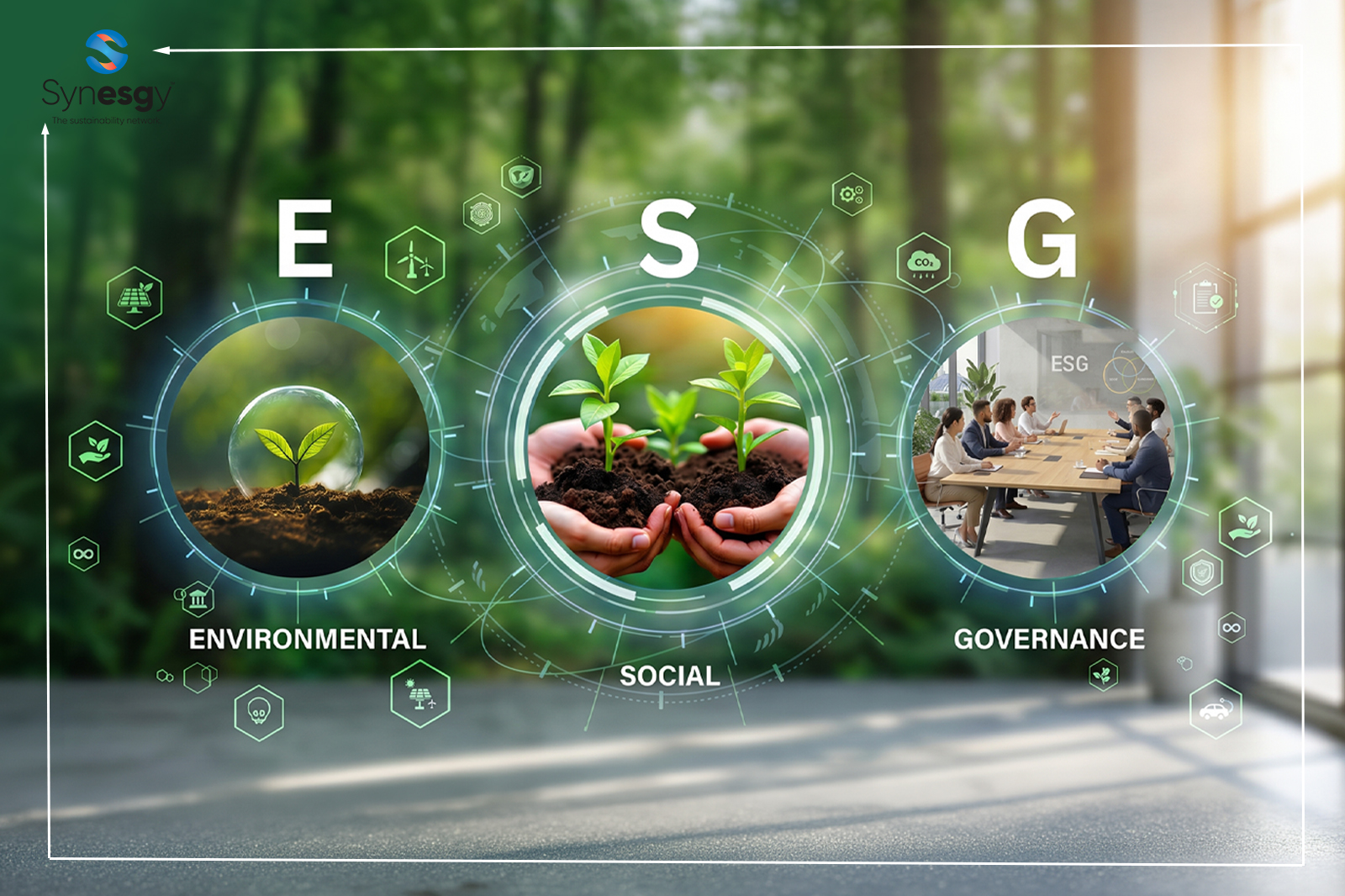
ESG stands for Environmental, Social, and Governance. It is a structured approach to measuring, managing, and reporting a business’s performance across all three of those dimensions. It is not a single pass/fail test. It is an ongoing process of disclosure, improvement, and stakeholder communication.
When people refer to ESG certification, they typically mean one of the following:
-
An ESG rating or score assigned by a platform or rating agency based on disclosed performance data
-
An ESG assessment conducted by a third-party platform that evaluates a business across environmental, social, and governance criteria
-
ESG compliance with a recognised reporting standard, such as the Global Reporting Initiative framework, the UN Sustainable Development Goals, or science-based targets
None of these are certifications in the traditional sense. There is no single globally recognised ESG certificate, the way there is for specific operational or environmental standards. What exists instead is a landscape of frameworks, disclosure standards, and rating methodologies that give businesses a structured way to measure and communicate their ESG performance.
The distinction matters because it changes how you approach the process. A sustainability certification has a fixed endpoint. An ESG framework is an ongoing commitment to measurement, transparency, and improvement.
ESG vs Sustainability Certification: The Key Differences
Understanding the structural differences between the two makes the decision significantly easier. Here is how they compare across the dimensions that matter most:
What it proves:
-
A sustainability certification proves that a business meets a specific, audited standard in one defined area
-
An ESG framework or rating reflects performance across environmental, social, and governance dimensions as a whole
Scope:
-
Sustainability certification is narrow by design, focused on one operational or environmental area
-
ESG covers the entire organisation across multiple dimensions simultaneously
Output:
-
Sustainability certification produces a certificate, a verifiable credential you can present to clients and stakeholders
-
ESG produces a score, a report, or a disclosure document that shows where you stand and how you are improving over time
Primary audience:
-
Sustainability certifications are most valued by clients, procurement teams, and regulators who need proof of a specific standard
-
ESG reports and ratings are most relevant to investors, lenders, institutional stakeholders, and regulators focused on broader corporate responsibility
How it is maintained:
-
Sustainability certifications require periodic re-audits to maintain the credential
-
ESG reporting is an annual or ongoing process with no expiry, but with a clear expectation of continuous improvement
The core distinction in plain terms: a sustainability certification is proof that you have reached a standard. An ESG framework is the system you use to understand, manage, and communicate your performance across your entire organisation.
Where ESG and Sustainability Certifications Overlap
The two are not competing approaches. In a well-built sustainability strategy, they work together.
Think of your ESG framework as the structure and your sustainability certifications as the evidence within it. When a business achieves a recognised environmental management certification, it is demonstrating measurable performance on the Environmental dimension of ESG. When a business earns a certification that evaluates social and governance conduct alongside environmental performance, it is generating credible evidence across multiple ESG dimensions at once.
Each certification strengthens a specific part of your ESG story.
This is an important reframe. Many businesses treat certifications as standalone achievements, something to pursue, display, and move on from. But when they are embedded within a broader ESG framework, certifications become proof points that directly improve your ESG score, strengthen your ESG disclosure, and give investors and stakeholders something concrete to point to.
The businesses that get the most value from certifications for sustainability are those that already understand their ESG baseline. They know where their performance gaps are, which means they can target certifications that address specific weaknesses rather than pursuing the most visible credential regardless of strategic fit.
This is also where ESG benchmarking becomes useful. When you measure your current ESG performance against an established framework, you can identify which areas of your corporate sustainability strategy are underdeveloped, and which certifications would add the most value in those specific areas.
Which One Should Your Business Pursue First?
There is no universal answer, but there is a logical starting point based on where your business currently sits. Start with an ESG framework if:
-
You have not yet mapped your baseline performance across environmental, social, and governance dimensions
-
You need to report to investors, lenders, or institutional stakeholders who expect ESG disclosure
-
You are building a long-term sustainability roadmap and need a structure to organise your goals and measure progress
-
You want to understand which certifications will actually strengthen your ESG performance before committing resources to one
Start with a sustainability certification if:
-
A client, tender, or procurement process is asking for proof of a specific standard in the near term
-
You operate in an industry where a particular type of certification carries significant weight, such as construction, real estate, manufacturing, or logistics
-
You want a visible, verifiable credibility signal quickly and have a clear standard already in mind
-
Your business already has strong operational practices in one area and formalising them through a certification is a natural next step
Pursue both in parallel if:
-
You are at a stage where ESG disclosure is expected by your stakeholders and you want certifications to strengthen specific dimensions of your ESG report
-
You have the internal capacity to manage both an ongoing ESG reporting process and a certification audit simultaneously
-
Your business operates across multiple sectors or geographies and needs both broad ESG credibility and specific standard-based proof
The most common mistake businesses make is treating a certification as a substitute for an ESG strategy. Achieving a single operational certification does not mean you have an ESG framework. It means you have demonstrated strong performance in one area. That is valuable, but it is one piece of a much larger picture.
The most effective approach is to start with the framework, understand your baseline, and then use certifications strategically to close gaps and build credibility in the areas that matter most to your stakeholders.
How Synesgy Helps Businesses Navigate Both
Synesgy is built for businesses that want a clear, structured starting point for ESG without the complexity of building a reporting process from scratch.
The platform provides a structured ESG assessment that gives businesses a verified ESG score across all three dimensions: environmental, social, and governance. Rather than asking businesses to self-report against a complex set of standards, Synesgy guides the process, surfaces performance gaps, and produces a score that is meaningful to investors, procurement teams, and stakeholders.
For businesses that are also pursuing sustainability certifications, Synesgy makes the connection explicit. By understanding where your ESG performance currently sits, you can identify which certifications would strengthen specific dimensions of your score and pursue them with a clear strategic rationale rather than guesswork.
The result is a sustainability strategy where your ESG framework and your certifications for sustainability work together, each reinforcing the other, rather than sitting in separate silos managed by different teams with no shared visibility.
If you are unsure where to start, the most valuable first step is understanding your current ESG baseline. Everything else, including which certifications to pursue, which reporting frameworks to adopt, and how to communicate your performance to stakeholders, becomes significantly clearer once that foundation is in place.
Conclusion
ESG certification and sustainability certification are not rivals. They are complementary tools that serve different functions at different stages of a sustainability strategy. Sustainability certifications prove that you meet a specific standard. An ESG framework gives you the structure to understand, manage, and improve your performance across your entire organisation.
The businesses building the most credible and durable sustainability strategies are not choosing between the two. They are using ESG frameworks to establish their baseline and identify their gaps, then using targeted certifications to close those gaps and give stakeholders something concrete to point to.
Start with the framework. Know your baseline. Then let your certifications do exactly what they are designed to do: prove it.
Phone: +971 4 406 9900
E-mail: info.me@crif.com
FAQs
Q: Is ESG certification mandatory or voluntary?
A: In most markets, ESG reporting is currently voluntary. However, regulatory bodies across the EU, UK, and several Asia-Pacific markets are introducing mandatory ESG disclosure requirements for listed companies and large enterprises. Beyond regulation, pressure from investors and procurement teams has made ESG reporting a practical necessity for businesses seeking institutional capital or large corporate contracts. Voluntary today does not mean optional tomorrow.
Q: How does a business get sustainability certified?
A: The process generally follows four stages: identifying the standard most relevant to your industry, conducting an internal gap assessment against that standard’s requirements, implementing the necessary changes, and undergoing an independent audit by an accredited body. Upon passing, the certification is issued. Most certifications require periodic re-audits to stay valid.
Q: Is ESG a certification or a framework?
A: ESG is a framework, not a certification. It is a structured approach to measuring and reporting performance across environmental, social, and governance dimensions. There is no single globally recognised ESG certificate. The output of an ESG process is typically a score, a rating, or a disclosure report, not a certificate.
Q: Can sustainability certifications improve your ESG score?
A: Yes, directly. Certifications are independently verified proof of performance in specific areas, and ESG scores are built on evidence of actual performance. An environmental management certification strengthens your E dimension. Certifications covering social and governance conduct strengthen the S and G dimensions, respectively. They are not a substitute for a broader ESG strategy, but they are among the strongest proof points you can bring to one.
Q: Do investors look at ESG scores or sustainability certifications?
A: Investors typically look at both, but for different reasons. ESG scores give investors a broad, comparable view of performance across all three dimensions and are used to screen and compare businesses at scale. Sustainability certifications provide granular, independently verified proof in specific areas. Together, they signal that a strong ESG score reflects genuine operational practice, not just self-reported data.
Q: Should a business pursue ESG reporting or sustainability certification first?
A: For most businesses, ESG reporting is the better starting point. An ESG assessment reveals your current baseline and performance gaps, which makes it easier to identify which certifications will have the most strategic impact. Pursuing a certification without that baseline often leads to investing in credentials that do not address your most material ESG weaknesses. Start with the framework, establish your baseline, then choose certifications accordingly.
Phone: +971 4 406 9900
E-mail: info.me@crif.com