Sustainability Certification is becoming an operational requirement for businesses involved in global supply chains, enterprise procurement, regulated industries, and ESG-driven partnerships. In the UAE, organizations are increasingly expected to demonstrate environmental responsibility, governance transparency, ethical business practices, and supplier accountability through recognized sustainability standards and ESG assessment frameworks.
For many businesses, sustainability certification is no longer limited to corporate reporting or branding initiatives. Procurement teams, investors, enterprise buyers, and international partners now use sustainability evaluations to assess supplier risk, operational resilience, compliance maturity, and long-term business reliability.
In this guide, you’ll learn:
-
What sustainability certification means in business terms
-
How the certification process works
-
Difference between sustainability certification and ESG rating
-
ESG and sustainability requirements for UAE businesses
-
Why supplier sustainability transparency matters in procurement
What Is Sustainability Certification?
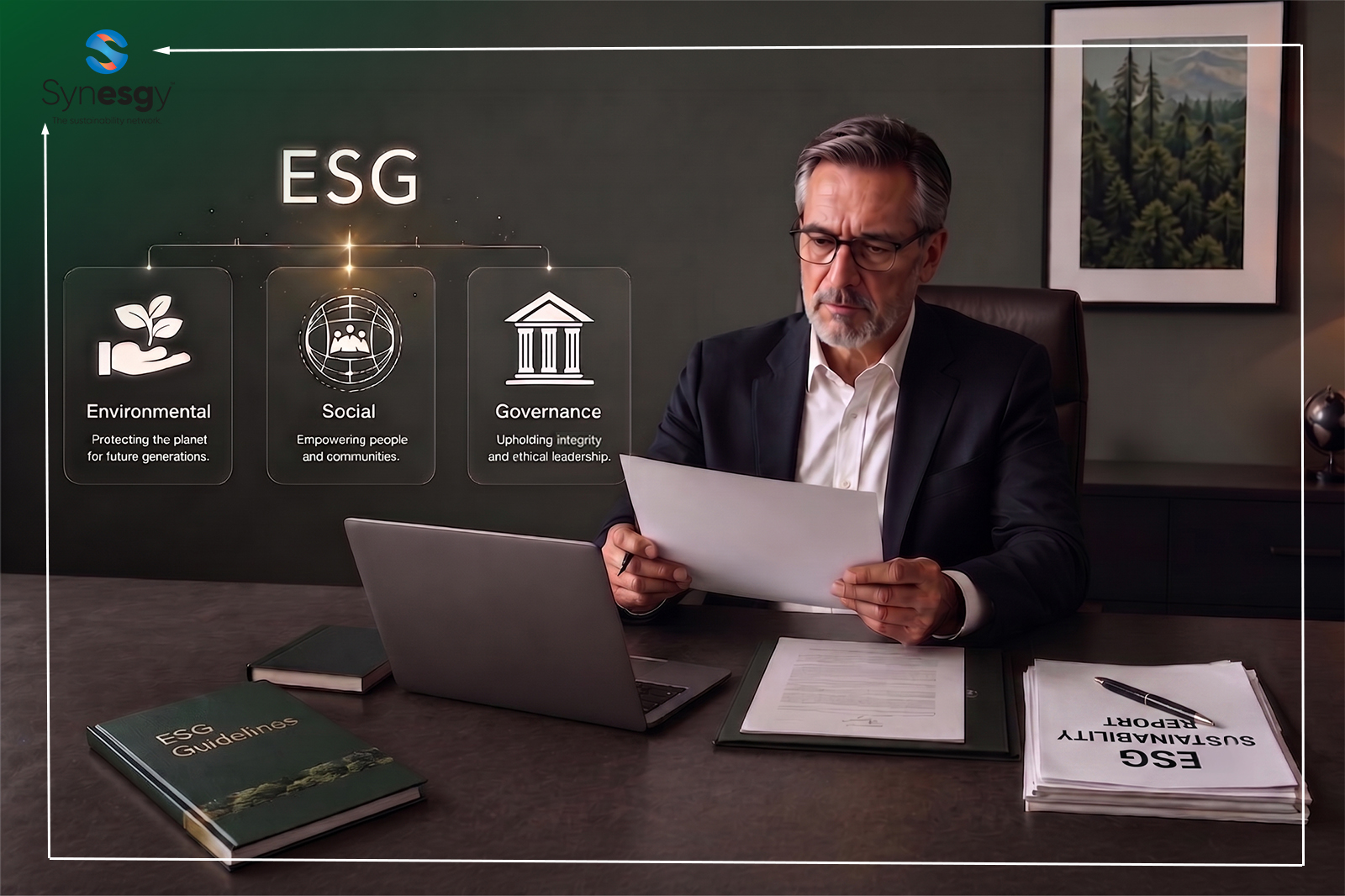
Sustainability certification is a formal verification process used to assess whether a company meets defined environmental, social, and governance (ESG) standards. Certifications are typically issued by independent third-party organizations that evaluate a company’s policies, operational practices, reporting systems, compliance controls, and sustainability performance against established frameworks.
These certifications help businesses demonstrate that sustainability practices are measurable, documented, and integrated into operations rather than presented as general commitments.
In practical terms, sustainability certification helps organizations validate areas such as:
-
environmental management
-
emissions and energy tracking
-
labor and workplace standards
-
ethical sourcing
-
supplier governance
-
compliance management
-
business transparency
-
sustainability reporting
Unlike internal sustainability claims, third-party certification introduces structured assessment criteria, documentation requirements, and verification procedures.
In simple terms
Sustainability certification provides external confirmation that a business follows recognized ESG and sustainability standards.
For procurement teams and enterprise buyers, certifications can also simplify supplier evaluation and reduce due diligence complexity.
Why Sustainability Certification Matters for UAE Businesses
Sustainability certification is becoming increasingly relevant across the UAE due to growing ESG expectations from multinational buyers, investors, regulators, and procurement teams. Businesses operating in construction, manufacturing, logistics, finance, automotive, retail, and supply chain sectors are facing greater pressure to demonstrate operational transparency and sustainability compliance.
In many procurement environments, sustainability performance is now evaluated alongside pricing, operational capability, and service quality.
Several factors are accelerating ESG adoption in the UAE:
-
supplier sustainability screening
-
international procurement standards
-
ESG-focused investment requirements
-
responsible sourcing expectations
-
sustainability-linked partnerships
-
governance and risk visibility requirements
For UAE suppliers working with international enterprises, ESG verification is increasingly part of vendor onboarding and procurement qualification processes.
Businesses without clear sustainability documentation may face challenges during:
-
enterprise supplier assessments
-
tender evaluations
-
ESG due diligence reviews
-
supply chain risk assessments
Sustainability certification also supports regional business competitiveness by helping organizations align with global sustainability frameworks and procurement expectations.
Types of Sustainability Certifications Businesses Should Know
Different sustainability certifications evaluate different aspects of ESG performance. Some focus on environmental management, while others evaluate labor practices, governance standards, supplier sustainability, or operational transparency.
The right certification depends on:
-
industry sector
-
buyer expectations
-
supply chain requirements
-
operational risks
-
reporting obligations
-
procurement goals
-
ISO 14001
An environmental management systems standard that helps organizations systematically manage environmental impact. It supports businesses in identifying and controlling environmental risks, improving resource efficiency, reducing waste and emissions, and ensuring compliance with regulatory requirements. In the UAE, it is widely used across industrial operations, manufacturing, logistics, and energy-related sectors, often as part of ESG and regulatory alignment.
-
LEED certification
Green building certification that evaluates the sustainability performance of buildings across design, construction, operation, and maintenance. It focuses on areas such as energy efficiency, water usage, indoor environmental quality, and material selection. In the UAE, LEED is commonly adopted in commercial real estate, hospitality, and large infrastructure projects, especially in developments targeting sustainability goals and green building initiatives.
-
SA8000
Social accountability standard that focuses on labor rights, workplace safety, fair working conditions, and ethical supply chain practices. It helps organizations ensure compliance with internationally recognized labor standards, including working hours, child labor restrictions, and health and safety measures. In the UAE, it is mainly used by companies integrated into global supply chains or those working with multinational buyers that require verified social compliance.
-
B Corp Certification
Certification for businesses that meet high standards of social impact, environmental responsibility, transparency, and ethical governance. It evaluates a company’s overall impact across stakeholders, including employees, communities, customers, and the environment. In the UAE, it is more commonly adopted by service-based companies, startups, and consumer brands that want to demonstrate strong purpose-driven business practices and differentiate themselves in competitive markets.
Sustainability Certification vs ESG Rating
Sustainability certification and ESG ratings are often used interchangeably, but they measure different aspects of a company’s sustainability profile. A sustainability certification focuses on compliance with clearly defined standards. It verifies whether a business has implemented required environmental, social, and governance practices according to a specific framework. The emphasis is on meeting established criteria, usually through structured documentation and audit validation.
ESG ratings, on the other hand, evaluate overall sustainability performance. Instead of checking compliance against a fixed standard, they assess how a company performs across multiple ESG dimensions using scoring models and comparative benchmarks. This includes areas such as governance quality, environmental impact, labor practices, reporting maturity, and supply chain risk exposure.
In simple terms, certification confirms whether minimum standards are met, while ESG ratings measure how strong or advanced a company’s sustainability performance is. Certification is typically compliance-focused and audit-driven, whereas ESG ratings are more analytical and performance-oriented.
In procurement and supplier management environments, organizations increasingly use both:
-
certifications for compliance validation
-
ESG ratings for supplier risk visibility and performance benchmarking
This distinction is important for UAE businesses participating in global supply chains where enterprise buyers require deeper ESG transparency.
How Businesses Get Sustainability Certified
The sustainability certification process varies depending on the certification framework, industry, and operational complexity. However, most certification programs follow a similar structure involving assessment, documentation, policy implementation, verification, and ongoing monitoring.
1. Assess Current Sustainability Practices
Organizations first evaluate existing ESG policies, operational controls, supplier practices, governance frameworks, and reporting systems.
This stage often identifies:
-
policy gaps
-
missing documentation
-
compliance risks
-
reporting weaknesses
-
supplier visibility limitations
2. Identify the Appropriate Certification Framework
Businesses must select certifications aligned with:
-
industry expectations
-
procurement requirements
-
geographic markets
-
customer expectations
-
operational priorities
For example:
-
manufacturers may prioritize ISO 14001
-
construction companies may prioritize LEED
3. Gather ESG Documentation
Most certification frameworks require documented evidence related to:
-
environmental policies
-
ethics procedures
-
supplier management
-
employee standards
-
governance structures
-
emissions tracking
-
compliance processes
Incomplete documentation is one of the most common barriers during sustainability audits.
4. Implement Required ESG Policies
Businesses may need to introduce:
-
sustainability governance frameworks
-
responsible sourcing policies
-
whistleblower procedures
-
emissions reduction initiatives
-
supplier evaluation processes
This phase often requires cross-functional coordination between operations, procurement, compliance, HR, and leadership teams.
5. Conduct Audits or Assessments
Third-party assessors review documentation, operational processes, governance controls, and sustainability evidence.
Depending on the framework, this may involve:
-
document verification
-
operational audits
-
supplier reviews
-
site inspections
-
ESG questionnaires
6. Maintain Ongoing Compliance
Sustainability certification is not a one-time activity. Businesses must continuously monitor ESG performance, maintain reporting accuracy, and update policies to remain compliant.
Many certifications require periodic reassessment or renewal reviews.
Sustainability Certification Requirements
Most sustainability certifications evaluate whether a business has structured ESG governance, operational transparency, and measurable sustainability practices.
Requirements vary by framework, but businesses are commonly expected to maintain evidence across several operational areas.
Common Sustainability Certification Requirements
Environmental Management
-
emissions tracking
-
waste management policies
-
energy efficiency initiatives
-
environmental compliance controls
Governance and Ethics
-
anti-corruption policies
-
compliance procedures
-
governance oversight
-
risk management controls
Labor and Social Standards
-
employee safety policies
-
labor rights protections
-
diversity and inclusion initiatives
-
workplace standards
Supplier Sustainability
-
supplier due diligence
-
responsible sourcing practices
-
supplier ESG monitoring
Reporting and Documentation
-
ESG reports
-
sustainability metrics
-
audit records
-
policy documentation
-
operational evidence
Businesses without structured ESG documentation often struggle during certification and supplier assessment processes.
Why Suppliers Are Increasingly Asked for Sustainability Certifications
Large enterprises are under growing pressure to improve supply chain transparency, reduce ESG risks, and strengthen responsible sourcing practices. As a result, suppliers are increasingly expected to demonstrate sustainability performance during procurement and vendor onboarding processes.
This shift is changing how procurement teams evaluate supplier relationships.
Supplier sustainability assessments are now commonly used to evaluate:
-
governance risks
-
labor practices
-
environmental impact
-
ethical sourcing controls
-
operational transparency
-
compliance maturity
For suppliers, sustainability certification can improve:
-
procurement eligibility
-
enterprise credibility
-
supplier visibility
-
partnership opportunities
-
global market access
Many international buyers now request ESG documentation before approving vendors or renewing supplier contracts.
This trend is especially relevant in sectors with complex supply chains, such as:
-
manufacturing
-
automotive
-
construction
-
logistics
-
retail
-
industrial operations
Benefits of Sustainability Certification for Businesses
Sustainability certification can provide measurable operational, procurement, and risk management advantages beyond regulatory alignment or reputation management.
For many businesses, certification supports stronger governance structures and improves sustainability visibility across operations and supply chains.
Key Business Benefits
Improved Supplier Credibility
Third-party ESG validation can strengthen buyer confidence and support procurement qualification processes.
Better Procurement Opportunities
Many enterprises now evaluate suppliers using sustainability and ESG criteria during vendor selection.
Stronger Operational Transparency
Certification frameworks often improve reporting consistency, policy visibility, and governance accountability.
Reduced ESG and Compliance Risks
Structured ESG controls help organizations identify operational vulnerabilities and compliance gaps earlier.
Greater Investor Confidence
Investors increasingly assess governance quality, ESG maturity, and sustainability reporting capabilities when evaluating businesses.
Improved International Market Readiness
Global buyers increasingly expect suppliers to align with recognized sustainability standards and ESG frameworks.
Common Challenges Businesses Face During Sustainability Certification
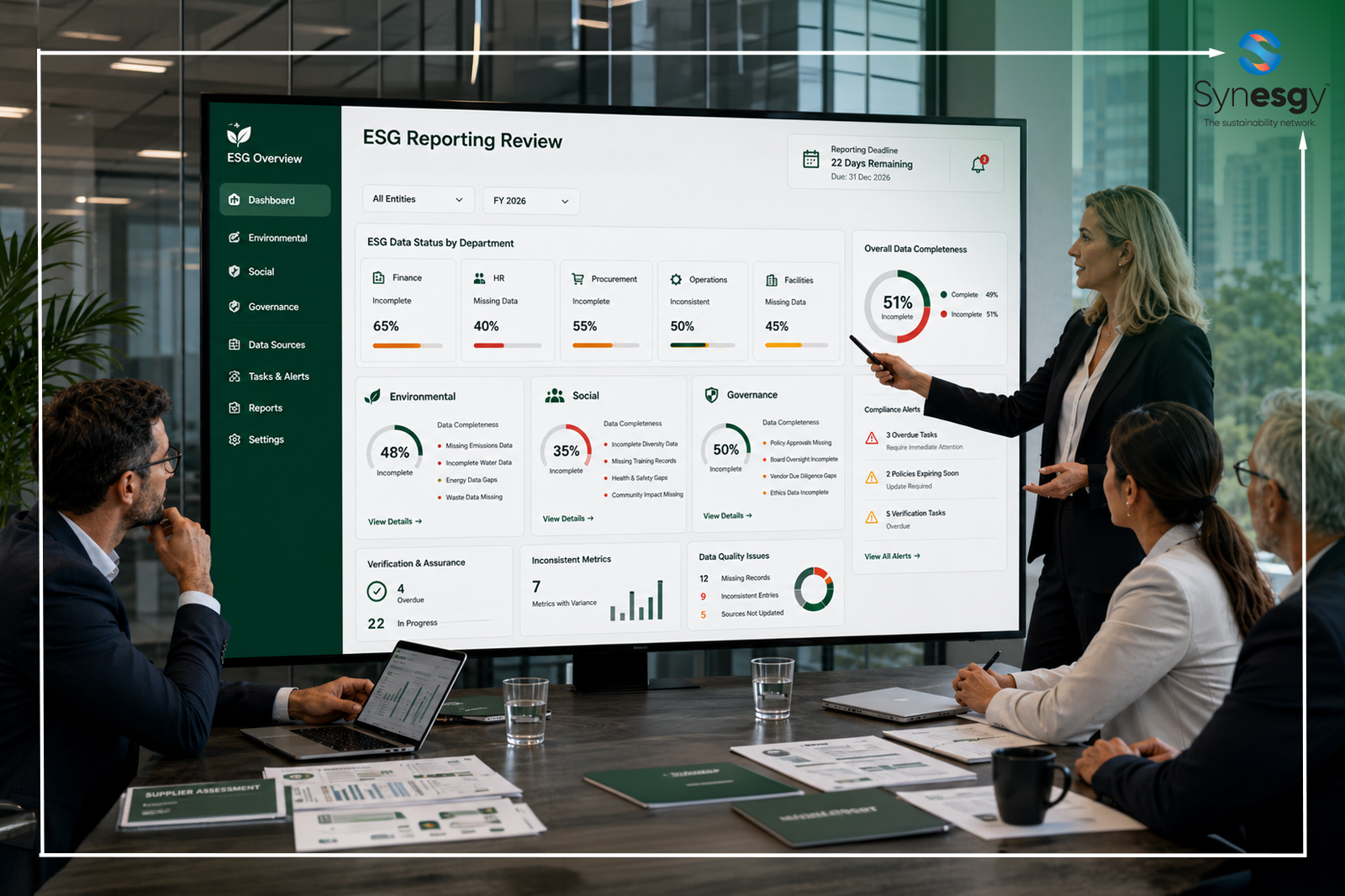
Many organizations underestimate the operational complexity involved in sustainability certification and ESG assessments. The challenge is often not the willingness to comply, but the lack of structured ESG systems and accessible operational data.
Common certification challenges include:
-
Incomplete ESG Documentation
Businesses may lack centralized records for policies, emissions data, supplier standards, or governance controls.
-
Limited Supplier Visibility
Organizations often struggle to collect ESG information consistently across supplier networks.
-
Internal Coordination Gaps
Sustainability initiatives typically involve multiple departments, including procurement, operations, HR, compliance, and leadership teams.
-
Inconsistent ESG Reporting
Different teams may track sustainability metrics using different methodologies, reducing reporting reliability.
-
Ongoing Compliance Maintenance
Certification frameworks require continuous monitoring, policy updates, and operational oversight rather than one-time implementation.
Businesses that approach sustainability certification as an operational governance process rather than a documentation exercise typically achieve stronger long-term outcomes.
Sustainability Certification Trends in UAE
Sustainability and ESG adoption in the UAE are evolving rapidly as organizations respond to international procurement expectations, investor scrutiny, and supply chain transparency demands.
Several trends are shaping sustainability certification adoption across the region.
Supplier ESG Transparency Is Expanding
Enterprises are requesting deeper supplier sustainability visibility to strengthen procurement governance and reduce third-party risk exposure.
ESG Reporting Expectations Are Increasing
Businesses are facing growing pressure to maintain structured ESG reporting processes and measurable sustainability metrics.
Procurement Teams Are Prioritizing ESG Risk
Supplier evaluation increasingly includes ESG maturity, sustainability performance, and governance quality assessments.
International Trade Requirements Are Influencing Local Operations
UAE businesses operating in global markets are aligning more closely with international sustainability standards and responsible sourcing expectations.
SMEs Are Entering ESG Assessment Ecosystems
Small and medium-sized businesses are increasingly participating in ESG assessment programs to remain competitive in enterprise supply chains.
How Synesgy Supports Supplier Sustainability Assessment
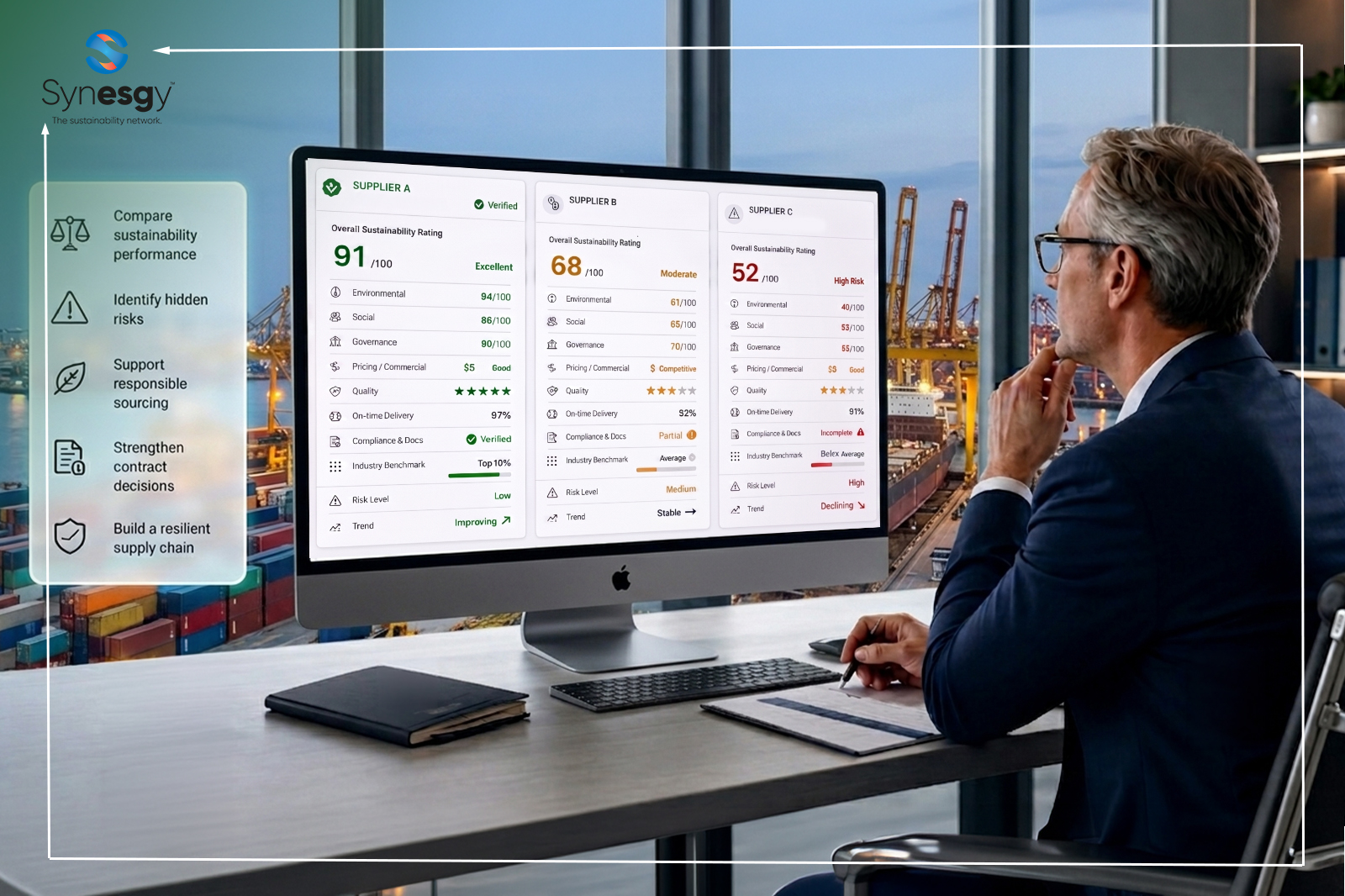
As sustainability expectations expand across procurement and supply chain ecosystems, businesses require better visibility into supplier ESG performance, operational risks, and sustainability maturity.
Synesgy supports organizations through supplier sustainability assessment and ESG evaluation workflows designed to improve sustainability intelligence across business networks.
The platform helps businesses:
-
evaluate supplier ESG performance
-
improve sustainability visibility
-
support procurement due diligence
-
monitor supplier sustainability risks
-
centralize ESG assessment processes
-
strengthen supply chain transparency
For procurement teams and supplier risk managers, structured ESG assessment systems can simplify sustainability evaluation while supporting more consistent supplier governance practices.
Conclusion
As ESG expectations continue to grow across procurement and global supply chains, sustainability certifications and ESG ratings are becoming essential for demonstrating compliance, transparency, and operational credibility. UAE businesses increasingly need strong governance, clear ESG documentation, and supplier sustainability visibility to remain competitive and procurement-ready.
Ready to strengthen your supplier ESG visibility and sustainability assessment process?
For more insights:
Phone: +971 4 406 9900
E-mail: info.me@crif.com
FAQs
Q: What sustainability certifications are globally recognized?
A: Globally recognized sustainability certifications and assessment frameworks include ISO ISO 14001, LEED, SA8000, and B Corp Certification. The right option depends on industry, procurement requirements, and business goals.
Q: How much does sustainability certification cost?
A: The cost of sustainability certification varies based on company size, operational complexity, certification type, audit scope, and documentation requirements. Some SME-focused assessments may be relatively affordable, while enterprise-level certifications can involve broader implementation and audit costs.
Q: How often do sustainability certifications need renewal?
A: Many sustainability certifications require periodic reassessment or renewal to ensure businesses continue meeting compliance standards and ESG expectations. Renewal cycles may range from annual reviews to certifications valid for multiple years.
Q: How do businesses improve ESG scores?
A: Businesses can improve ESG scores by strengthening governance policies, reducing environmental impact, improving transparency, tracking sustainability metrics, enhancing supplier management practices, and maintaining accurate ESG documentation.
Q: What ESG data do procurement teams request?
A: Procurement teams commonly request data related to environmental policies, emissions tracking, labor practices, ethics and compliance policies, supplier standards, sustainability reporting, diversity initiatives, and governance frameworks.
Q: What sustainability certifications help suppliers win contracts?
A: Certifications and ESG assessments, such as ISO 14001, and supplier sustainability assessments can improve supplier credibility and help businesses meet procurement qualification requirements from enterprises and global buyers.
Q: How do sustainability certifications improve supply chain transparency?
A: Sustainability certifications improve supply chain transparency by helping organizations verify supplier practices, assess ESG risks, standardize reporting, and ensure suppliers align with responsible sourcing and compliance expectations.
Q: What’s the easiest sustainability certification for small businesses?
A: The most suitable certification for small businesses depends on industry, customer expectations, and operational maturity. Many SMEs begin with foundational ESG assessments or environmental management frameworks before pursuing more advanced sustainability certifications.