Sustainability has become a strategic priority for businesses across the United Arab Emirates. But as ESG commitments grow, so does scrutiny. Companies are no longer judged by what they claim, but by what they can prove.
This is where the risk of greenwashing becomes critical.
Unverified sustainability claims can expose businesses to regulatory penalties, investor distrust, and lost commercial opportunities. In today’s environment, sustainability reporting is not just about transparency. It is about credibility, compliance, and competitive advantage.
What Is Greenwashing and Why Is It a Serious Risk for UAE Businesses?
Greenwashing occurs when companies exaggerate or misrepresent their environmental or social impact. In the UAE, this is no longer viewed as a harmless marketing tactic. It is increasingly treated as a form of misrepresentation that can mislead regulators, investors, and customers.
As ESG awareness grows, stakeholders expect verifiable data. Any gap between claims and actual performance can quickly damage trust and trigger deeper scrutiny.
How do regulators identify misleading ESG or sustainability claims?
Regulators and compliance bodies assess sustainability claims by evaluating data consistency, transparency, and alignment with recognized reporting frameworks. Discrepancies between reported metrics and actual performance, lack of supporting documentation, or vague disclosures can raise red flags.
Advanced analytics and third-party data validation are now being used to detect inconsistencies, making it harder for unverified claims to go unnoticed.
Can greenwashing lead to legal action or financial penalties in the UAE?
Yes. Greenwashing can lead to fines, legal action, and regulatory enforcement. Authorities are increasingly treating misleading ESG disclosures as violations under consumer protection and financial compliance frameworks.
Penalties can escalate quickly, especially for repeated violations or cases involving intentional misrepresentation.
What makes ESG misreporting a legal liability rather than a marketing issue?
The shift lies in accountability. ESG disclosures influence investor decisions, procurement eligibility, and regulatory compliance. When inaccurate data impacts financial or contractual outcomes, it becomes a legal concern rather than a branding issue.
Inaccurate reporting can therefore expose companies to lawsuits, regulatory sanctions, and long-term reputational damage.
The Financial and Regulatory Consequences of Non-Verified Sustainability Reporting
What Penalties Can UAE Companies Face for ESG Non-Compliance?
Companies can face fines ranging from AED 50,000 to AED 2 million, with higher penalties for repeat offenses. In some cases, regulatory bodies may impose operational restrictions or increased compliance oversight.
Can businesses lose contracts due to poor ESG or sustainability disclosures?
Yes. Many organizations now require verified ESG data as part of supplier evaluation. Companies that fail to meet these requirements risk losing contracts or being excluded from bidding processes altogether.
How does non-compliance impact licensing, operations, or procurement eligibility?
Non-compliance can lead to delays in approvals, restrictions on operations, or disqualification from government and enterprise procurement programs. ESG is increasingly embedded in regulatory and operational frameworks.
What are the hidden financial costs of inaccurate sustainability reporting?
Beyond direct fines, the hidden costs include reputational damage, loss of partnerships, increased compliance expenses, and reduced access to funding. These indirect impacts often exceed the initial penalties.
Why Do Investors Avoid Companies with Weak or Unverified ESG Reporting?
Investors rely on ESG data to assess long-term risk, resilience, and governance quality. When reporting is unverified or inconsistent, it creates uncertainty around a company’s actual performance. This increases perceived risk, making investors cautious or unwilling to commit capital.
Over time, such companies may be viewed as less transparent and harder to evaluate, reducing investor confidence and limiting access to long-term funding.
How does sustainability reporting influence company valuation and funding?
Strong sustainability reporting signals operational discipline, risk awareness, and long-term viability, all of which positively influence valuation. Companies with credible ESG performance are often seen as more stable and future-ready, making them attractive to investors and lenders.
On the other hand, weak or unreliable reporting raises concerns about hidden risks, which can lead to lower valuations, stricter funding conditions, or even rejection during due diligence.
Can greenwashing increase the cost of capital for businesses?
Yes. When companies are perceived as engaging in greenwashing or lacking credible ESG data, lenders and investors factor in higher risk. This often results in higher borrowing costs, reduced credit availability, and stricter financing terms.
In competitive markets, businesses with verified ESG performance are more likely to secure favorable funding, while those with questionable claims face financial disadvantages.
What role does ESG credibility play in attracting global investors?
Global investors prioritize transparency, accountability, and consistency in ESG disclosures. Credible, verified reporting builds trust and demonstrates that a company is aligned with international standards and responsible business practices. This not only attracts a broader pool of investors but also strengthens long-term relationships, positioning the company as a reliable and competitive investment opportunity in global markets.
How Does ESG Compliance Affect Supplier Selection in the UAE?
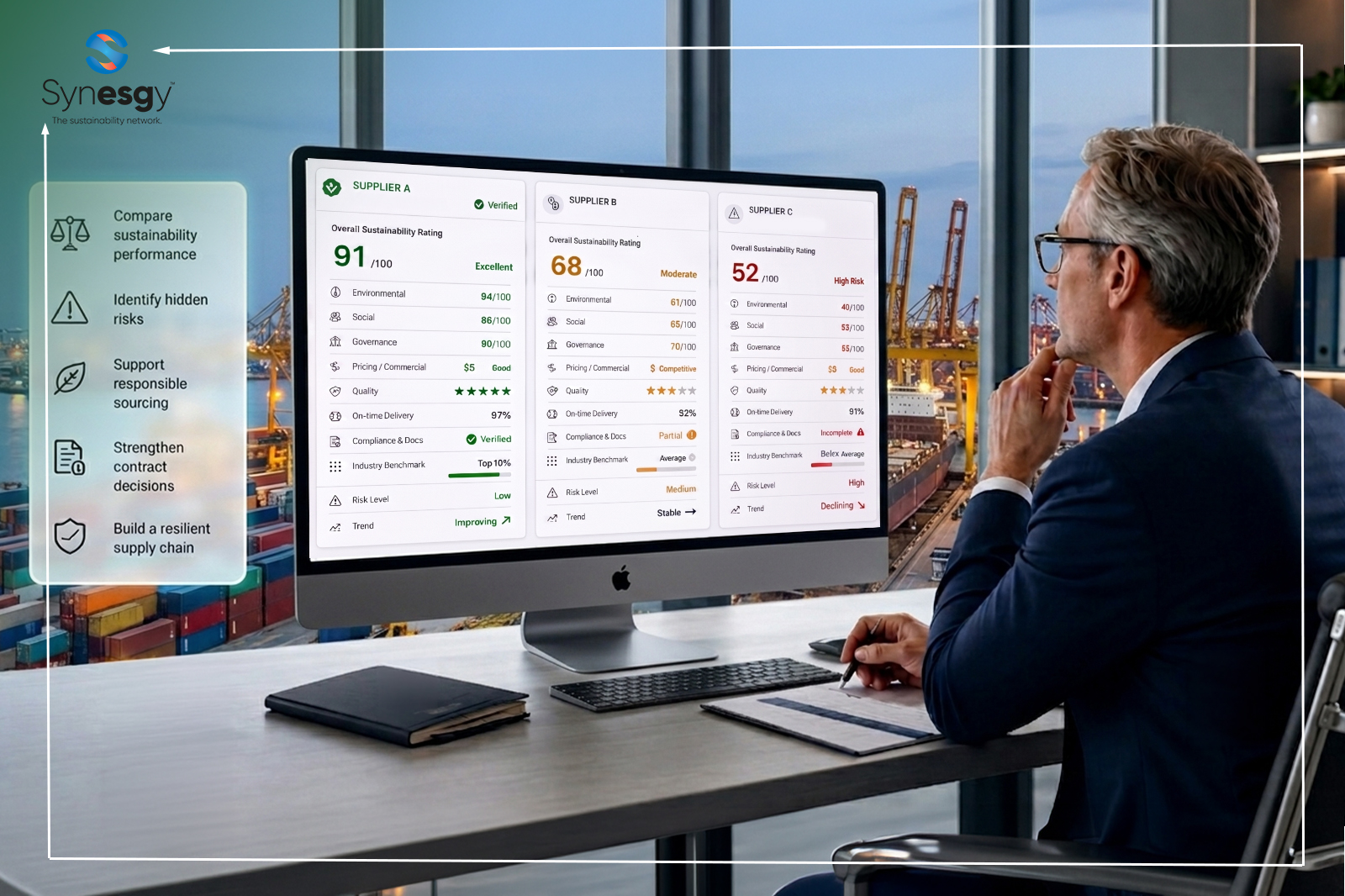
Organizations increasingly integrate ESG criteria into supplier evaluation to reduce risk and meet regulatory expectations. Companies must demonstrate compliance through credible, well-documented data to qualify as vendors.
Beyond basic eligibility, strong ESG performance can act as a competitive differentiator, helping businesses secure long-term contracts and partnerships, especially with multinational corporations and government entities.
Can companies be removed from vendor lists due to poor ESG performance?
Yes. Businesses with weak ESG performance or unverifiable claims can be removed from approved vendor lists, particularly in regulated industries or ESG-driven supply chains. Many organizations conduct periodic reviews of supplier performance, and failure to meet ESG standards can lead to disqualification, contract termination, or reduced business opportunities.
What is ESG due diligence in supplier onboarding?
ESG due diligence involves evaluating a supplier’s environmental, social, and governance practices before onboarding. This includes reviewing policies, compliance records, risk exposure, and sustainability performance.
The goal is to ensure alignment with corporate values, regulatory requirements, and long-term risk management strategies, minimizing exposure to reputational or operational risks.
Why are global supply chains demanding verified sustainability data?
Global supply chains are under increasing pressure from regulators, investors, and customers to meet sustainability targets. Verified ESG data ensures transparency and accountability across all tiers, helping organizations identify risks, maintain compliance, and build trust. It also enables better decision-making, as companies can confidently partner with suppliers who meet established ESG standards.
Why is Third-Party ESG Verification Critical for UAE Businesses?
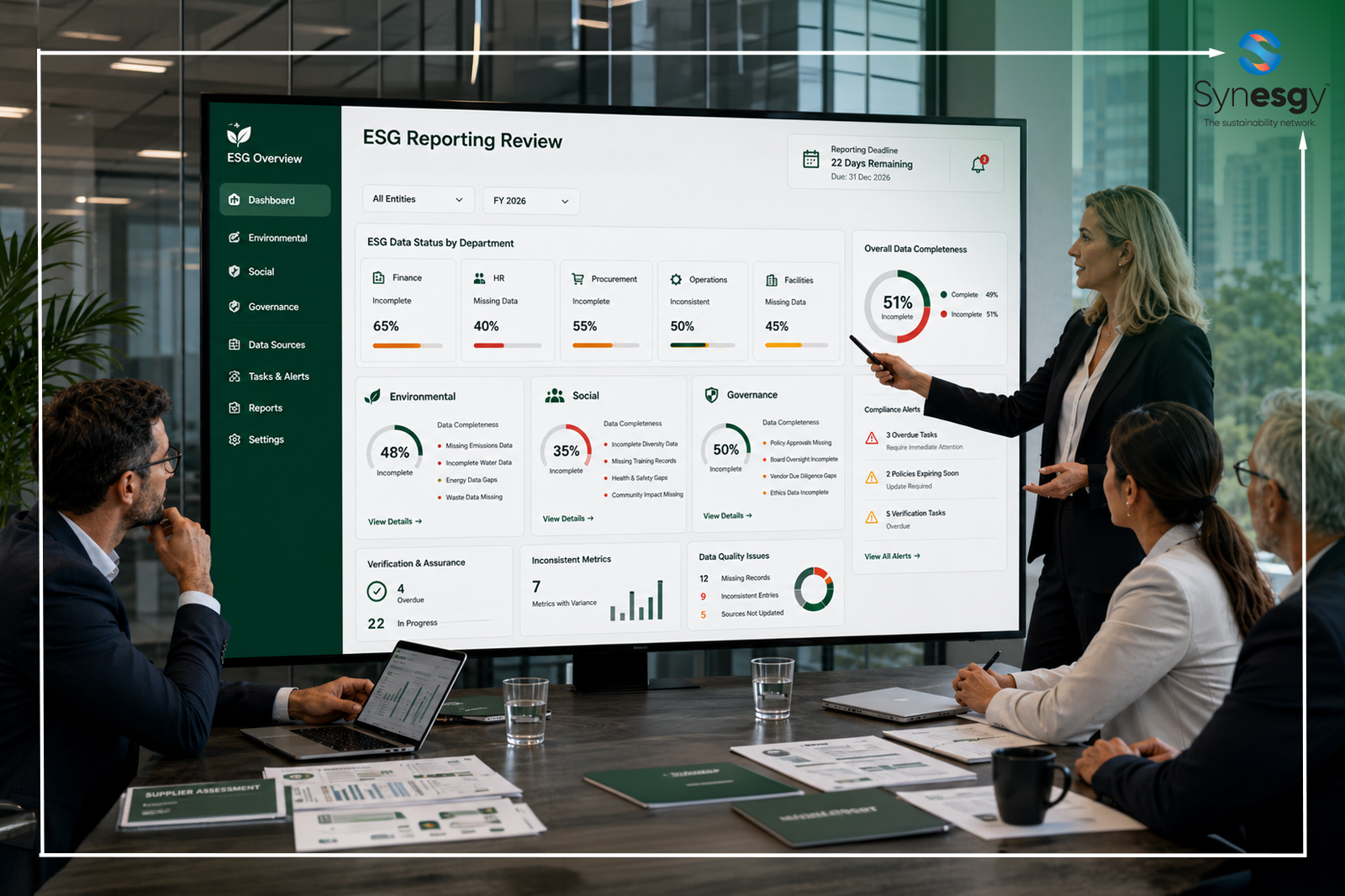
Third-party verification provides independent validation of ESG data, reducing the risk of inaccuracies and building stakeholder trust. In the UAE, where regulatory expectations and investor scrutiny are increasing, verified data acts as a safeguard against compliance risks.
It also ensures that sustainability disclosures are credible, consistent, and aligned with accepted standards, making them defensible during audits or regulatory reviews.
How can companies prove their sustainability claims are accurate?
Companies can prove their sustainability claims by adopting standardized reporting frameworks, maintaining consistent and traceable data records, and ensuring internal controls over ESG disclosures.
Most importantly, leveraging independent verification platforms adds an extra layer of credibility, as external validation confirms that the reported data reflects actual performance rather than assumptions or estimates.
How does ESG certification protect against greenwashing?
ESG certification evaluates and validates a company’s sustainability performance against defined criteria. It provides an objective benchmark that helps distinguish genuine efforts from exaggerated claims.
By undergoing certification, businesses demonstrate accountability and transparency, significantly reducing the risk of being accused of greenwashing while strengthening their credibility with stakeholders.
How does third-party validation reduce regulatory and reputational risk?
Third-party validation ensures data accuracy, enhances transparency, and provides audit-ready documentation that can be presented to regulators, investors, and partners. This minimizes the likelihood of discrepancies, disputes, or penalties. It also protects brand reputation by ensuring that all sustainability claims are backed by verifiable evidence, reducing the risk of public or regulatory backlash.
Solutions, such as Synesgy, add a trusted verification layer that strengthens credibility, supports compliance, and helps businesses confidently communicate their ESG performance.
What Steps Can Companies Take to Prevent Greenwashing?
Preventing greenwashing requires a structured and proactive approach to how sustainability data is collected, validated, and communicated. It is not enough to make broad ESG claims.
Businesses must ensure that every statement is backed by clear evidence, consistent reporting, and credible verification. A well-defined process helps reduce risk, improve transparency, and build long-term trust with stakeholders.
-
Use standardized ESG frameworks
-
Ensure data accuracy and consistency
-
Avoid vague or unsubstantiated claims
-
Implement internal audit mechanisms
-
Adopt third-party verification
How can businesses build audit-ready sustainability reporting systems?
By integrating ESG data collection into core operations, using automated tools, and maintaining clear documentation for all disclosures.
What does a compliant and credible ESG strategy look like in practice?
It combines accurate data, transparent reporting, regulatory alignment, and independent validation to ensure consistency and reliability.
How can companies future-proof against evolving ESG regulations?
Businesses should adopt scalable reporting systems, monitor regulatory changes, and continuously improve ESG performance through data-driven insights.
Key Takeaways
-
Greenwashing is now a regulatory and financial risk, not just reputational, with real consequences for misleading ESG claims.
-
ESG non-compliance can result in fines, contract losses, and operational or licensing challenges.
-
Investors and partners expect accurate, verified ESG data to reduce risk and build trust.
-
Procurement decisions increasingly depend on ESG credibility, directly impacting revenue opportunities.
-
Third-party verification strengthens transparency, ensures compliance, and provides audit-ready confidence.
-
The highest cost goes beyond penalties, including lost business opportunities, higher capital costs, and long-term trust erosion.
Conclusion
The cost of greenwashing goes far beyond fines. It affects trust, capital access, and business growth. In a market like the UAE, where sustainability is becoming central to economic strategy, unverified claims are a liability.
Verified sustainability reporting is no longer optional. It is a business necessity.
Organizations that invest in credible, transparent, and independently validated ESG reporting will not only avoid risk but also gain a competitive advantage in an increasingly compliance-driven world.
Build trust with verified ESG reporting. Contact Synesgy UAE to strengthen your sustainability credibility today.
For more insights:
Phone: +971 4 406 9900
E-mail: info.me@crif.com
FAQs
Q: What happens if a company is accused of greenwashing in the UAE?
A: Companies can face fines, legal scrutiny, reputational damage, and potential exclusion from contracts. In serious cases, misleading ESG disclosures may be treated as regulatory violations rather than marketing errors.
Q: What are the penalties for ESG non-compliance in the UAE?
A: Penalties typically range from AED 50,000 to AED 2 million for initial violations, with higher fines, operational restrictions, or procurement bans for repeated non-compliance.
Q: Can poor sustainability reporting affect business contracts?
A: Yes. Companies may lose contracts or fail supplier qualification processes if they cannot provide verified ESG data, especially in regulated or international supply chains.
Q: Why is verified sustainability reporting important?
A: Verified reporting ensures that ESG claims are accurate, defensible, and compliant with regulations, reducing the risk of greenwashing accusations and improving trust with investors and partners.
Q: How can businesses avoid greenwashing risks?
A: By using standardized frameworks, ensuring data accuracy, and adopting third-party verification, companies can move from unverified claims to credible, audit-ready sustainability reporting.
Q: What is the highest hidden cost of greenwashing?
A: Beyond fines, the highest cost is loss of trust, which leads to investor pullback, higher capital costs, and missed business opportunities.