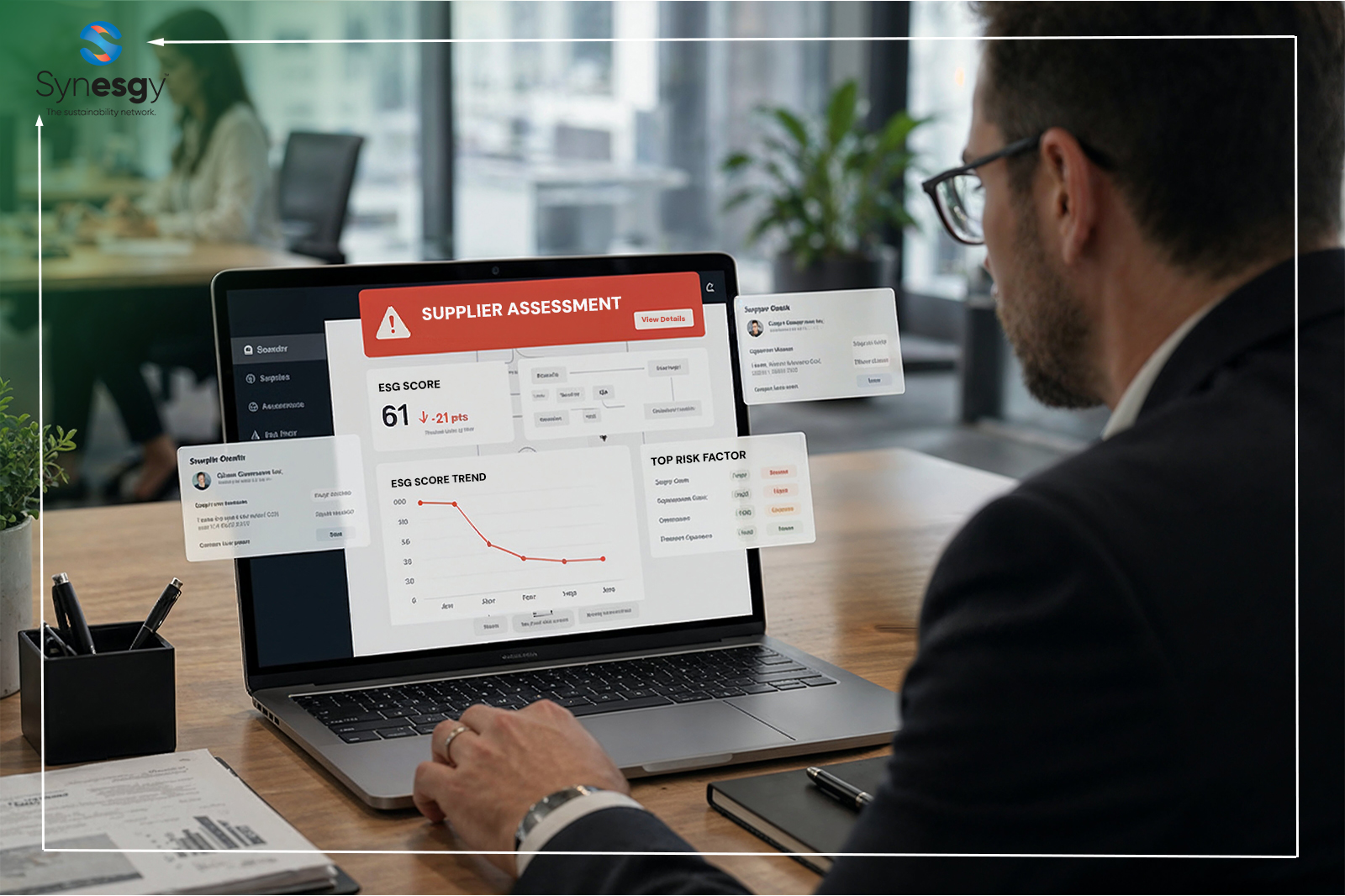
What happens when a trusted supplier fails an ESG assessment? For many businesses, the answer is immediate and often underestimated. It leads to unexpected risk exposure, compliance challenges, and a measurable drop in ESG performance. Since suppliers are deeply embedded in operational workflows, their failures do not remain isolated. They directly influence your ESG risk rating, affecting how regulators, investors, and stakeholders perceive your organization.
Beyond compliance, supplier-related ESG failures can disrupt operations, delay reporting, and weaken overall governance structures. In highly regulated and competitive markets, this can translate into lost business opportunities and reduced stakeholder confidence.
Ensuring supply chain sustainability is no longer optional. It is a strategic necessity for maintaining control, minimizing risk, and building a resilient ESG framework that can withstand disruptions across the value chain.
How Does Supplier Failure Affect ESG Risk Rating?
A supplier failing an ESG assessment directly impacts your ESG risk rating, particularly in areas related to governance, ethical sourcing, and environmental responsibility. Since ESG frameworks consider the entire value chain, any weakness at the supplier level becomes a reflection of your organization’s risk exposure.
What happens to ESG risk rating if a supplier fails an assessment?
When a key supplier fails an ESG assessment, your ESG risk rating may increase, signaling higher exposure to environmental, social, or governance risks. This can lead to reduced trust among investors, stricter compliance scrutiny, and potential business disruptions.
Can ESG scores drop due to third-party risks?
Yes, ESG scores can drop due to third-party risks. Issues such as labor violations, environmental non-compliance, or unethical governance practices by suppliers are often factored into ESG evaluations, resulting in a measurable decline in overall performance.
The ESG score impact of supplier failure is not isolated. It often cascades across reporting metrics, affecting sustainability disclosures, compliance audits, and brand perception.
How Are Suppliers Evaluated in ESG Scoring Models?
To manage ESG risk effectively, organizations rely on structured evaluation frameworks that assess supplier performance across environmental, social, and governance parameters.
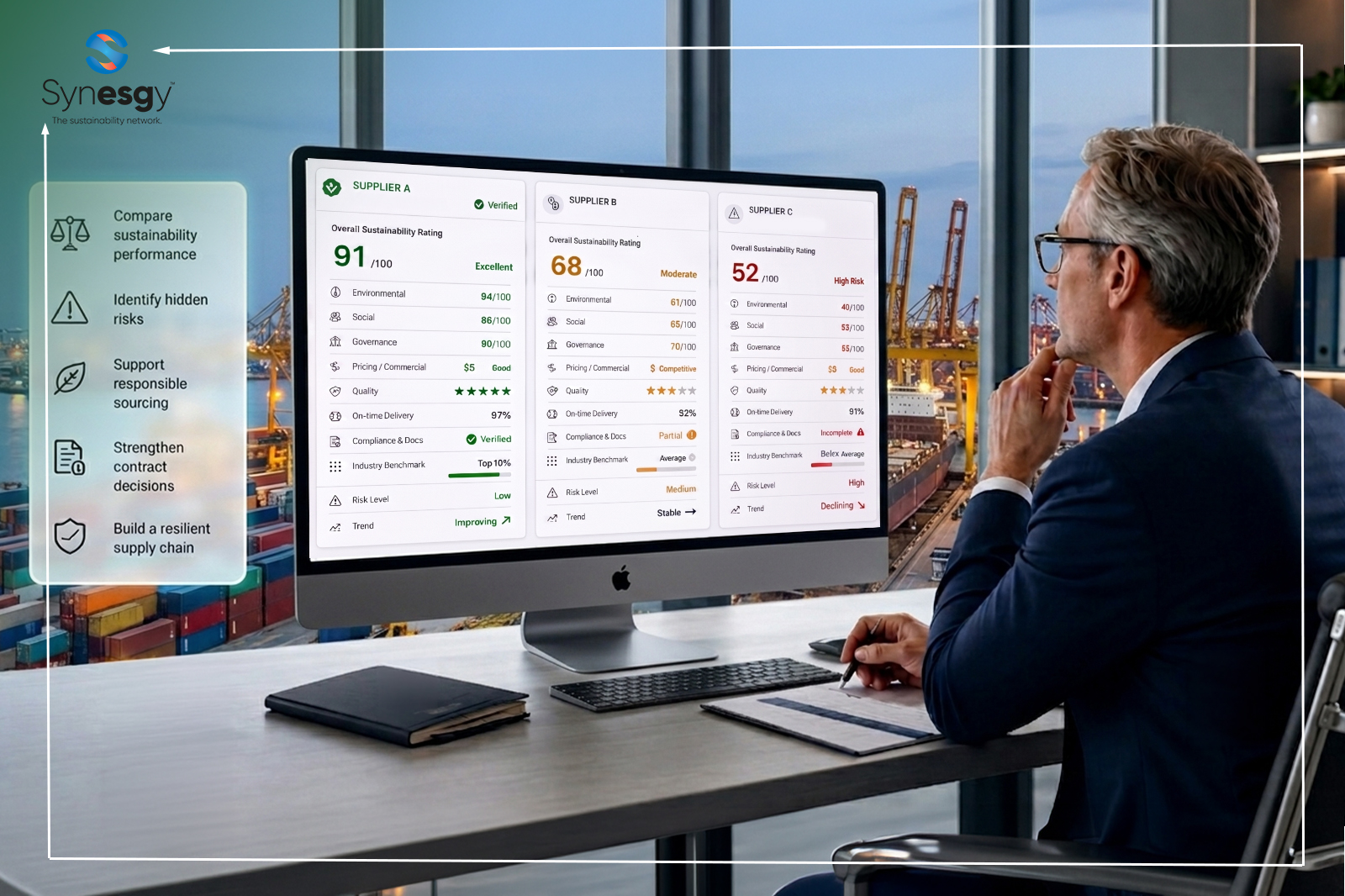
What is an ESG scorecard for suppliers?
An ESG scorecard for suppliers is a structured evaluation tool that measures supplier performance across key ESG criteria such as emissions, labor practices, compliance policies, and governance standards. It helps businesses quantify supplier-related risks and integrate them into overall ESG scoring.
How are suppliers factored into ESG risk ratings?
Suppliers are assessed based on multiple data points, including certifications, audit results, regulatory compliance, and self-reported ESG data. These insights are then integrated into the company’s ESG model, influencing the final ESG risk rating.
This systematic approach ensures that supplier performance is not treated as a secondary factor but as a core component of ESG evaluation.
What Is ESG Risk from Vendors in the Supply Chain?
ESG risk from vendors refers to the potential exposure a company faces due to the environmental, social, or governance shortcomings of its suppliers. These risks are often complex, dynamic, and difficult to detect without proper monitoring systems.
Why is supplier ESG assessment important?
Supplier ESG assessment is critical because it identifies vulnerabilities that could impact compliance, operations, and reputation. Without proper evaluation, businesses may unknowingly engage with high-risk vendors.
How does supplier ESG risk impact the overall ESG rating?
The supplier ESG risk impact can significantly influence overall ESG ratings. For example:
-
Environmental violations can affect sustainability metrics
-
Poor labor practices can impact social responsibility scores
-
Governance failures can raise compliance concerns
These risks contribute directly to ESG rating volatility and long-term business exposure.
Why Is Supply Chain Sustainability Critical for ESG Performance?
Supply chain sustainability is a foundational element of ESG strategy. It ensures that all stakeholders within the value chain adhere to responsible environmental and social practices.
What is supply chain sustainability in ESG?
Supply chain sustainability refers to the integration of ethical, environmental, and governance practices across all suppliers and partners. It ensures that operations align with global sustainability standards.
Why is supply chain sustainability important for ESG ratings?
Strong supply chain sustainability improves ESG ratings by:
-
Reducing risk exposure
-
Enhancing transparency
-
Supporting regulatory compliance
-
Strengthening brand reputation
How do sustainable suppliers improve ESG scores?
Sustainable suppliers contribute positively to ESG performance by maintaining compliance, reducing environmental impact, and following ethical practices. This strengthens the overall ESG profile and stabilizes the ESG risk rating over time.
How Do Digital ESG Assessment Tools Help Monitor Supplier Risk?
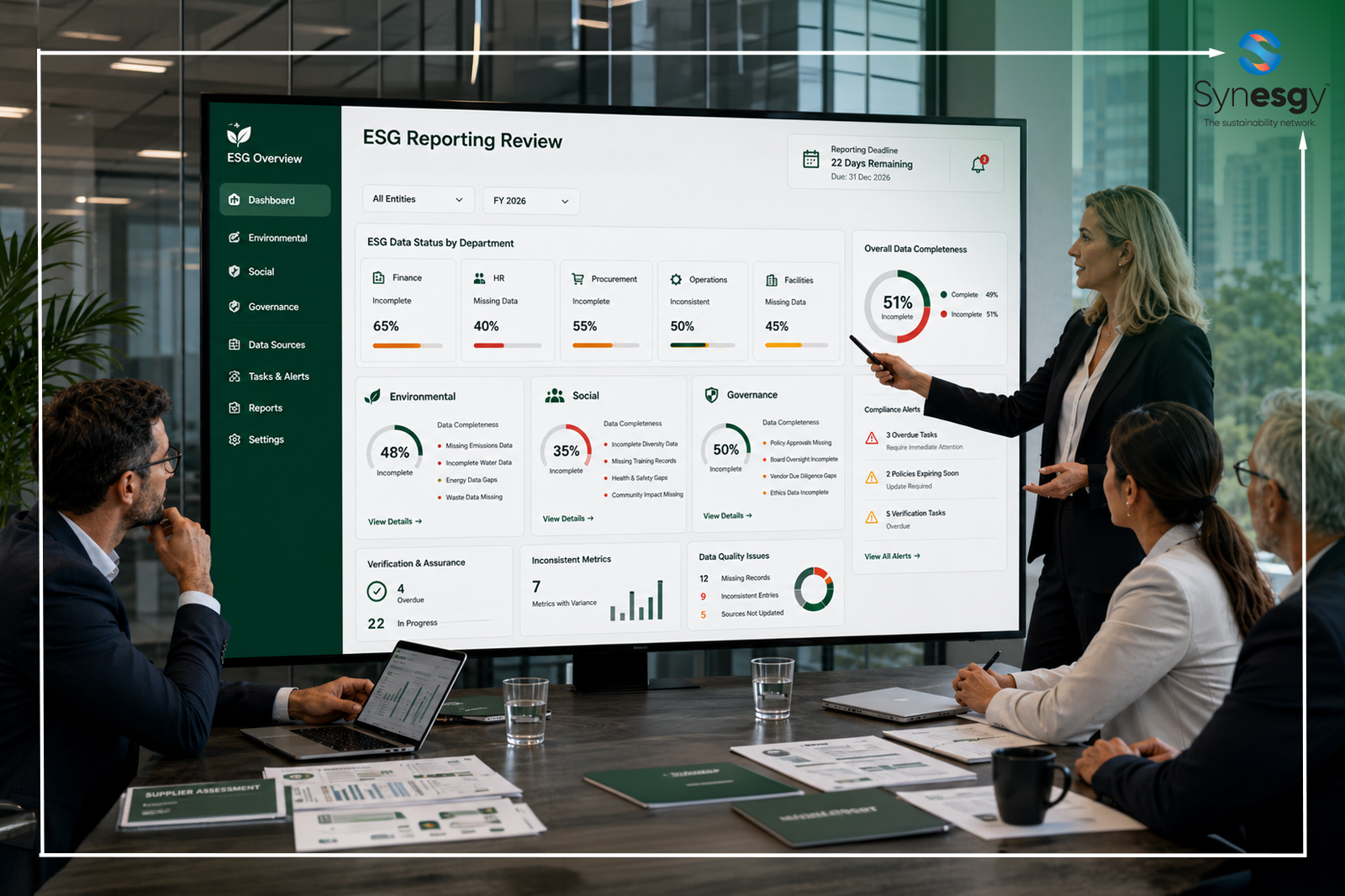
Manual ESG tracking is no longer sufficient in complex supply chains. Businesses are increasingly adopting digital ESG assessment tools to gain real-time visibility into supplier performance.
What are digital ESG assessment tools?
Digital ESG assessment tools are platforms that automate the evaluation of suppliers based on ESG criteria. They collect, analyze, and score ESG data, enabling businesses to monitor risks continuously.
How do ESG assessment platforms work for suppliers?
These platforms:
-
Collect supplier data through questionnaires and integrations
-
Generate ESG scorecards
-
Benchmark supplier performance
-
Provide risk alerts and insights
What tools help monitor supply chain sustainability?
Modern ESG platforms offer features such as:
-
Real-time risk monitoring
-
Automated scoring models
-
Compliance tracking
-
Supplier benchmarking
These capabilities help organizations proactively manage ESG risk from vendors and maintain consistent ESG performance.
How Can Companies Manage and Mitigate Supplier ESG Risk?
Managing supplier-related ESG risks requires a proactive and structured approach. Businesses must move beyond reactive compliance and adopt continuous monitoring strategies.
How can you protect the ESG score from supplier failure?
Organizations can protect their ESG score by:
-
Conducting regular supplier assessments
-
Diversifying supplier networks
-
Implementing strict onboarding criteria
-
Monitoring supplier performance continuously
How to mitigate ESG risks in the supply chain?
Effective mitigation strategies include:
-
Establishing ESG policies for suppliers
-
Using digital assessment tools
-
Conducting audits and verifications
-
Creating remediation plans for non-compliant suppliers
What is the best way to monitor supplier ESG risk?
The most effective approach is to combine digital ESG assessment tools with continuous monitoring and data-driven insights. This ensures early detection of risks and timely corrective actions.
How Do UAE Companies Ensure ESG Compliance Across Supply Chains?
In the UAE, ESG adoption is accelerating due to regulatory focus, investor expectations, and sustainability initiatives. Companies are increasingly required to demonstrate transparency and accountability across their supply chains.
How do UAE companies manage ESG risk from suppliers?
UAE businesses manage ESG risk by:
-
Implementing standardized supplier assessments
-
Aligning with global ESG frameworks
-
Leveraging digital platforms for monitoring
What are ESG compliance requirements for supply chains in the UAE?
While ESG regulations continue to evolve, companies are expected to:
-
Disclose sustainability practices
-
Ensure supplier compliance
-
Maintain transparency in reporting
What regulations affect ESG reporting in UAE supply chains?
Regulatory frameworks and sustainability initiatives in the UAE emphasize responsible sourcing, environmental impact reduction, and governance transparency, all of which influence ESG risk ratings.
How Synesgy Helps Businesses Monitor Supplier ESG Risk
Managing ESG risks at scale requires more than manual processes. Businesses need intelligent, automated solutions that provide visibility, accuracy, and control.
Synesgy offers a comprehensive platform designed to simplify ESG assessment and supplier risk management.
With Synesgy, organizations can:
-
Create detailed ESG scorecards for suppliers
-
Automate ESG data collection and validation
-
Monitor supplier performance in real time
-
Identify high-risk vendors early
-
Strengthen overall ESG risk rating
By leveraging advanced digital ESG assessment tools, Synesgy enables businesses to build transparent, compliant, and sustainable supply chains.
Key Takeaways
-
Your ESG risk rating is directly influenced by supplier performance, not just internal operations
-
A single supplier failure can trigger a measurable ESG score impact across your entire value chain
-
ESG risk from vendors is one of the most critical and hardest-to-control risk factors
-
Strong supply chain sustainability helps stabilize ESG performance and reduce long-term risk exposure
-
Using an ESG scorecard for suppliers enables a structured, data-driven evaluation
-
Digital ESG assessment tools are essential for real-time monitoring and proactive risk management
-
Continuous supplier assessment is key to maintaining compliance and protecting your ESG profile
Conclusion
Your ESG risk rating is only as strong as your weakest supplier. In a world where supply chain sustainability directly influences business performance, a single supplier failure can have far-reaching consequences.
Organizations that rely on manual processes or periodic checks are more vulnerable to sudden ESG score fluctuations. The key lies in shifting from reactive compliance to proactive, data-driven risk management.
By adopting structured evaluation frameworks and leveraging digital ESG assessment tools, businesses can gain full visibility into supplier performance, reduce risk exposure, and maintain a stable ESG profile.
Take Control of Your ESG Risk with Synesgy
With Synesgy, you can assess suppliers, monitor ESG risks in real time, and protect your ESG risk rating from unexpected disruptions.
FAQs
Q: What causes a sudden drop in ESG score?
A: A sudden drop in ESG score is often caused by compliance failures, negative supplier performance, regulatory issues, or governance lapses that increase overall risk exposure.
Q: What happens if a key vendor fails ESG compliance?
A: If a key vendor fails ESG compliance, it can increase your risk rating, impact reporting accuracy, and potentially lead to reputational and operational challenges.
Q: How do you identify high-risk ESG suppliers?
A: High-risk ESG suppliers can be identified through structured assessments, ESG scorecards, audit reports, and continuous monitoring using digital tools.
Q: What are the risks of poor supplier sustainability practices?
A: Poor practices can lead to environmental damage, legal penalties, reputational harm, and a decline in ESG performance.
Q: How can companies track supplier ESG performance?
A: Companies can track performance using ESG platforms that provide real-time data, scoring, and benchmarking insights.
Q: How does an ESG rating platform improve compliance?
A: It centralizes data, automates assessments, and provides actionable insights, making it easier to meet regulatory and reporting requirements.
Q: What are examples of sustainable supply chain practices?
A: Examples include ethical sourcing, reducing carbon emissions, ensuring fair labor practices, and maintaining transparent governance policies.
Q: What are the ESG risks in global supply chains?
A: Global supply chains face risks such as regulatory differences, environmental violations, labor issues, and governance challenges.
Q: What should companies do if a supplier fails an ESG assessment?
A: They should initiate corrective actions, reassess the supplier, or consider replacing them to minimize risk exposure.
Q: How to improve the ESG score after supplier non-compliance?
A: Improve monitoring, strengthen supplier policies, and adopt digital ESG tools to ensure better compliance and risk management.
Q: How often should supplier ESG assessments be done?
A: Assessments should be conducted regularly, with continuous monitoring to detect and address risks proactively.