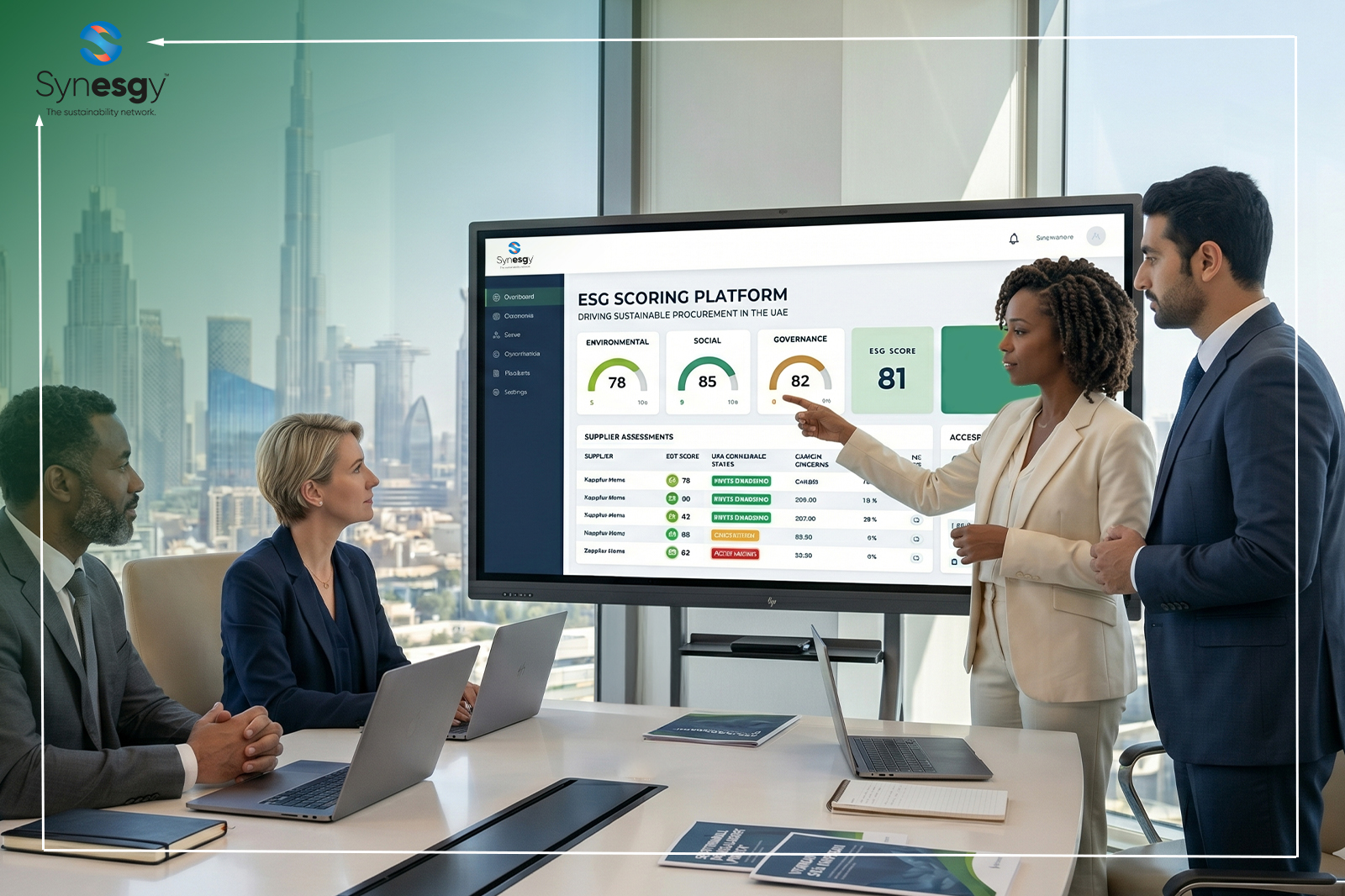
As regulatory expectations and stakeholder scrutiny continue to rise, Sustainable Procurement is no longer optional for UAE businesses. Organizations are now expected to go beyond cost-based sourcing and actively evaluate the environmental, social, and governance performance of their suppliers.
This shift has made ESG integration a core component of procurement strategy. However, managing ESG data across large supplier networks can be complex without the right tools. This is where an advanced ESG scoring platform becomes essential.
By enabling structured vendor ESG risk assessment, real-time monitoring, and compliance alignment, platforms like Synesgy help organizations transform procurement into a strategic driver of sustainability and risk management. In the UAE, where ESG adoption is accelerating, leveraging ESG assessment tools is critical to maintaining compliance and competitive advantage.
How ESG Scoring Integrates Directly Into Procurement Decision-Making
How can ESG scores be embedded into procurement workflows?
Embedding ESG into procurement workflows ensures that sustainability is considered at every stage of vendor selection. Instead of treating ESG as a separate function, companies can integrate ESG checkpoints directly into procurement systems.
An ESG scoring platform allows procurement teams to:
-
Evaluate suppliers before approval
-
Set minimum ESG thresholds
-
Automate decision-making workflows
This ensures that every sourcing decision aligns with sustainable procurement objectives.
How do procurement teams use ESG data in vendor selection?
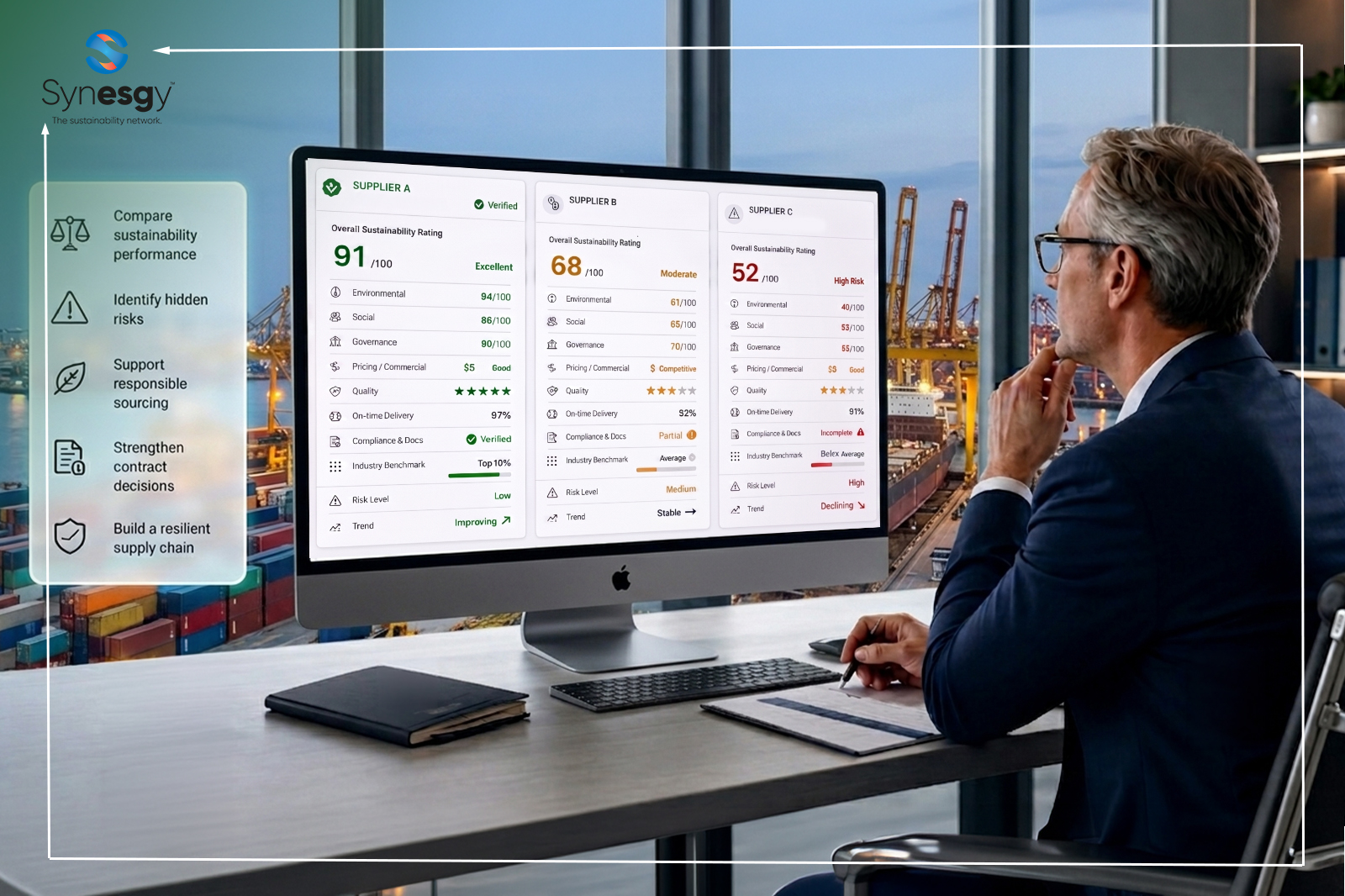
Procurement teams increasingly rely on ESG data alongside traditional metrics like cost, quality, and delivery timelines. By incorporating vendor ESG risk assessment, businesses can identify suppliers that pose regulatory, reputational, or operational risks.
In the UAE, where compliance expectations are growing, ESG risk rating UAE frameworks help organizations prioritize vendors that align with sustainability goals.
Can ESG scoring be used during supplier onboarding?
Yes, ESG scoring plays a crucial role during onboarding. Using ESG assessment tools, companies can evaluate suppliers before they enter the ecosystem.
This early-stage screening helps:
-
Filter out high-risk vendors
-
Categorize suppliers based on ESG performance
-
Establish baseline ESG expectations
As a result, businesses build a more resilient and compliant supplier network from the outset.
How ESG Scoring Platforms Enable Real-Time Supplier Risk Monitoring
How can businesses monitor supplier ESG risk continuously?
Traditional supplier evaluations are periodic, leaving gaps in visibility. An ESG scoring platform enables continuous monitoring by tracking supplier performance over time.
This allows businesses to:
-
Detect emerging risks early
-
Respond proactively to ESG issues
-
Maintain up-to-date vendor ESG risk assessment
What tools provide real-time ESG risk visibility across suppliers?
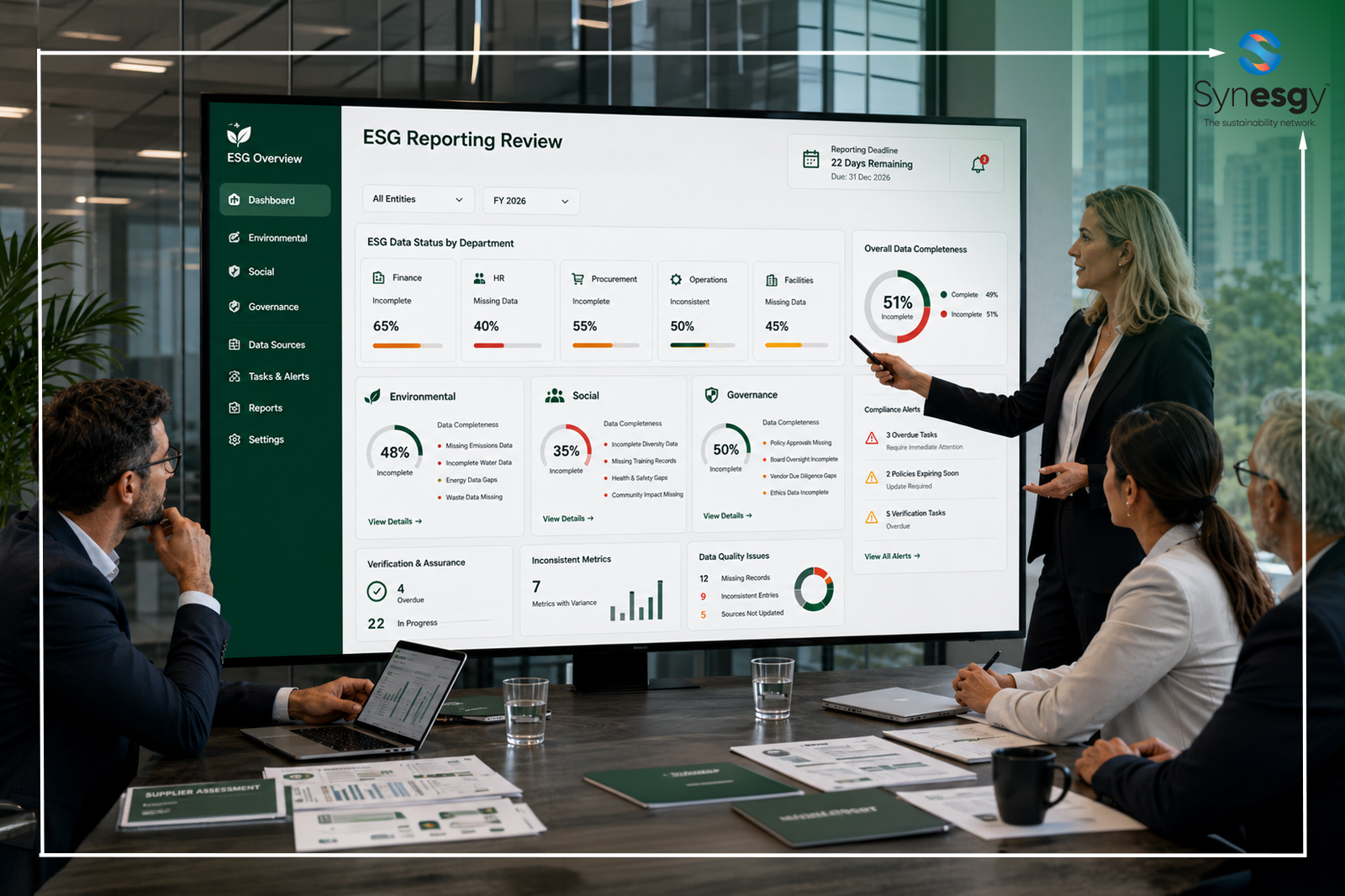
Modern ESG assessment tools offer dashboards, alerts, and analytics that provide real-time visibility into supplier risk.
These tools help procurement teams:
-
Monitor ESG performance across all vendors
-
Identify high-risk suppliers instantly
-
Maintain compliance with evolving regulations
Such capabilities are essential for organizations operating in dynamic regulatory environments like the UAE.
How do companies track ESG performance across multiple supplier tiers?
Multi-tier supply chains introduce complexity and hidden risks. Companies must go beyond direct suppliers to assess the entire ecosystem.
An ESG scoring platform enables:
-
Tier-wise supplier mapping
-
Risk propagation analysis
-
End-to-end visibility
This ensures that sustainable procurement practices extend across the entire value chain.
How ESG Platforms Help Standardize Supplier Evaluation Across Global Supply Chains
How to standardize ESG assessments across global suppliers?
Standardization is key to comparing suppliers objectively. ESG platforms provide unified scoring frameworks that allow businesses to evaluate vendors consistently.
Using ESG assessment tools, companies can:
-
Apply the same criteria across regions
-
Ensure fairness in evaluation
-
Improve decision accuracy
How do companies ensure consistent ESG data from all vendors?
Consistency depends on structured data collection. ESG platforms use standardized questionnaires and validation mechanisms to ensure reliable inputs. This approach minimizes discrepancies and enhances the effectiveness of vendor ESG risk assessment.
What challenges exist in comparing supplier ESG performance?
Without standardization, comparing suppliers becomes difficult due to:
-
Different reporting formats
-
Incomplete data
-
Varying compliance levels
An ESG scoring platform addresses these challenges by normalizing data and providing comparable metrics.
How ESG Scoring Supports Audit-Ready Procurement Compliance
How can ESG platforms help prepare for sustainability audits?
Sustainability audits require accurate and well-documented ESG data. ESG platforms centralize information and create audit trails for every supplier. This ensures that businesses are always prepared for compliance checks related to sustainable procurement.
What data is required for ESG procurement compliance?
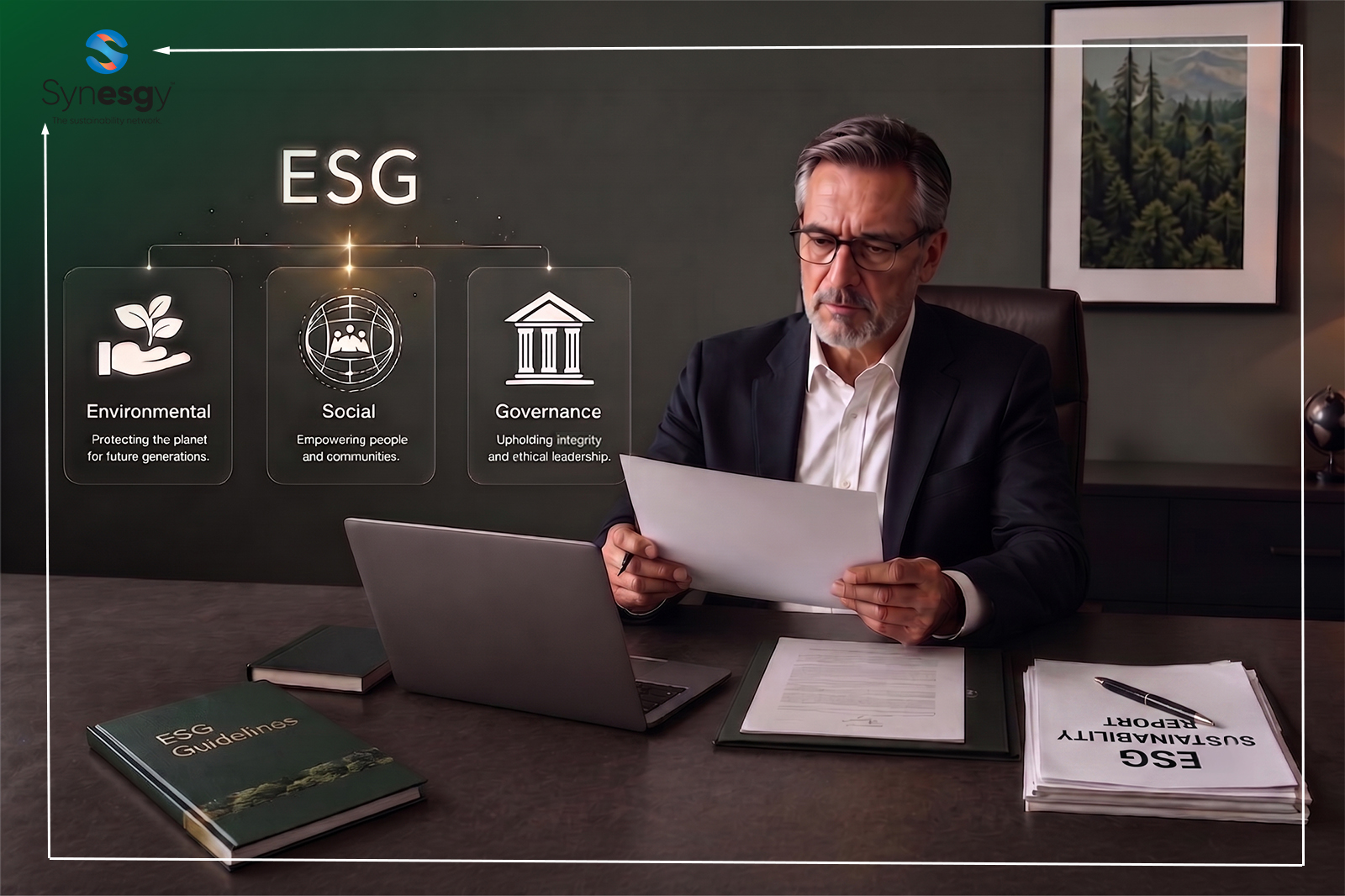
Organizations must collect data across:
-
Environmental impact
-
Social responsibility
-
Governance practices
In the UAE, aligning with ESG risk rating UAE standards ensures that companies meet both local and global expectations.
How do businesses ensure ESG documentation is audit-ready?
Audit readiness requires:
-
Centralized data storage
-
Consistent documentation
-
Real-time updates
Using advanced ESG assessment tools, businesses can maintain accurate records and simplify compliance processes.
How Synesgy Simplifies ESG Data Collection and Supplier Engagement
How do ESG platforms collect supplier sustainability data?
Synesgy uses digital workflows and questionnaires to gather ESG data directly from suppliers. This structured approach ensures accuracy and completeness.
Through its ESG scoring platform, businesses can streamline data collection without manual intervention.
How can businesses improve supplier participation in ESG assessments?
Supplier engagement is critical for successful ESG implementation. Companies can improve participation by:
-
Simplifying data submission processes
-
Communicating the importance of ESG
-
Providing clear guidelines
This strengthens sustainable procurement initiatives.
What is the role of ESG questionnaires in supplier evaluation?
Questionnaires are a core component of ESG assessment tools. They enable businesses to collect standardized data and assess suppliers objectively.
They also support effective vendor ESG risk assessment by identifying gaps and risks early.
How ESG Scoring Improves Procurement Transparency and Reporting
How can companies improve ESG transparency in procurement?
Transparency is achieved through centralized data and clear visibility into supplier performance.
An ESG scoring platform enables organizations to:
-
Track ESG metrics across vendors
-
Share insights with stakeholders
-
Build trust and accountability
What role does ESG data play in sustainability reporting?
ESG data forms the foundation of sustainability reporting. It allows businesses to demonstrate compliance and progress toward ESG goals.
In the UAE, accurate reporting aligned with ESG risk rating UAE standards enhances credibility.
How do ESG platforms support reporting frameworks like GRI or IFRS?
ESG platforms align data collection with global frameworks such as GRI and IFRS. This ensures that reporting is consistent, reliable, and compliant. Advanced ESG assessment tools simplify the reporting process and reduce manual effort.
How UAE Businesses Can Align Procurement With ESG and Net Zero Goals
How can procurement strategies align with UAE’s sustainability goals?
Procurement plays a key role in achieving national sustainability targets. By prioritizing ESG-compliant suppliers, businesses can align with UAE initiatives. Integrating sustainable procurement practices ensures long-term impact.
How does ESG help companies meet the UAE Net Zero 2050 targets?
Supplier emissions and practices significantly impact a company’s carbon footprint. ESG scoring helps track and reduce these impacts.
Using an ESG scoring platform, businesses can:
-
Identify high-emission suppliers
-
Drive sustainability improvements
-
Contribute to Net Zero goals
What role does procurement play in corporate ESG strategy in the UAE?
Procurement acts as a bridge between strategy and execution. By embedding ESG into sourcing decisions, companies can operationalize their ESG commitments.
This makes vendor ESG risk assessment a critical component of corporate strategy.
Why Traditional Supplier Evaluation Methods Fail Without ESG Integration
Why is cost-based supplier selection no longer enough?
Focusing only on cost ignores hidden risks such as environmental violations or governance issues. These risks can lead to long-term losses. Sustainable procurement requires a broader evaluation framework.
What risks arise from ignoring ESG in procurement decisions?
Ignoring ESG can result in:
-
Regulatory penalties
-
Reputational damage
-
Supply chain disruptions
Using ESG risk rating UAE frameworks helps mitigate these risks effectively.
How do ESG gaps impact long-term supplier reliability?
Suppliers with poor ESG performance are more likely to face operational disruptions. This affects reliability and business continuity.
An ESG scoring platform ensures that such risks are identified and managed proactively.
Key Takeaways
-
Sustainable procurement is now a core requirement for UAE businesses
-
An ESG scoring platform enables consistent, data-driven supplier selection
-
Vendor ESG risk assessment helps identify and mitigate compliance and operational risks early
-
Real-time ESG monitoring ensures continuous visibility into supplier performance
-
Standardized ESG scoring improves comparison across global suppliers
-
Early ESG screening strengthens supplier onboarding and reduces future risks
-
ESG platforms simplify audit readiness and regulatory compliance processes
-
Multi-tier supplier visibility reduces hidden risks across complex supply chains
Conclusion
As ESG expectations continue to evolve, procurement is no longer just about cost efficiency. It has become a critical lever for driving sustainability, compliance, and long-term business resilience. UAE organizations that embed sustainable procurement into their operations are better positioned to manage risks, meet regulatory requirements, and build stronger, more transparent supplier ecosystems.
An advanced ESG scoring platform plays a central role in this transformation. From enabling real-time vendor ESG risk assessment to standardizing supplier evaluations and supporting audit-ready compliance, the right tools empower businesses to make smarter, data-driven decisions. In a fast-moving regulatory landscape like the UAE, leveraging reliable ESG assessment tools is essential to stay ahead.
Leverage Synesgy’s ESG scoring platform to simplify supplier assessments, enhance transparency, and ensure compliance with UAE sustainability standards. Start building a more resilient, ESG-aligned supply chain today with Synesgy.
FAQs
Q: How to integrate ESG scoring into supplier onboarding processes?
A: Integrate ESG scoring at the onboarding stage using an ESG scoring platform to evaluate suppliers before approval. This ensures only compliant vendors enter the supply chain and supports effective vendor ESG risk assessment.
Q: What is the role of ESG platforms in procurement compliance audits?
A: ESG platforms centralize data and create audit trails, making it easier to demonstrate compliance. ESG assessment tools help ensure alignment with sustainable procurement standards and regulatory requirements.
Q: How can companies ensure suppliers provide accurate ESG data?
A: Companies can use structured questionnaires and validation mechanisms within ESG assessment tools to ensure consistency, accuracy, and completeness of supplier data.
Q: How does ESG scoring improve multi-tier supplier visibility?
A: An ESG scoring platform enables businesses to track ESG performance across all supplier tiers, providing end-to-end visibility and reducing hidden risks in the supply chain.
Q: Can ESG platforms automate supplier sustainability tracking?
A: Yes, modern ESG assessment tools automate data collection, monitoring, and reporting, enabling continuous tracking of supplier sustainability performance.
Q: What challenges do companies face when implementing ESG in procurement?
A: Challenges include data inconsistency, supplier resistance, and lack of standardization. Adopting sustainable procurement practices and using the right tools helps overcome these barriers.
Q: How do ESG tools help compare suppliers objectively?
A: By standardizing data and scoring methodologies, vendor ESG risk assessment tools allow businesses to compare suppliers on consistent metrics.
Q: How can businesses scale ESG assessments across global suppliers?
A: Businesses can scale ESG assessments using centralized ESG scoring platforms and automated ESG assessment tools, ensuring consistency across global operations.