A well-structured sustainability report may explain a company’s environmental initiatives, workforce practices and governance policies, but those disclosures have limited value if the underlying data is incomplete, inconsistent or difficult to verify. Before companies can communicate their ESG performance effectively, they first need a structured way to collect, organise and assess relevant Environmental, Social and Governance information.
This is where ESG assessment and reliable data collection become important.
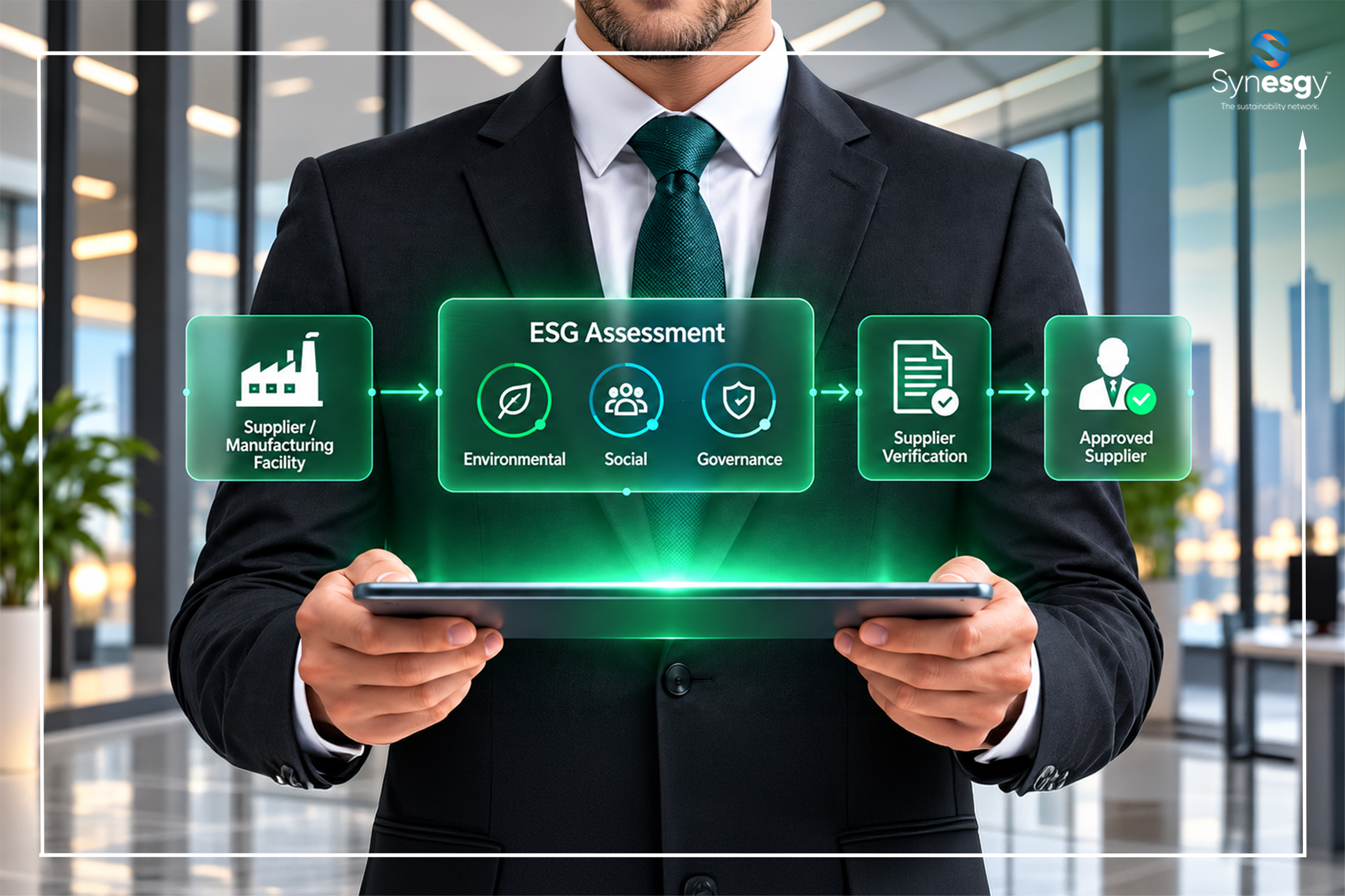
Synesgy supports companies in measuring and understanding sustainability performance through a structured ESG questionnaire and assessment process. The information collected can cover areas ranging from energy consumption and greenhouse gas emissions to workforce practices, compliance, stakeholder relationships and corporate policies. The assessment process also includes checks on the adequacy and consistency of the information provided, helping companies develop a more structured ESG information base before using those insights for reporting and improvement.
What Are ESG Reporting Services?
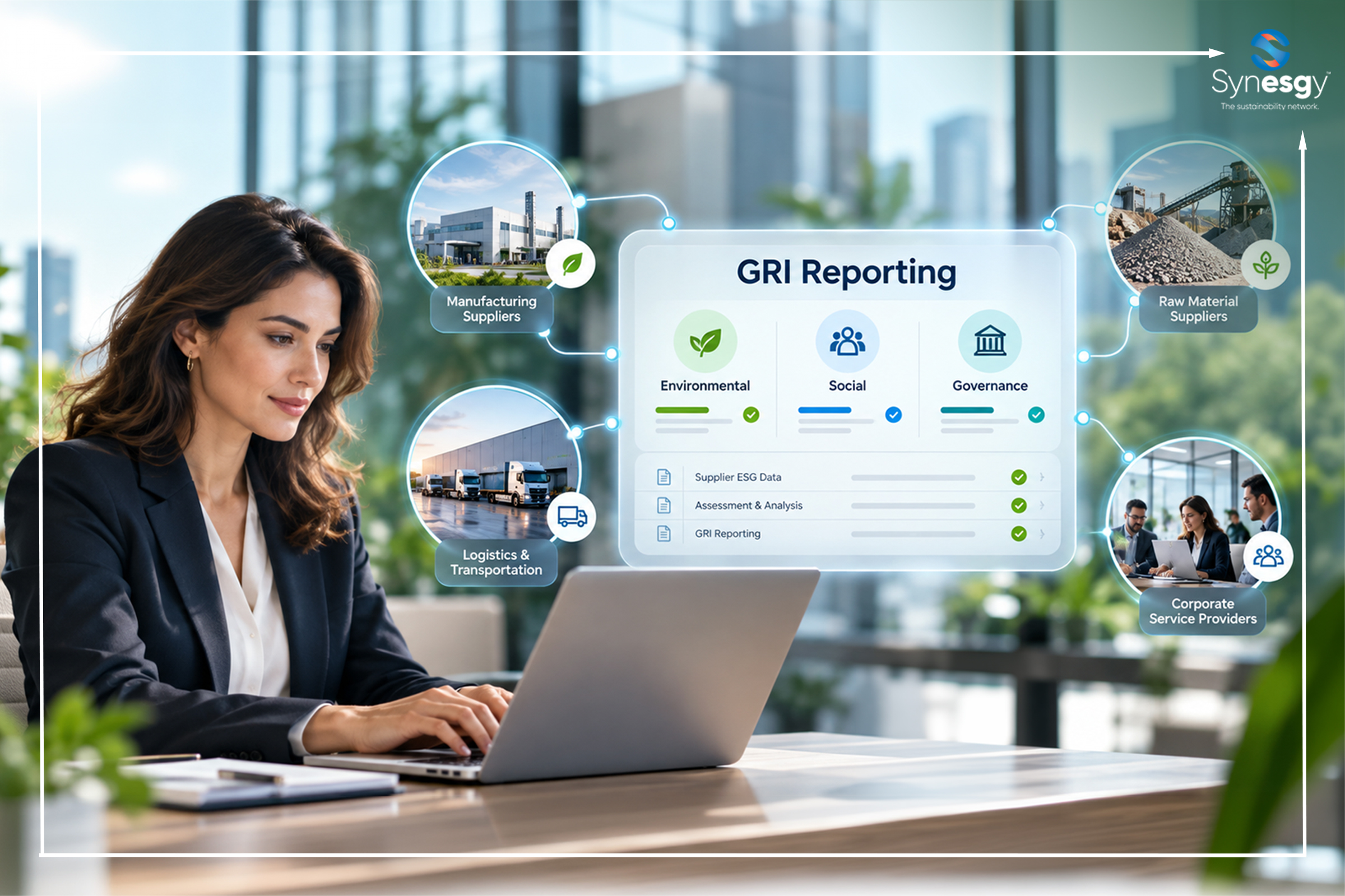
ESG reporting services generally support businesses in organising and communicating information relating to their Environmental, Social and Governance performance.
However, reporting should not begin with writing the final report. It should begin with understanding what information is available, whether it is complete and how well it represents the company’s sustainability performance.
An effective ESG information process may therefore involve:
-
identifying relevant ESG indicators
-
collecting quantitative and qualitative information
-
reviewing policies and supporting documentation
-
assessing Environmental, Social and Governance factors
-
identifying gaps or inconsistencies in available data
-
organising ESG information into a structured format
-
using the resulting insights to support reporting and improvement initiatives
Within Synesgy, ESG information is collected through a structured questionnaire covering sustainability strategy, ESG risk management, stakeholder relations, employees, energy use, greenhouse gas emissions, water, waste, pollution, biodiversity, internal policies, certifications and compliance.
This creates a structured foundation from which a company can better understand its ESG profile.
Why Does Reliable ESG Data Matter for Reporting?
ESG reporting brings together information from different parts of an organisation.
Environmental information may come from facilities or operations teams. Workforce information may come from HR. Compliance information may sit with legal or risk teams, while governance information may be maintained at management or board level.
When these data sources are fragmented, several problems can arise.
A company may have environmental information but little structured information about workforce policies. Different departments may calculate indicators differently. Some ESG claims may lack supporting documentation, while other information may not have been updated consistently.
Reliable ESG data helps reduce these gaps.
Good ESG information should be sufficiently complete, consistent and supported to provide a credible picture of how the company manages its sustainability impacts.
Synesgy’s assessment process specifically checks the adequacy and consistency of information supplied through the questionnaire. Where inconsistencies arise, supporting documentation may be requested to validate responses.
This is important because stronger reporting starts before information reaches the final document.
How Can ESG Questionnaires Improve Data Collection?
One of the challenges of ESG reporting is determining what information needs to be collected in the first place.
A structured ESG questionnaire can help create consistency.
Rather than asking individual departments to decide independently which sustainability information should be supplied, the questionnaire provides a common framework for collecting relevant data.
Synesgy’s questionnaire investigates areas including corporate sustainability strategy, ESG risk management, impact analysis, sustainability reporting, codes of conduct, data security, certifications, compliance, stakeholder relations, workforce information, energy, greenhouse gas emissions, waste, water, pollutants and biodiversity.
This approach can help organisations identify not only the information they already have, but also where important gaps may exist.
For example, a company may track energy consumption accurately but discover that supplier sustainability information is limited. Another company may have detailed workforce policies but lack structured biodiversity or water information.
The assessment process can therefore provide a clearer picture of ESG data readiness.
How Can Companies Improve ESG Data Quality and Consistency?
Collecting information is only the first step.
Companies also need to consider whether ESG information is:
Complete: Are important Environmental, Social and Governance topics represented?
Consistent: Are indicators measured and reported using a consistent approach?
Current: Does the information reflect the relevant reporting period?
Supported: Are policies, certifications or other evidence available where appropriate?
Relevant: Does the information reflect the sustainability matters that are meaningful for the company and its industry?
Synesgy addresses part of this challenge through information and documentation checks during the assessment process.
More advanced CRIF Synesgy Ratings methodologies also combine company information, questionnaire responses, documentary evidence, public ESG information and sector benchmarks when assessing sustainability performance.
This illustrates an important principle for ESG reporting: reliable sustainability information often requires more than a single source of data.
Why Should ESG Reporting Include Both Quantitative and Qualitative Information?
ESG reporting is not simply a collection of numbers.
Quantitative indicators may show how much energy a company consumes, how much waste it generates or how workplace incidents have changed.
Qualitative information explains how those issues are managed.
For example, environmental performance can be better understood alongside environmental policies, targets and management systems. Workforce indicators can be considered together with health and safety policies, training programmes and human rights practices.
Governance performance similarly requires information about internal controls, codes of conduct and compliance arrangements.
The CRIF Synesgy Ratings approach uses both quantitative and qualitative information, documentary evidence, sector benchmarks and analyst judgement in its more advanced assessments.
Combining different types of evidence can provide a more complete sustainability profile than relying on isolated ESG metrics.
How Does ESG Assessment Support Better Sustainability Reporting?
ESG assessment and ESG reporting serve different but connected purposes.
ESG assessment helps a company understand its current sustainability performance.
ESG reporting communicates relevant sustainability information to stakeholders.
An assessment can therefore strengthen the information that comes before reporting.
Through Synesgy, companies complete an ESG questionnaire, receive an overall ESG score, and can access outputs including a report, Action Plan and certificate. The process also includes Environmental, Social and Governance-specific assessment results and identifies priority improvement areas.
This means the assessment can help companies move from simply gathering ESG information to understanding what that information indicates about their sustainability performance.
From ESG Data to Actionable Insights
One of the limitations of ESG reporting is that it can become a documentation exercise rather than an improvement process.
A company may disclose information every year without clearly identifying which ESG areas need the greatest attention.
Assessment can help bridge that gap.
Synesgy’s outputs include an Action Plan that identifies improvement areas across Environmental, Social and Governance dimensions. The priority of those areas also considers industry-specific impacts.
This makes ESG reporting more useful by connecting reliable data with performance assessment and practical improvement priorities. Rather than treating reporting as a standalone disclosure exercise, companies can use the underlying ESG information to identify gaps, strengthen weaker areas and communicate progress more clearly over time.
Reporting therefore becomes more valuable when it is connected to an ongoing process of measurement and improvement.
Why Sector Context Matters in ESG Reporting
Not every sustainability issue has the same importance for every organisation.
A manufacturing company may need particularly detailed information about energy, emissions, water, waste and occupational safety.
A service-based business may have a different combination of material workforce, governance and operational issues.
CRIF Synesgy Ratings methodologies use sector-specific considerations when evaluating ESG performance. ESG Rating Core, for example, combines company-specific information with sector benchmarks and applies sector-specific weights when aggregating Environmental, Social and Governance assessments.
This reinforces an important point: ESG information should not be treated as a generic checklist.
The relevance of individual indicators needs to be considered in relation to the company’s operations and sector.
Building a Stronger Foundation for ESG Reporting
Good ESG reporting begins long before the final sustainability information is published.
Companies first need to know:
-
which ESG information they should collect
-
where that information is located
-
whether it is complete
-
whether it is consistent
-
whether supporting evidence exists
-
which ESG areas require improvement
A structured ESG assessment can help answer those questions.
Synesgy provides a digital framework for collecting and evaluating ESG information through structured questionnaires, assessment, scoring and improvement outputs. By helping companies organise Environmental, Social and Governance information more systematically, the process can provide a stronger foundation for sustainability reporting and ongoing ESG improvement.
The objective should not simply be to produce more ESG information. It should be to produce more reliable, structured and useful ESG information that supports better decisions and clearer sustainability communication.
Take the first step towards more reliable ESG reporting.
FAQs
Q: What makes ESG data reliable?
A: Reliable ESG data should be complete, consistent, current and supported by appropriate documentation or evidence. Companies should also use consistent methods to collect and interpret sustainability information across reporting periods.
Q: How is ESG data verified before reporting?
A: Verification can involve reviewing questionnaire responses, supporting documentation, policies, certifications and other company information. In Synesgy’s assessment process, we check information for adequacy and consistency, and we may request additional documentation when we identify inconsistencies.
Q: What happens if ESG data is incomplete or inconsistent?
A: Incomplete or inconsistent information can make it more difficult to develop a reliable understanding of ESG performance. Identifying those gaps early allows companies to improve their data collection processes before relying on the information for assessment or reporting.
Q: Does ESG reporting include Environmental, Social and Governance data?
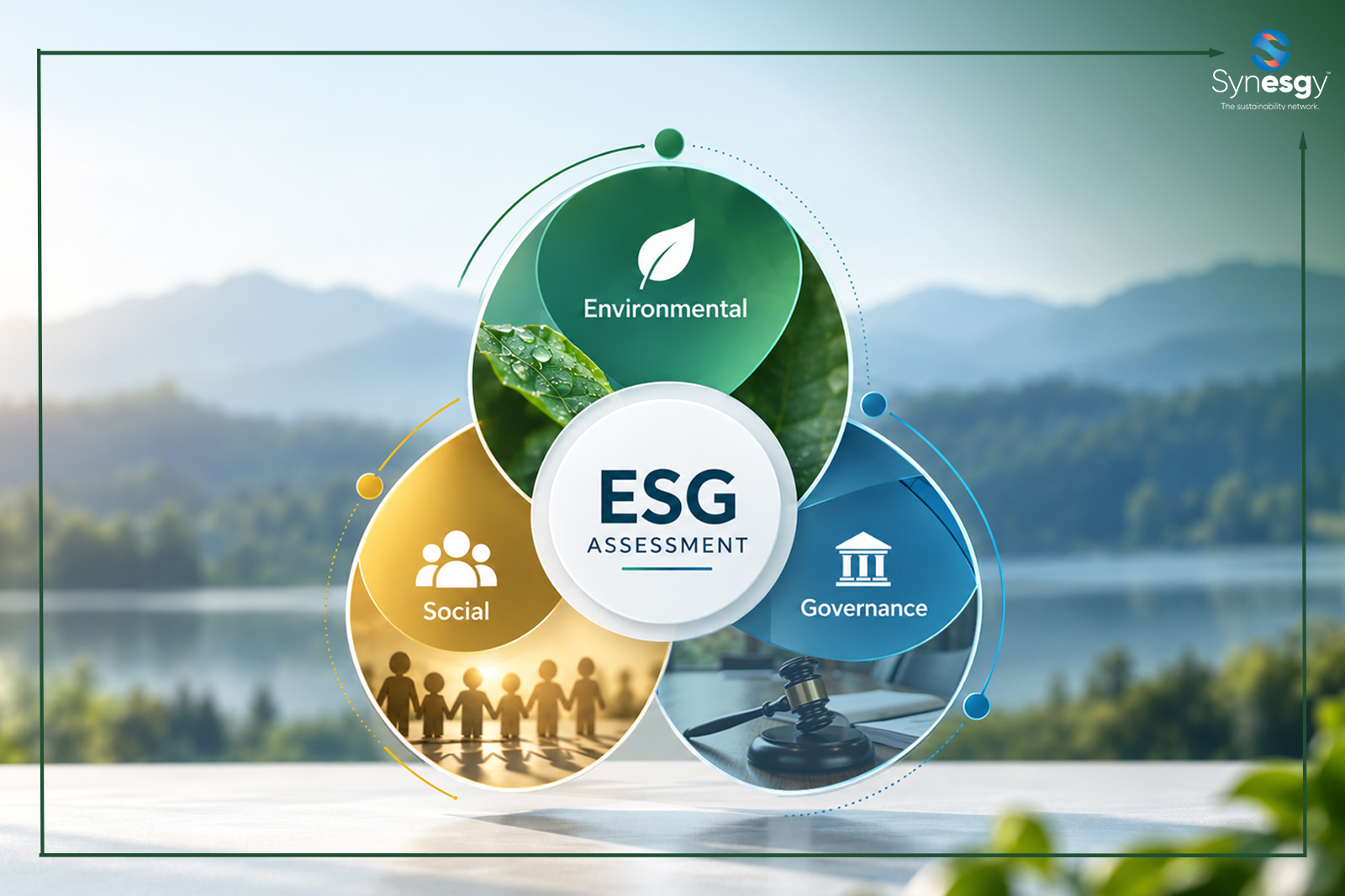
A: Yes. ESG information extends beyond environmental indicators. It can include emissions, energy, water and waste alongside workforce practices, health and safety, human rights, governance policies, compliance and business conduct. The Synesgy assessment framework covers information across all three ESG pillars.
Q: How does an ESG questionnaire support sustainability reporting?
A: An ESG questionnaire provides a structured way to collect sustainability information across different business areas. It can help companies understand what ESG information is available, identify gaps and organise Environmental, Social and Governance data more consistently.
Q: What is the difference between ESG assessment and ESG reporting?
A: ESG assessment evaluates a company’s sustainability performance using relevant ESG information, indicators and evidence. ESG reporting focuses on communicating sustainability information to stakeholders. Assessment can therefore help create a more structured information base that supports subsequent reporting.