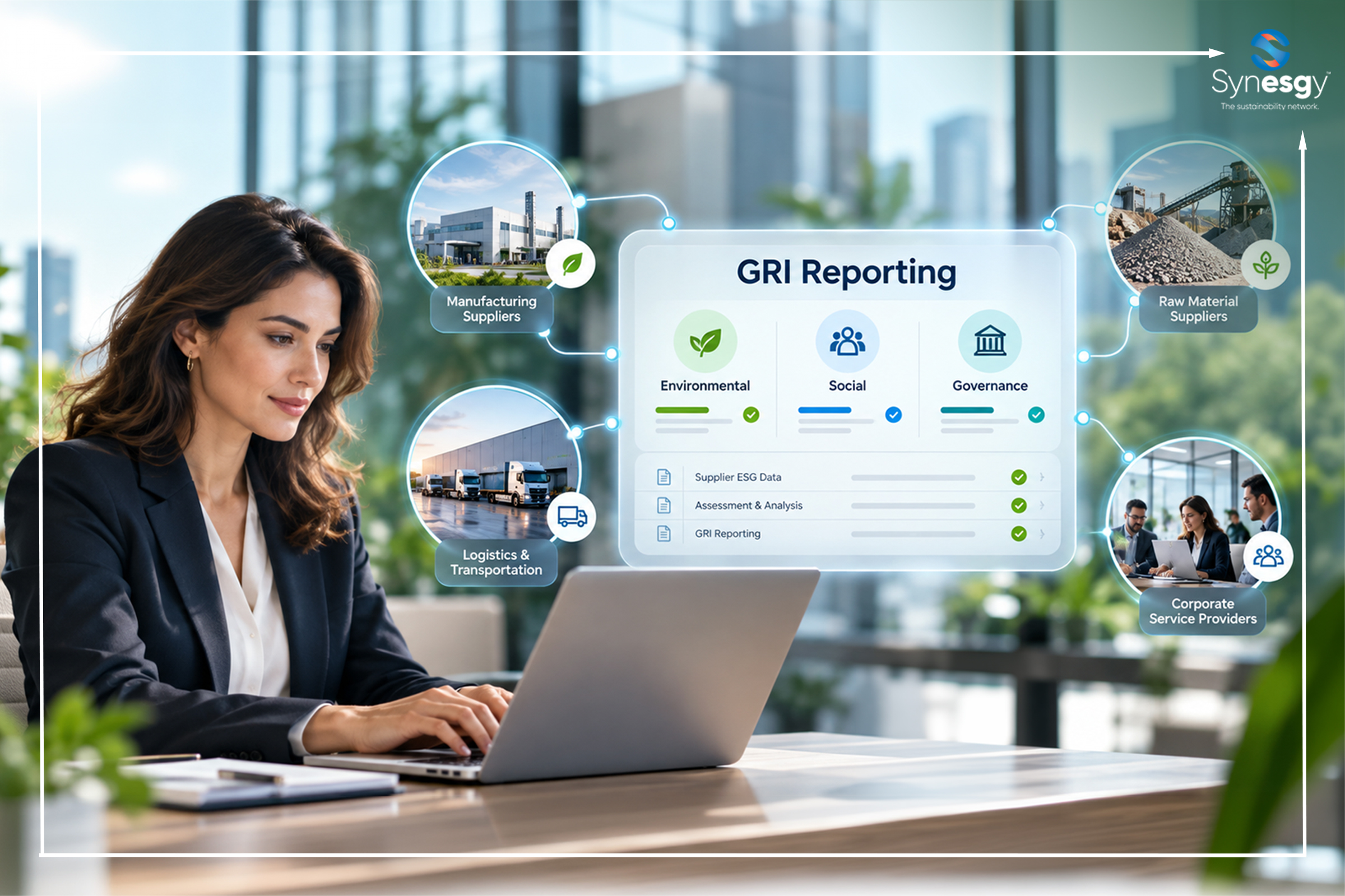
For many organisations, suppliers represent an important part of that picture. They provide materials, services, components, logistics, technology and other resources that enable the business to operate. Their environmental practices, labour conditions, health and safety controls, certifications and compliance processes can therefore influence the wider sustainability profile of the organisation.
This is why supplier and supply chain data can strengthen GRI global reporting and broader sustainability disclosure. Instead of limiting reporting to information generated internally, companies can develop a more complete view of environmental, social and governance performance across their value chain.
However, collecting supplier information is only the beginning. Companies also need a structured way to determine what data should be requested, whether it is sufficiently reliable, how suppliers should be assessed, and where improvement is needed.
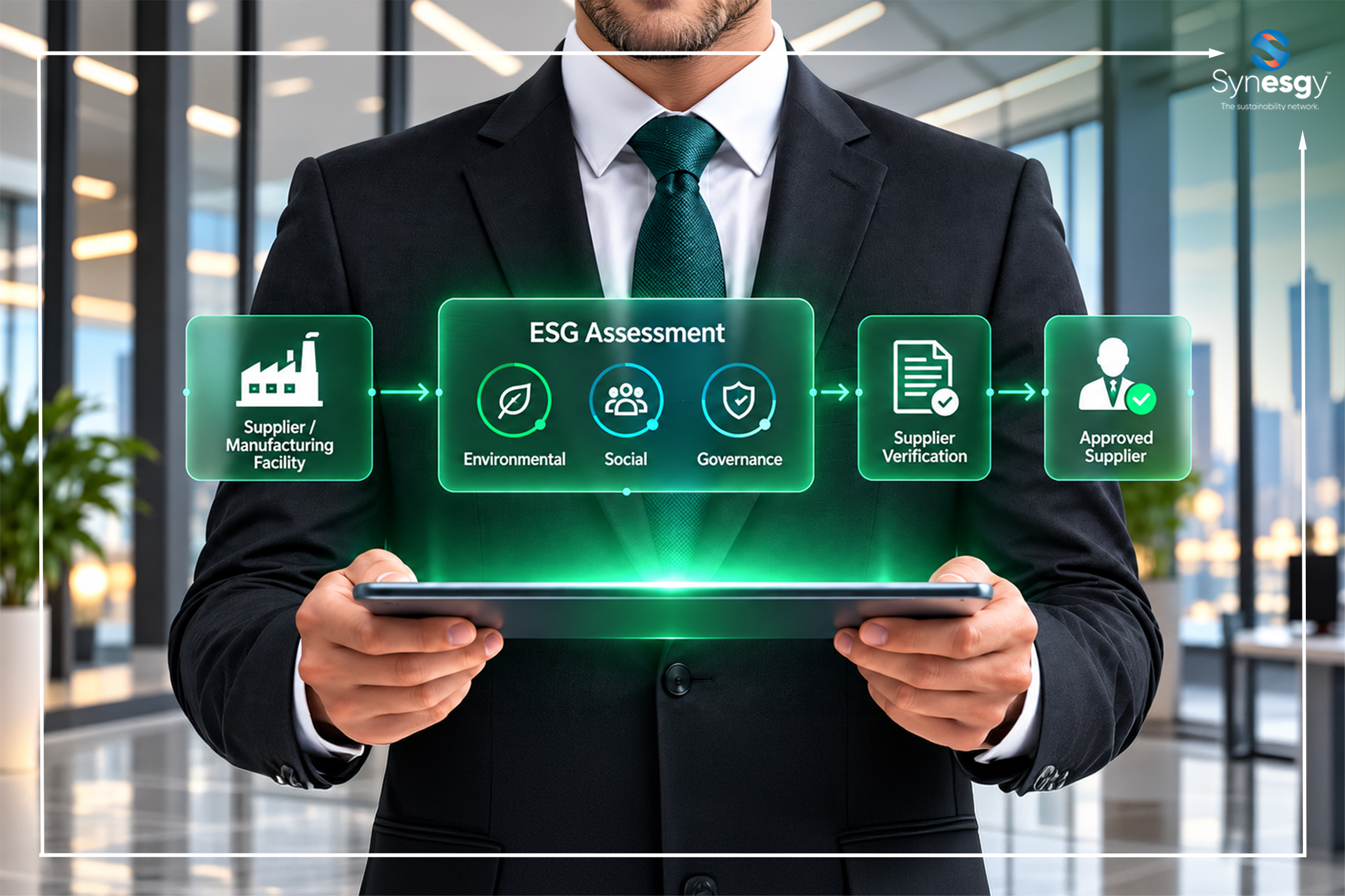
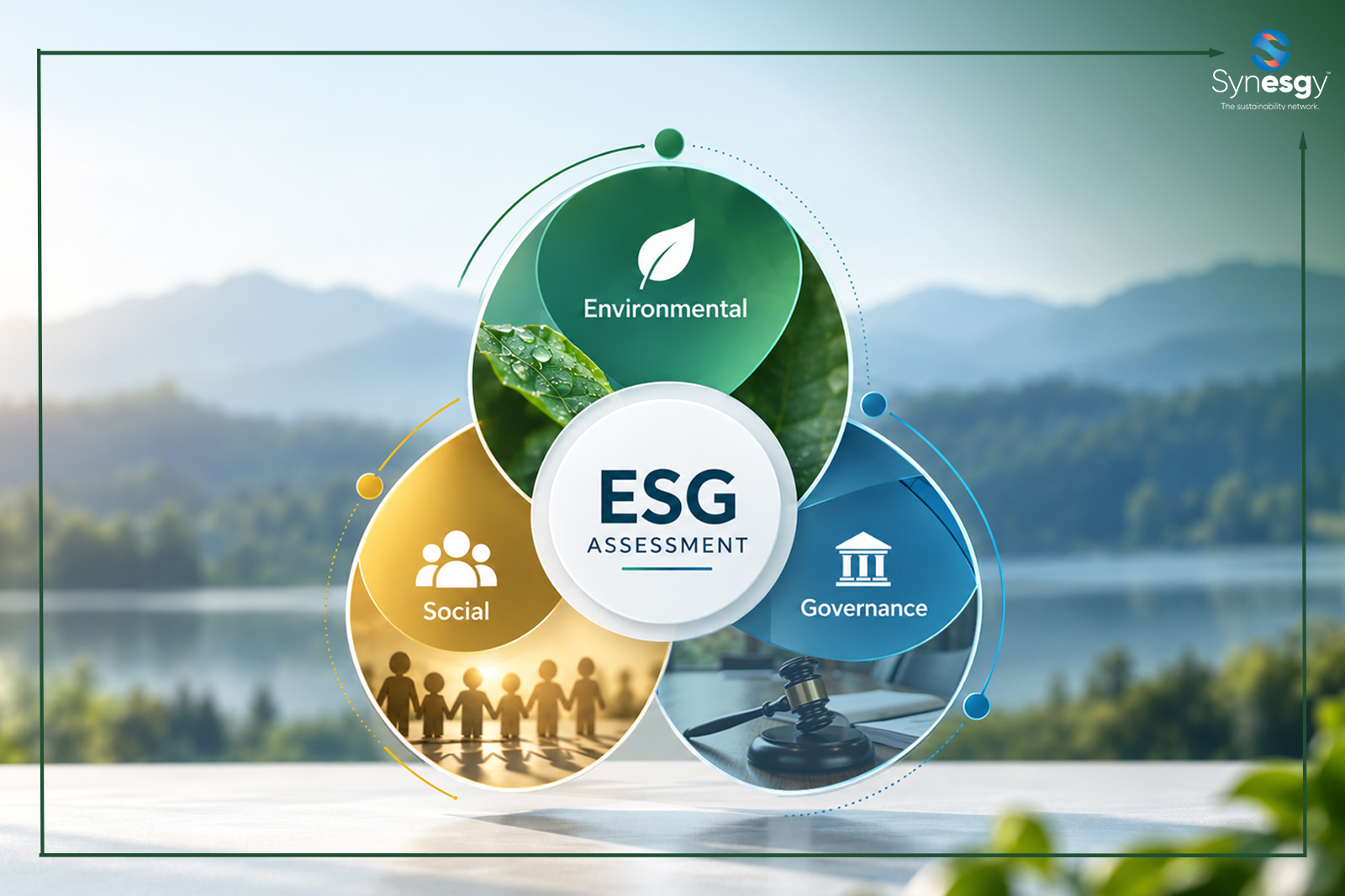
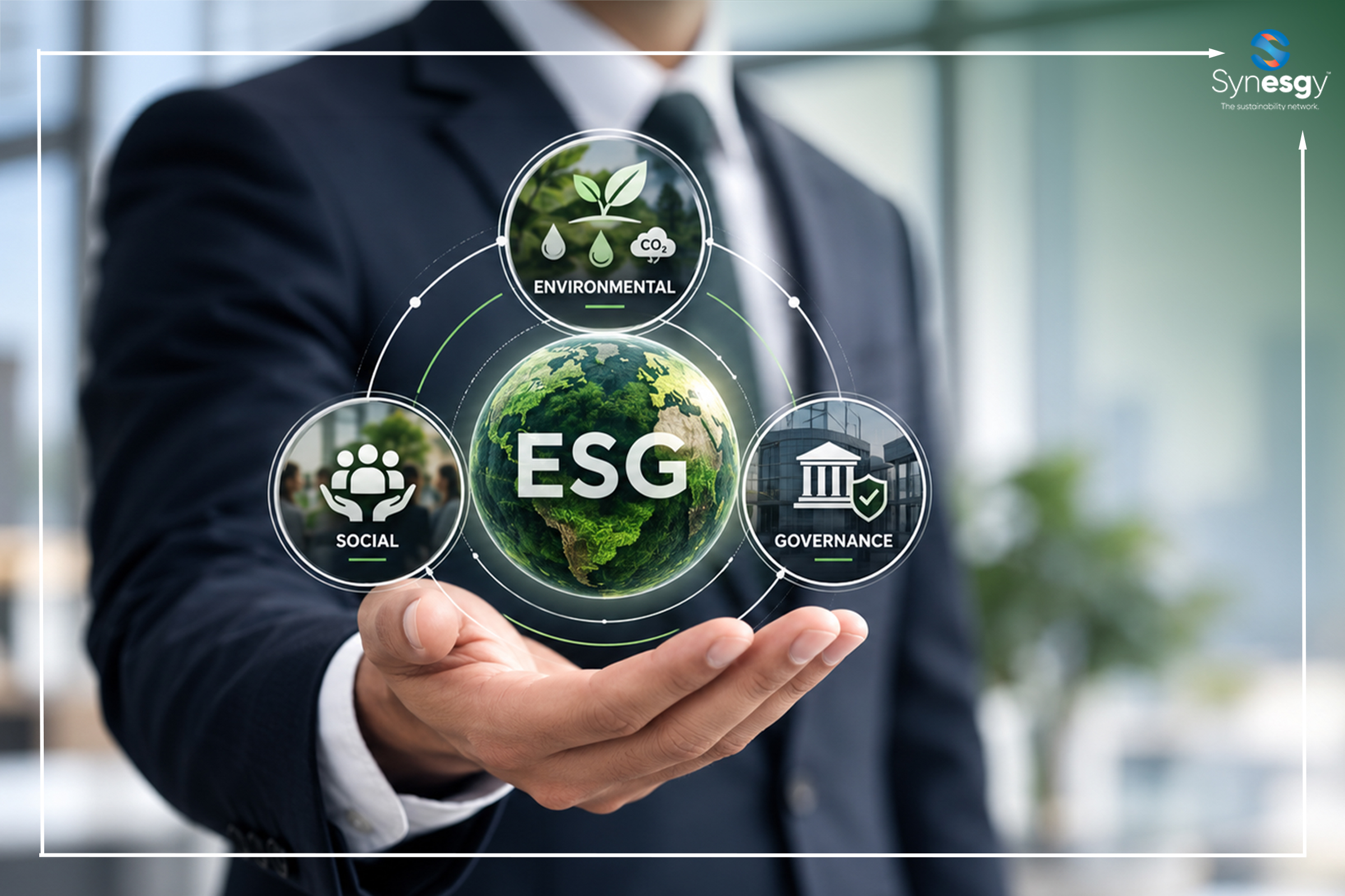
Synesgy approaches this challenge through ESG assessment of both companies and supply chains. Its framework includes structured questionnaires, supplier assessment, information verification, ESG scoring, and improvement planning.
Why Does Supplier Data Matter in GRI Global Reporting?
Sustainability reporting is stronger when companies can support their statements with structured and consistent information.
Internal data may explain how the organisation manages energy consumption, employees, waste, governance, and other ESG matters within its own operations. But this does not necessarily provide visibility into how suppliers operate.
A company may have strong internal sustainability policies while depending on suppliers that have weaker controls around:
-
environmental management
-
health and safety
-
labour practices
-
human rights
-
ethical conduct
-
compliance
-
certification
-
supplier governance
-
monitoring and documentation
This creates a potential information gap between a company’s own ESG performance and the sustainability characteristics of its broader value chain.
Synesgy’s assessment methodology recognises this distinction. Its value-chain analysis looks at how organisations identify and manage environmental and social impacts connected with suppliers and other business relationships. It also examines whether ESG expectations are integrated into supplier selection, qualification, contracting and ongoing monitoring.
For sustainability reporting, this type of supplier information can provide greater context around how ESG principles are applied beyond the organisation itself.
It can also help companies replace broad supplier commitments with more specific, evidence-based reporting on how ESG expectations are communicated, assessed, monitored, and supported across the supply chain.
That additional layer of information can make sustainability reporting more structured, transparent, and decision-useful.
What ESG Data Should Companies Collect From Suppliers?
The information collected should extend beyond a single sustainability score.
A useful supplier ESG dataset should help the company understand several dimensions of supplier performance.
The Synesgy methodology provides a useful example of the types of information that can be considered within ESG assessment.
Environmental Data
Environmental supplier information may include areas such as:
-
energy consumption
-
greenhouse gas emissions
-
waste generation
-
recycling and recovery
-
water consumption
-
pollution
-
biodiversity
-
resource use
-
circular economy practices
-
environmental policies
-
relevant certifications
Synesgy’s questionnaire includes energy consumption, GHG emissions, waste management and recycling, water consumption and recovery, pollutants, and biodiversity among the environmental areas investigated.
Environmental information can help companies understand whether suppliers are measuring and managing their operational impacts rather than simply making broad sustainability commitments.
For reporting purposes, structured supplier environmental data can also help identify where information is complete and where further supplier engagement may be needed.
Social and Workforce Data
Environmental information alone does not provide a complete picture of supplier sustainability.
Social factors can be equally important.
The Synesgy methodologies evaluate workforce-related matters including:
-
workforce composition
-
employment stability
-
gender representation
-
equal treatment
-
training and development
-
human rights policies
-
diversity
-
health and safety
-
occupational injuries
The value-chain assessment also considers environmental, social, human rights, safety, and compliance criteria when evaluating suppliers.
For companies preparing sustainability disclosures, these areas can provide insight into whether suppliers have responsible workforce practices and appropriate management systems.
Governance and Compliance Data
Supplier sustainability also depends on governance.
Companies may therefore need information relating to:
-
codes of ethics
-
compliance policies
-
anti-corruption measures
-
whistleblowing mechanisms
-
privacy controls
-
management systems
-
certifications
-
business conduct requirements
Within Synesgy’s broader ESG framework, governance assessment considers legal compliance, ethical conduct, internal controls, anti-corruption arrangements, whistleblowing and other management mechanisms.
Collecting this information from suppliers helps companies understand whether responsible business conduct is supported by documented systems rather than informal commitments.
Why Supplier Data Quality Matters for Sustainability Reporting
More supplier data does not automatically mean better reporting.
One of the biggest challenges in supply chain sustainability is data quality.
If suppliers submit incomplete, inconsistent, or unsupported information, the company may technically have data but still lack reliable ESG visibility.
For example, a supplier may state that it has an environmental management system without providing evidence. Another may report energy or waste information using an inconsistent reporting period. Others may answer sustainability questionnaires differently even though they operate in similar sectors.
This makes verification important.
In the Synesgy assessment process, Synesgy checks questionnaire responses for adequacy and consistency. Where inconsistencies arise, the company may be asked to provide supporting documentation to validate its responses.
This principle is highly relevant to sustainability reporting.
Companies should not treat supplier questionnaires simply as a data-collection exercise. They should consider whether the information can be supported with evidence.
Useful supporting materials may include:
-
certifications
-
internal policies
-
codes of conduct
-
management-system documentation
-
environmental records
-
workforce policies
-
health and safety documentation
-
compliance documents
-
sustainability reports
Synesgy’s rating methodology also considers documentary evidence and the quality of supporting information when evaluating ESG performance.
The result is a stronger distinction between self-declared information and information that can be substantiated.
How Can Supplier Qualification Strengthen Sustainability Reporting?
Supplier ESG assessment is most valuable when it is connected with procurement and supplier-management processes.
If sustainability reporting and procurement operate independently, companies may gather ESG data once a year without using it in operational decisions.
A stronger model is to incorporate ESG considerations into the supplier lifecycle.
This can include:
-
supplier onboarding
-
supplier qualification
-
contracting
-
ESG assessment
-
documentation review
-
periodic monitoring
-
corrective action
-
reassessment
Synesgy’s value-chain methodology specifically examines whether ESG expectations are embedded in supplier selection, qualification, contracting, and ongoing monitoring.
This creates a direct connection between the sustainability information being reported and the way suppliers are actually managed.
For example, instead of only stating that suppliers are expected to follow ESG requirements, a company may be able to demonstrate that suppliers are assessed against defined criteria and periodically monitored.
That provides stronger evidence of implementation.
How Do Supplier Certifications and Documentation Support ESG Reporting?
Certifications can provide another layer of evidence within supplier assessment.
They do not automatically demonstrate strong ESG performance across every area, but they can support specific claims about management systems or controls.
Synesgy’s methodologies consider supplier documentation and certifications as part of value-chain assessment.
The assessment also considers whether suppliers are required to comply with codes of ethics, policies, and conduct requirements.
For sustainability reporting, these records can help companies show how expectations are communicated across the supply chain.
Useful information may include:
-
whether suppliers acknowledge a supplier code of conduct
-
whether relevant certifications are current
-
whether documentation has been reviewed
-
whether ESG criteria form part of supplier qualification
-
whether high-risk suppliers require additional review
-
whether evidence is updated periodically
This moves reporting away from broad commitments and toward documented processes.
Why Periodic Supplier Monitoring Is Important
Supplier sustainability performance can change.
A supplier that performs well during onboarding may later experience operational changes, compliance issues, workforce incidents, or changes in management systems.
For this reason, ESG assessment should not necessarily be treated as a one-time exercise.
Synesgy’s value-chain methodology considers periodic monitoring, scoring, corrective actions, and audits for critical and strategic suppliers.
The Synesgy platform also uses a recurring assessment cycle. The materials describe questionnaire updates and renewals after the assessment period to support updated evaluations.
For companies using supplier data in sustainability reporting, regular updates can help ensure that disclosures are based on more current information.
This is particularly important where suppliers are considered strategically important or where their ESG profile has a material influence on the wider supply chain.
How Can Supplier ESG Scoring Help Identify Reporting Gaps?
Large organisations may work with hundreds or thousands of suppliers.
Reviewing every supplier manually can therefore be difficult.
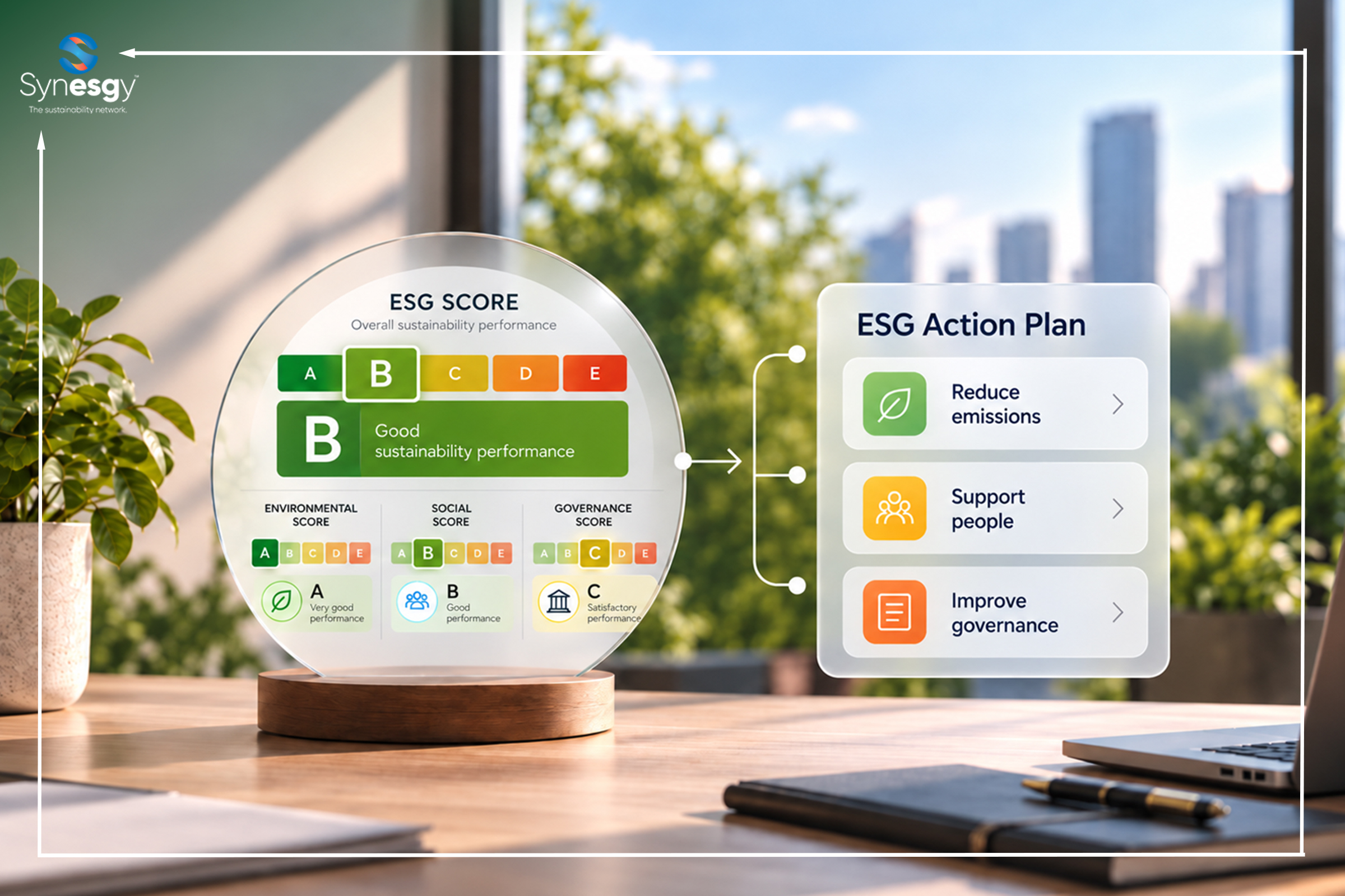
Structured ESG assessment and scoring can help create a more consistent way of comparing supplier information and identifying areas that require attention.
Synesgy generates overall ESG scores and section-specific Environmental, Social and Governance results. The platform also identifies improvement areas and priority actions.
This kind of structure can help procurement and sustainability teams answer practical questions such as:
-
Which suppliers have incomplete ESG information?
-
Which suppliers show weaker performance in specific pillars?
-
Where is documentation missing?
-
Which suppliers should be prioritised for engagement?
-
Which ESG themes appear most frequently as improvement areas?
For reporting teams, this can improve visibility into the quality and coverage of supply chain information.
Rather than treating every supplier in the same way, companies can develop a more risk-aware and evidence-based approach to supplier engagement.
How Can Procurement Teams Support GRI Global Reporting?
Sustainability reporting should not sit only with the sustainability or ESG team.
Procurement teams often have direct access to supplier information, contracts, qualification documents, and performance data. They are therefore in a strong position to support the collection and maintenance of supplier ESG information.
A coordinated approach can divide responsibilities clearly.
Procurement may manage:
-
supplier onboarding
-
contractual requirements
-
qualification
-
documentation collection
-
supplier communication
-
corrective actions
Sustainability teams may focus on:
-
ESG criteria
-
assessment methodology
-
performance interpretation
-
materiality
-
reporting
-
improvement priorities
Risk and compliance teams may contribute:
-
supplier screening
-
governance controls
-
sanctions or compliance information
-
policy requirements
-
evidence review
When these functions work together, supply chain ESG data becomes more useful both for operational decision-making and for sustainability reporting.
How Can an ESG Assessment Platform Improve Supply Chain Visibility?
One of the difficulties of supplier ESG data is fragmentation.
Information may be spread across spreadsheets, emails, procurement systems, certificates, and supplier documents.
A structured ESG assessment platform can help standardise the process.
Synesgy is positioned as a global digital platform for ESG assessment of companies and supply chains.
The platform supports two main assessment routes:
-
A company can register and complete its own ESG self-assessment
-
A Head of Supply Chain can upload suppliers and invite them to participate in the assessment process
The assessment uses a structured questionnaire and includes information verification before generating ESG outputs.
For supplier management, this can help organisations establish a more consistent method for:
-
collecting ESG information
-
comparing suppliers
-
identifying gaps
-
requesting supporting documentation
-
assessing E, S and G performance
-
highlighting improvement priorities
This is particularly useful where supplier ESG information needs to be managed across a large or geographically diverse supply base.
From Supplier Data to Better Sustainability Reporting
Supplier and supply chain information can make sustainability reporting more complete, but only when the information is organised, relevant and sufficiently reliable.
The objective should not be to collect the largest possible number of ESG data points.
Instead, companies should focus on creating a repeatable process for identifying relevant suppliers, collecting meaningful ESG information, verifying important claims and using the findings to improve supplier management.
A mature process can therefore follow a simple sequence:
A stronger approach is to build supplier ESG data into an ongoing assessment and reporting process. Companies should identify the suppliers most relevant to their ESG priorities, collect consistent environmental, social and governance information, verify key responses with supporting evidence, assess performance, identify gaps and continue monitoring over time. This creates a more reliable supplier data foundation for sustainability reporting while also supporting procurement and supplier management decisions.
This approach can strengthen both sustainability disclosure and procurement decision-making.
For organisations using GRI global reporting as part of their sustainability communication, supplier ESG information can provide important supporting context around how environmental, social and governance principles extend beyond internal operations.
Specific GRI disclosure requirements should still be reviewed against the applicable GRI Standards. However, building a structured supplier ESG data foundation can make the reporting process more evidence-based and improve visibility into sustainability performance across the value chain.
Synesgy supports this wider process by enabling companies and supply-chain leaders to collect structured ESG information, assess suppliers, verify documentation, generate ESG scores and identify improvement priorities.
The result is not simply more supplier data. It is a clearer understanding of where sustainability strengths and weaknesses exist across the supply chain and where companies may need to act next.
FAQs
Q: What supplier ESG data should companies collect for sustainability reporting?
A: Companies can consider environmental, social and governance information such as energy use, emissions, waste, water, workforce practices, health and safety, human rights, compliance, codes of conduct and relevant certifications. The exact information collected should reflect the supplier’s activities, sector and relevance to the organisation.
Q: Why is supplier data verification important for ESG reporting?
A: Verification helps determine whether supplier information is complete, consistent, and supported by evidence. Documents such as policies, certifications, and management-system records can provide additional support for supplier responses and improve confidence in the information used for sustainability assessment and reporting.
Q: How can companies monitor ESG performance across their supply chain?
A: Companies can use structured supplier assessments, ESG questionnaires, documentation reviews, periodic scoring, corrective actions and reassessments. Synesgy’s methodology also considers periodic monitoring and audits for critical and strategic suppliers.
Q: How do supplier certifications and documentation support sustainability reporting?
A: Certifications and supporting documents can provide evidence that specific management systems, policies or controls exist. They can strengthen supplier assessment by supporting self-declared information and helping companies determine whether ESG requirements are being implemented.
Q: How can supplier ESG assessments improve the quality of sustainability disclosures?
A: Supplier ESG assessments create a more structured view of environmental, social, and governance performance across the value chain. By identifying data gaps, verifying information, and tracking improvement areas, companies can base their sustainability disclosures on more consistent and evidence-supported supplier information.