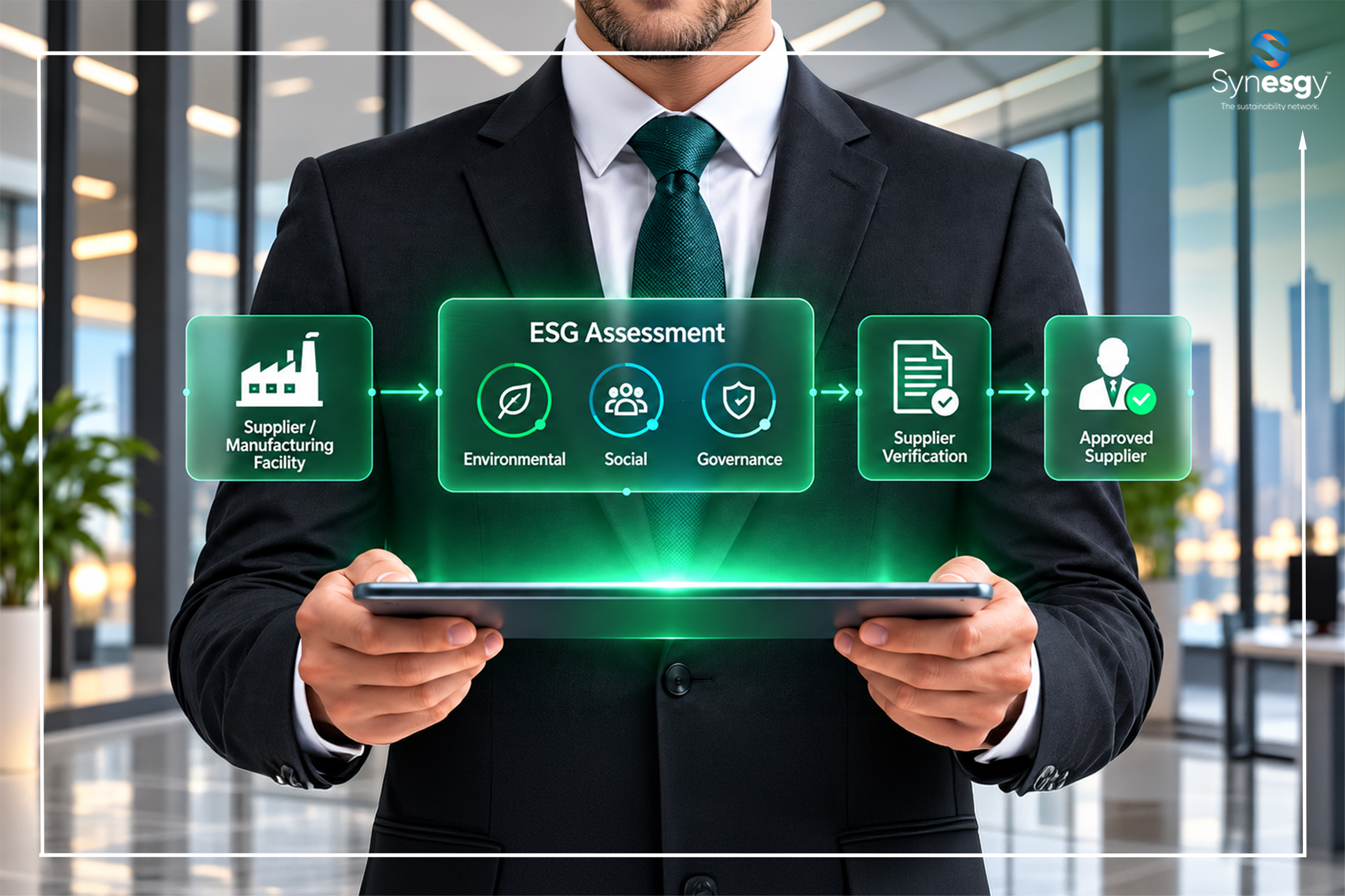
Sustainable supply chain management depends on more than choosing suppliers based on cost, availability, and delivery performance. Companies also need to understand how suppliers manage environmental, social, human rights, safety, and compliance-related issues.
This is where supplier qualification becomes important.
Supplier qualification provides a structured way to evaluate whether a supplier meets defined business and sustainability requirements before and during the commercial relationship. When ESG factors are included in that process, procurement teams gain a clearer view of how suppliers operate, what controls they have in place, and where potential sustainability gaps may exist.
The Synesgy methodology reflects this broader approach. Its value-chain analysis considers supplier qualification and control procedures, the integration of environmental, social, human rights, safety, and compliance criteria into supplier assessment, supplier documentation and certifications, and ongoing monitoring of critical and strategic suppliers.
What Is Supplier Qualification in Sustainable Supply Chain Management?
Supplier qualification is the process of evaluating whether a supplier meets the requirements established by a company before becoming, or continuing as, an approved supplier.
Traditional qualification may focus on factors such as:
-
operational capability
-
quality standards
-
financial reliability
-
delivery capacity
-
contractual requirements
Within sustainable supply chain management, however, qualification also needs to consider ESG-related factors.
This means assessing whether suppliers have appropriate environmental practices, workforce standards, health and safety controls, human rights policies, compliance procedures, certifications, and other relevant governance mechanisms.
The purpose is not simply to decide whether a supplier can deliver a product or service. It is also to understand whether that supplier operates in a way that is consistent with the organisation’s sustainability expectations.
Why Should ESG Criteria Be Part of Supplier Qualification?
A company’s sustainability performance does not stop at the boundaries of its own operations.
Suppliers and other business relationships can create environmental and social impacts across the value chain. As a result, supply chain ESG needs to be considered during supplier selection, qualification, contracting, and monitoring.
The Synesgy methodology specifically evaluates whether ESG expectations are embedded within these supplier-management processes.
Adding ESG criteria to supplier qualification can help companies answer questions such as:
-
Does the supplier have environmental policies?
-
Are appropriate workplace health and safety practices in place?
-
Are human rights expectations addressed?
-
Does the supplier follow relevant compliance requirements?
-
Are appropriate certifications or management systems available?
-
Is sustainability performance monitored over time?
These questions help procurement teams move beyond basic supplier approval toward a more structured approach to sustainable sourcing.
What ESG Criteria Should Companies Assess When Qualifying Suppliers?
The exact criteria should reflect the company’s activities, industry, supplier profile, and sustainability priorities. However, supplier qualification can include criteria across environmental, social, and governance areas.
Environmental Criteria
Environmental evaluation can consider how the supplier manages issues such as:
-
energy use
-
greenhouse gas emissions
-
water
-
waste
-
pollution
-
resource efficiency
-
biodiversity
-
environmental management practices
These areas are consistent with the environmental topics addressed across the Synesgy assessment methodologies.
Environmental performance should therefore form part of supplier qualification, but it should not be the only consideration.
Social and Human Rights Criteria
Supplier qualification can also examine how suppliers manage people within their operations and value chain.
Relevant areas may include:
-
working conditions
-
employee health and safety
-
human rights policies
-
workforce practices
-
equal treatment
-
training
-
social management systems
The Synesgy methodology explicitly includes environmental, social, human rights, and safety criteria within supplier assessment.
This is particularly important for companies trying to strengthen responsible sourcing, because sourcing decisions can involve not only environmental impacts but also how workers and other stakeholders are treated.
Governance and Compliance Criteria
Governance-related evaluation can help determine whether suppliers have appropriate controls and responsible business practices.
Relevant areas may include:
-
codes of ethics
-
compliance procedures
-
anti-corruption controls
-
internal policies
-
certifications
-
supplier codes of conduct
-
documented management processes
Within the wider Synesgy governance framework, areas such as legal compliance, codes of ethics, whistleblowing, anti-corruption arrangements, internal controls, and certifications are considered part of ESG assessment.
Including these areas helps organisations establish clearer ESG compliance criteria for suppliers.
Why Do Supplier Documentation and Certifications Matter?
Supplier qualification should not rely only on statements made during onboarding.
Supporting documentation can help companies understand whether policies and management practices are formally established and whether relevant certifications or controls are in place.
The Synesgy value-chain methodology specifically considers:
-
collection of supplier documentation
-
verification of supplier documentation
-
supplier certifications
-
codes of ethics
-
supplier policies and conduct requirements
This makes evidence an important part of supplier assessment.
For example, a supplier may state that it has strong environmental or safety practices. Supporting policies, certifications, management-system documentation, or other evidence can provide a clearer basis for evaluating that claim.
This is also why structured ESG data collection is important. Procurement teams need consistent information that can be compared across suppliers rather than relying on unstructured responses from each organisation.
How Can ESG Data Collection Improve Supplier Qualification?
One of the challenges in supply-chain sustainability is inconsistency.
Different suppliers may provide different types of sustainability information, use different terminology, or offer varying levels of supporting evidence.
A structured ESG assessment can help standardise the information collected across the supplier base.
For example, companies can collect information related to:
-
environmental policies and performance
-
workforce practices
-
health and safety
-
human rights
-
compliance
-
certifications
-
governance controls
-
sustainability initiatives
This makes supplier comparison more systematic.
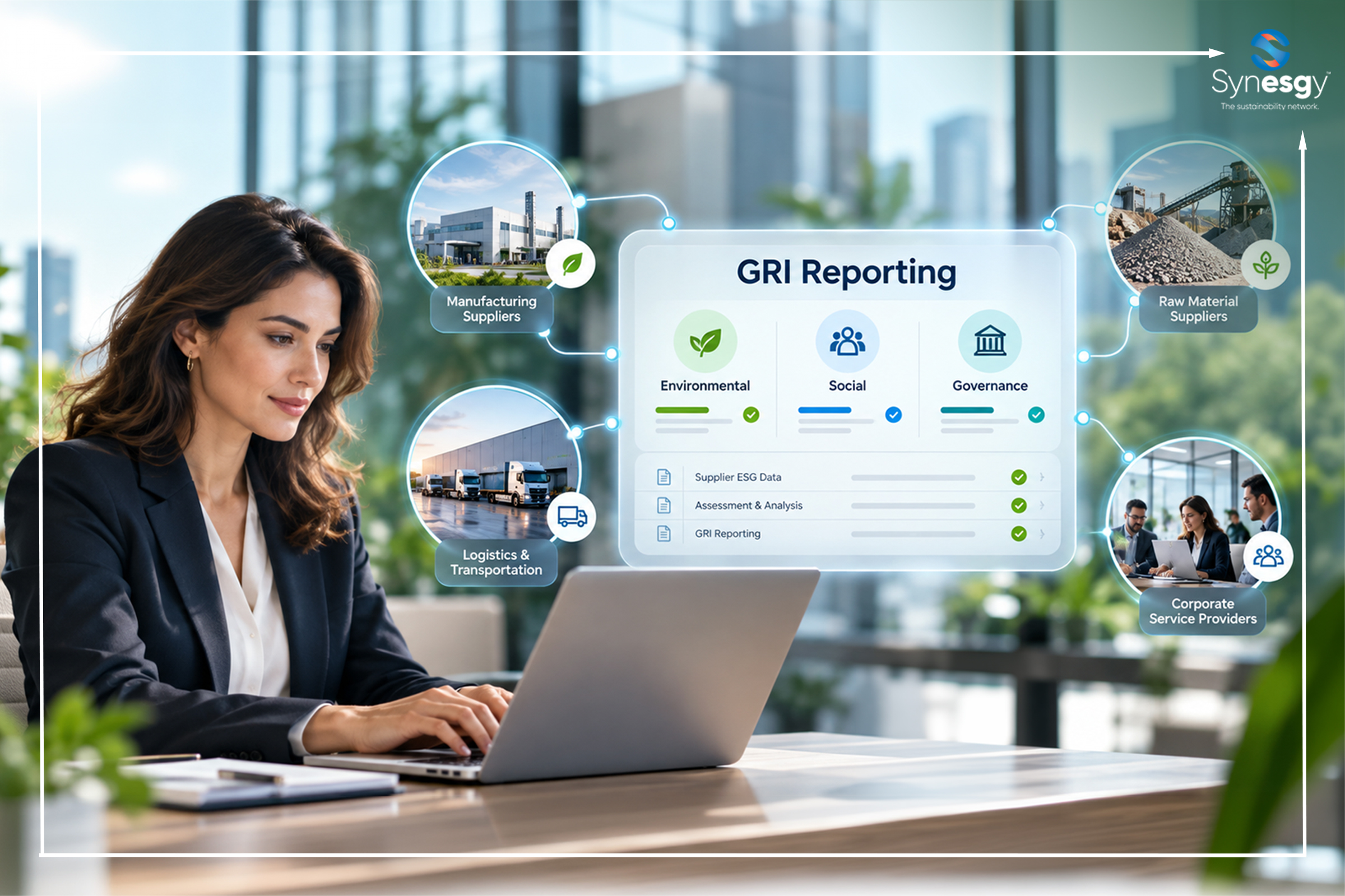
Synesgy supports this type of structured process through its ESG questionnaire and supply-chain assessment model. A Head of Supply Chain can upload a supplier list and invite suppliers to complete an assessment through the platform.
The questionnaire covers areas including sustainability strategy, ESG risk management, stakeholder relations, employee information, energy consumption, greenhouse gas emissions, waste, water, pollution, biodiversity, policies, certifications, and compliance.
This creates a more consistent foundation for ESG data collection across suppliers.
How Does Supplier Qualification Support Responsible Sourcing?
Responsible sourcing involves considering how goods and services are obtained, not only whether they meet commercial requirements.
Supplier qualification supports this by introducing ESG expectations earlier in the procurement process.
Instead of waiting until a sustainability problem appears, companies can evaluate suppliers against defined ESG criteria for suppliers before or during onboarding.
This may help procurement teams identify whether suppliers:
-
meet the company’s ESG expectations
-
have relevant sustainability policies
-
provide supporting documentation
-
hold applicable certifications
-
manage human rights and safety issues
-
have compliance controls
-
require further improvement or monitoring
As a result, supplier selection becomes more closely connected with the organisation’s broader sustainability objectives.
Why Should Supplier Qualification Continue After Onboarding?
Qualification should not necessarily be treated as a one-time approval exercise.
Supplier practices, business conditions, documentation, certifications, and ESG performance can change over time.
The Synesgy methodology therefore considers ongoing activities such as:
-
periodic supplier monitoring
-
supplier scoring
-
corrective actions
-
audits for critical and strategic suppliers
This creates a more continuous supplier-management process.
A supplier may meet requirements during initial qualification but later require additional attention. Ongoing assessment can help organisations identify new gaps and determine whether improvement actions are necessary.
What Role Do Corrective Actions Play in Supplier ESG Management?
Supplier qualification should not always lead to a simple approved-or-rejected decision.
In many cases, a supplier may meet some requirements while showing weaknesses in others.
For example, a supplier could have appropriate environmental controls but limited formal policies related to human rights or governance. Another supplier may have relevant certifications but weak ongoing monitoring.
Corrective actions provide a way to address such gaps.
They can help procurement and sustainability teams establish what needs to improve and follow up on progress over time.
The Synesgy methodology specifically includes corrective actions as part of the monitoring approach for critical and strategic suppliers.
This supports a more improvement-oriented approach to supplier sustainability rather than relying only on pass-or-fail qualification.
Why Do Critical and Strategic Suppliers Need More Attention?
Not every supplier has the same level of relevance to a company’s operations.
Critical or strategic suppliers may have a greater influence on operational continuity, sustainability performance, or value-chain impacts.
For these suppliers, stronger assessment and monitoring may be appropriate.
The Synesgy methodology recognises this by referring specifically to periodic monitoring, scoring, corrective actions, and audits for critical and strategic suppliers.
This allows companies to focus their supplier-management efforts where they may matter most.
How Can a Structured ESG Assessment Strengthen Supplier Qualification?
A structured ESG assessment can make supplier qualification more consistent and evidence-based.
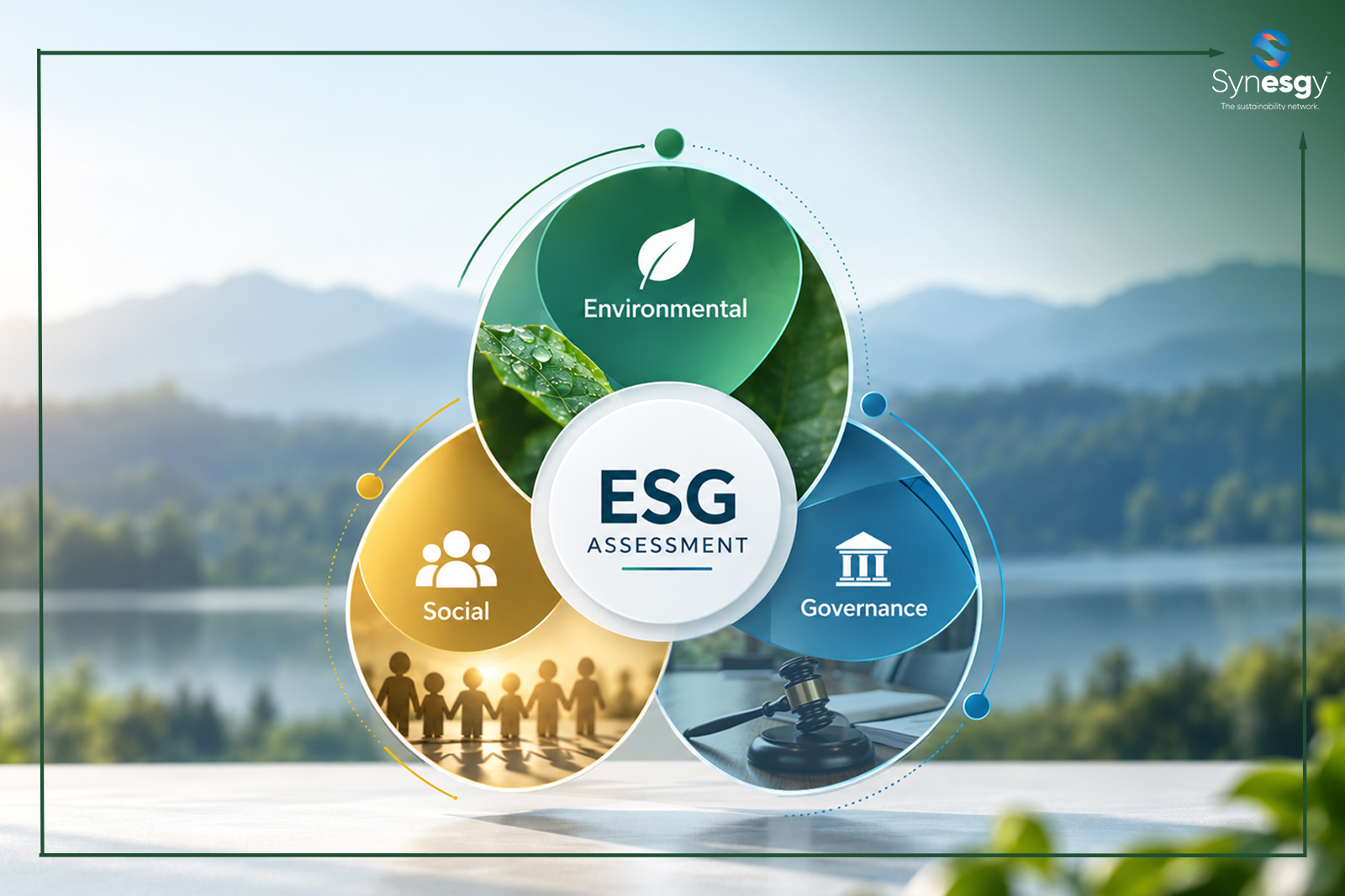
Rather than relying only on individual procurement checks, companies can evaluate suppliers using defined ESG criteria across environmental, social, and governance areas.
This approach can help organisations:
-
standardise supplier assessment
-
collect comparable ESG information
-
identify gaps earlier
-
verify documentation and certifications
-
monitor supplier performance
-
support corrective actions
-
strengthen supply chain visibility
Synesgy is designed to support both company self-assessment and supply-chain assessment. Its supplier-assessment model allows organisations to invite suppliers into a structured ESG evaluation process and collect information across multiple sustainability areas.
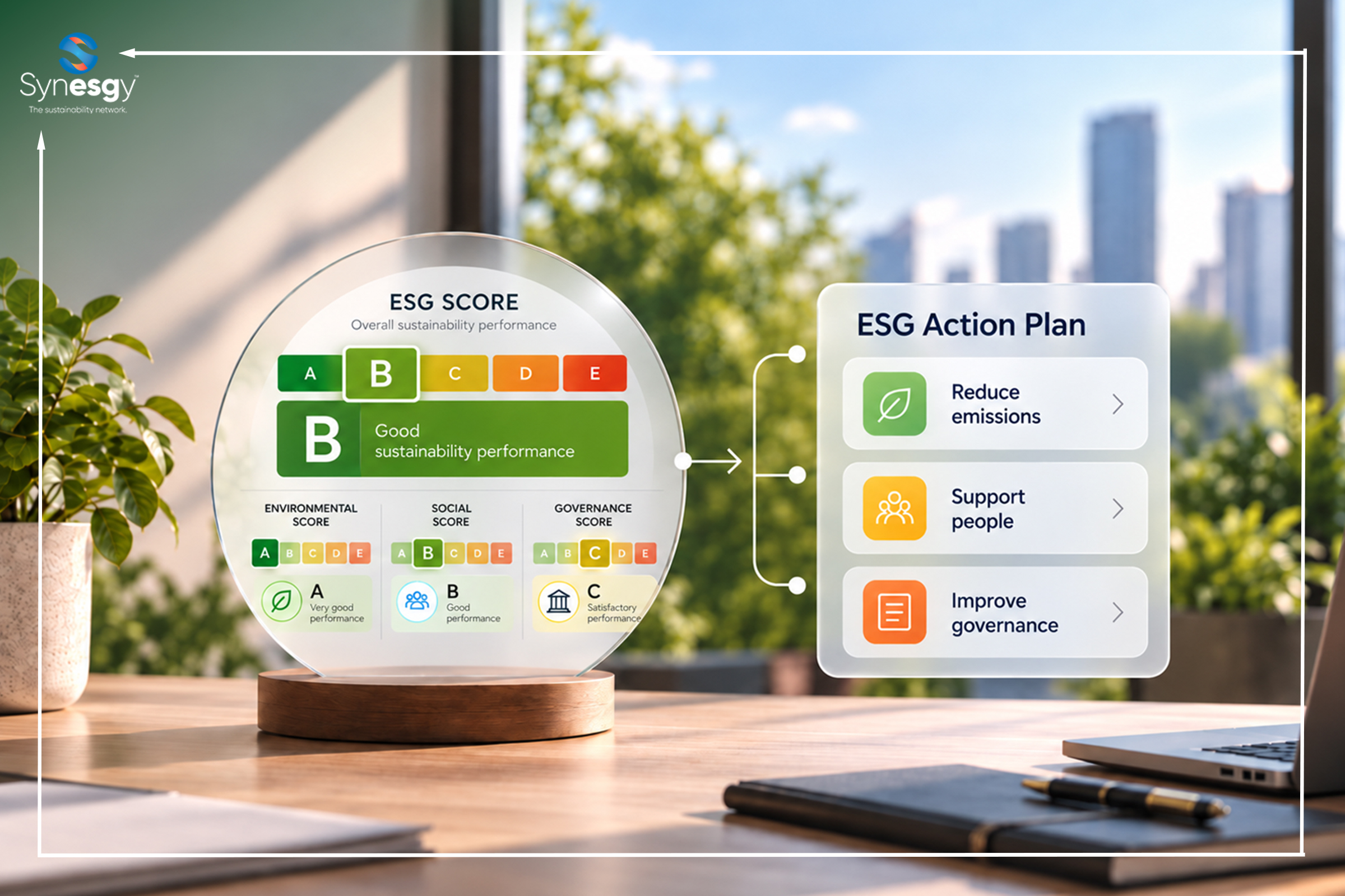
The broader objective is not simply to assign a supplier a score. It is to create a clearer picture of sustainability practices across the supplier network and identify where monitoring or improvement may be needed.
Building a More Sustainable Supply Chain Starts With Better Supplier Qualification
Sustainable supply chain management requires companies to understand more than whether a supplier can meet commercial requirements.
They also need visibility into how suppliers manage environmental impacts, workforce issues, human rights, safety, compliance, policies, and governance.
Supplier qualification creates an important point at which these expectations can be established.
By integrating supply chain ESG, responsible sourcing, ESG compliance criteria, structured ESG data collection, and relevant ESG criteria for suppliers into qualification and ongoing monitoring, companies can build a more consistent approach to supplier sustainability.
A structured process also helps organisations move from simply collecting supplier information toward identifying gaps, monitoring performance, and supporting improvement across the supply chain.
Ready to Strengthen Supplier ESG Assessment?
Build greater visibility across your supplier network with a structured approach to ESG data collection, supplier qualification, monitoring, and improvement.
Synesgy helps companies assess suppliers across Environmental, Social, and Governance criteria, identify gaps, and support more sustainable supply chain management.
FAQs
Q: What ESG criteria should be included in supplier qualification?
A: Supplier qualification can consider environmental, social, human rights, health and safety, governance, and compliance factors. Relevant criteria may include environmental practices, workforce policies, safety systems, codes of conduct, certifications, compliance controls, and supplier documentation.
Q: Are human rights and workplace safety considered when assessing suppliers?
A: Yes. The Synesgy value-chain methodology includes human rights and safety criteria within supplier assessment and considers whether these expectations are integrated into supplier qualification and monitoring.
Q: Why are supplier documentation and certifications important?
A: Documentation and certifications provide evidence that a supplier has established relevant policies, processes, or management systems. They can help companies verify supplier information and support more consistent qualification decisions.
Q: Should suppliers be monitored after qualification?
A: Yes. Supplier qualification should be supported by ongoing monitoring where appropriate. The Synesgy methodology considers periodic monitoring, scoring, corrective actions, and audits, particularly for critical and strategic suppliers.
Q: How can companies manage suppliers that do not meet ESG requirements?
A: Where gaps are identified, companies can establish corrective actions and monitor improvement. The appropriate response can depend on the significance of the issue and the supplier’s importance to the organisation.
Q: How does ESG assessment support sustainable supply chain management?
A: ESG assessment provides a structured way to collect and evaluate information about suppliers across environmental, social, and governance areas. This can help organisations compare suppliers, identify sustainability gaps, monitor performance, and strengthen ESG visibility across the supply chain.