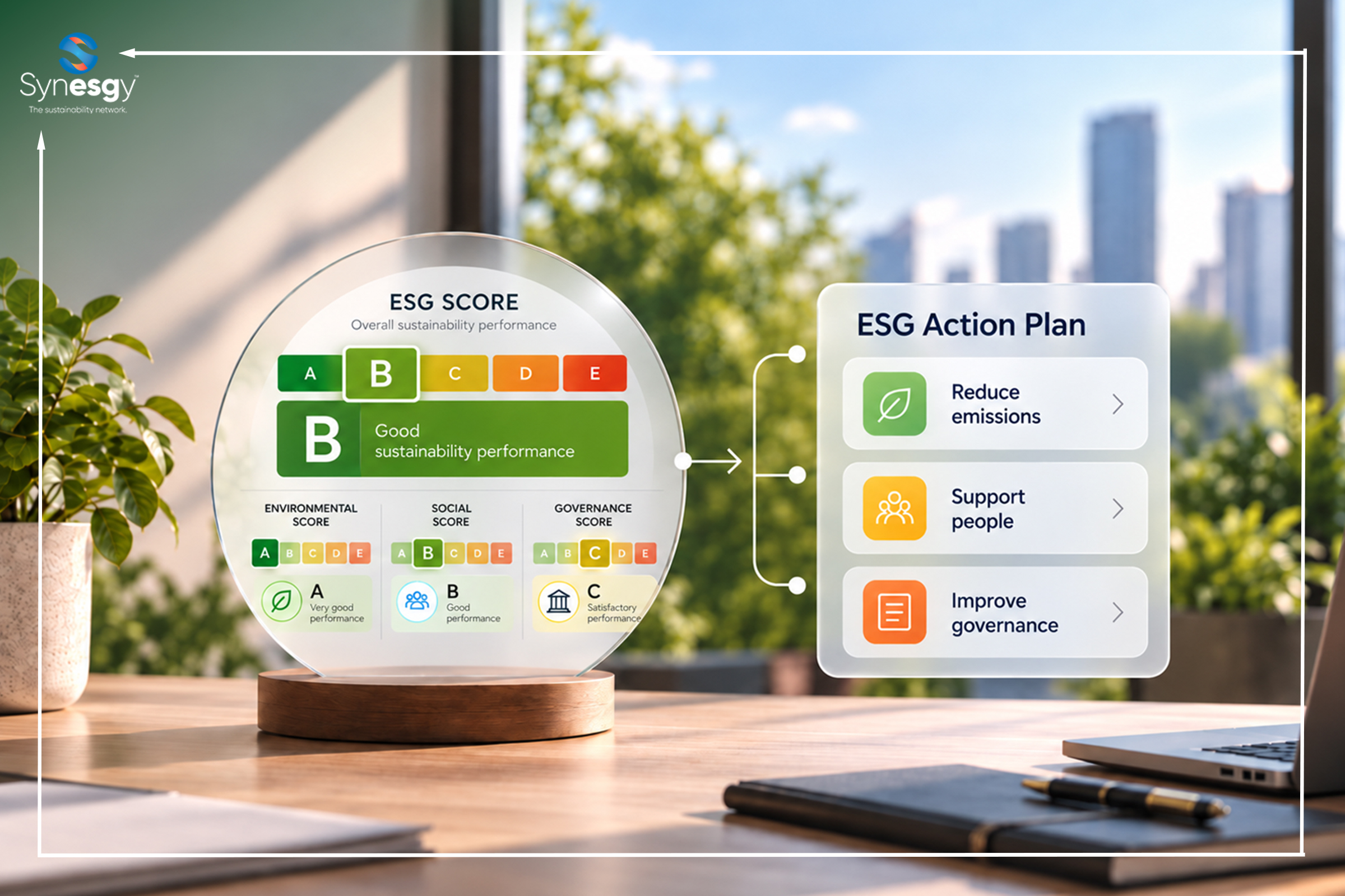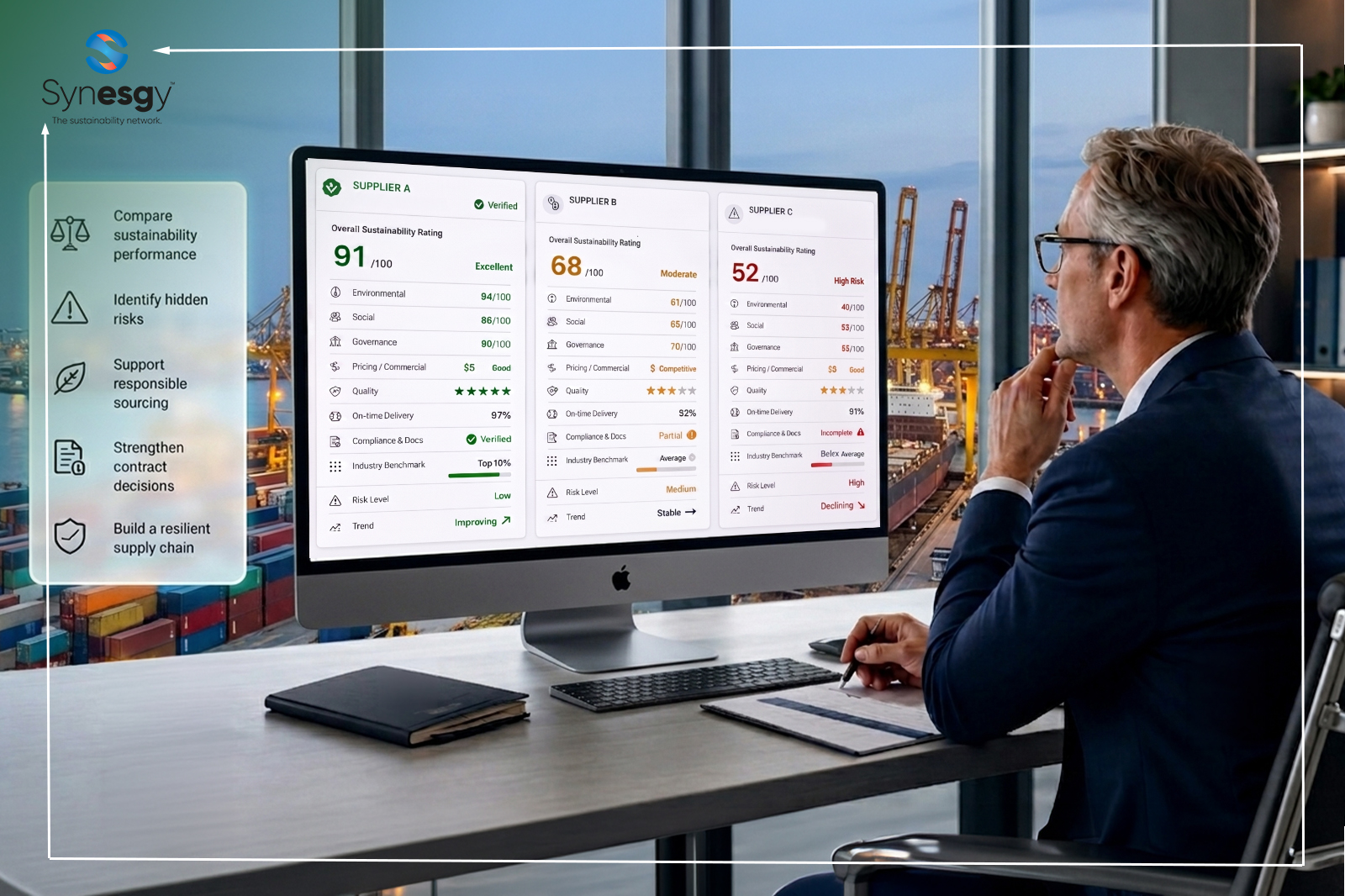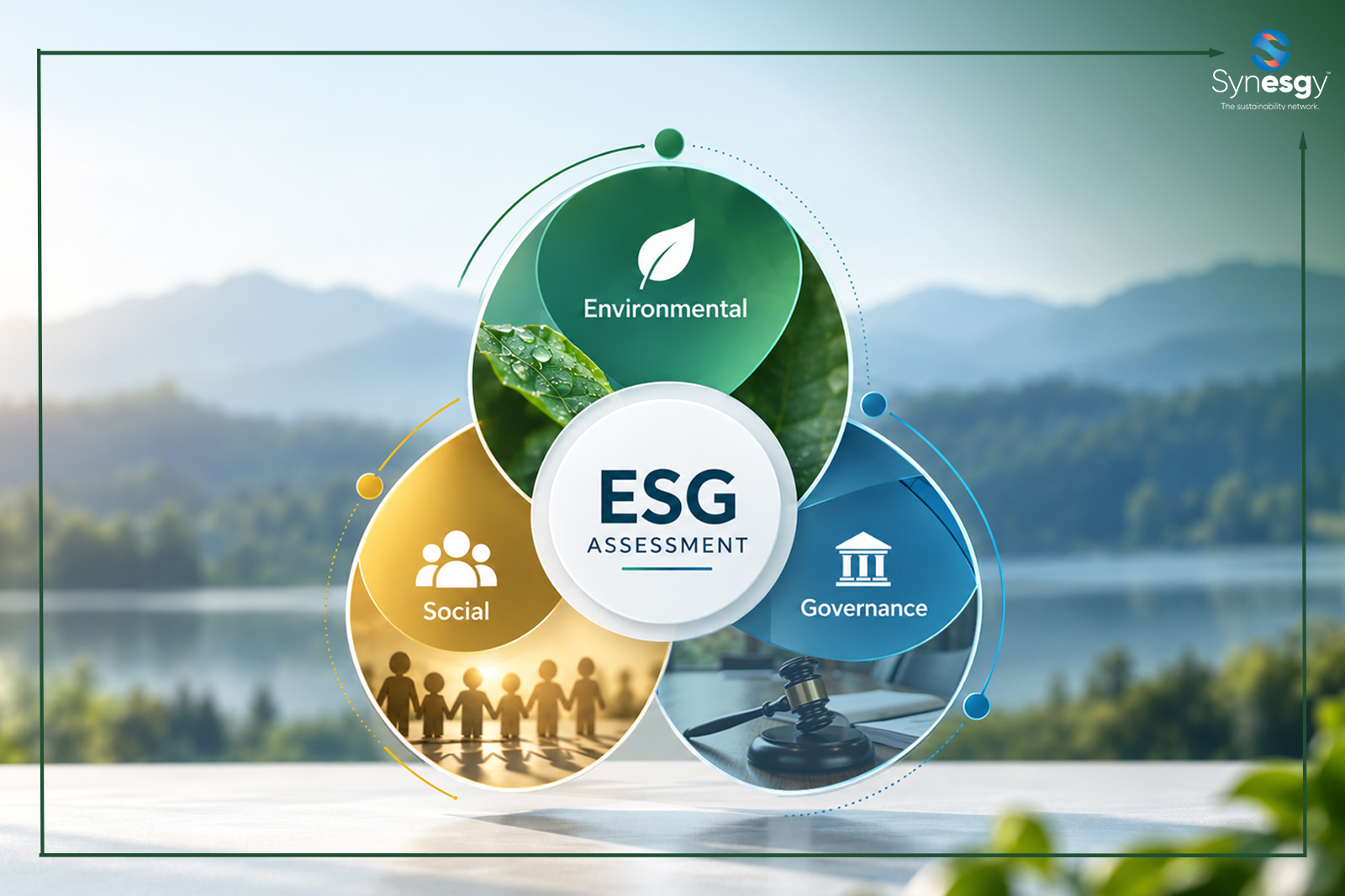
Two companies operate in the same sector. They are similar in size, similar in operations, and by most external measures, similar in how they run their business. Yet when it comes to ESG performance, one scores significantly higher than the other. For procurement teams comparing vendors, investors weighing portfolio risk, or partners conducting due diligence, this kind of gap raises an obvious question: does a higher score mean a genuinely more sustainable company, or does it mean something else entirely?
The honest answer is that ESG scores are provider-specific assessments, not a single universal measure of sustainability. Depending on the product, a score may assess a company’s ESG risk exposure, its management systems, its sustainability impacts, its performance against targets, its controversy history, or the completeness and quality of its disclosures. Because providers define these things differently, weight them differently, and treat missing information differently, the same company can receive materially different results from different assessors, and two companies in the same industry can diverge for reasons that have little to do with a simple good-company-versus-bad-company judgment. In the UAE specifically, this distinction matters for procurement, lending, and partner due diligence, since sustainability disclosure expectations increasingly emphasise materiality, data quality, and assurance, while the requirements that actually apply depend on a company’s status, regulator, listing venue, and sector.
This article breaks down the real drivers behind that divergence. If you want a clearer picture of where your own company stands, a proper ESG assessment is the first step.
Why Do ESG Scores Vary Between Companies?
Score differences between similar companies generally trace back to four distinct drivers, and they do not move together.
The first is methodology. ESG providers do not use one globally standardised scoring model. They differ in the topics they cover, the indicators and definitions they use, the weight assigned to environmental, social, and governance issues, and whether the product is designed to measure risk, impact, opportunity, or disclosure. A company can therefore receive different results from different providers even when nothing about the business itself has changed.
The second is data and disclosure. Scores depend on the information available to the provider, how recent it is, how consistent it has been over time, and how well it can be verified. Two companies with similar operations can still produce different results if one has more complete or better-evidenced reporting.
The third is operational performance. Actual emissions, safety records, labor practices, governance controls, targets, and controversies genuinely differ between companies, even within the same sector, and these differences are real inputs to most assessments.
The fourth is risk exposure and management. Providers assess the risks associated with a company’s business model and how actively those risks are controlled, which means two companies facing similar sector-level risk can still land in different places depending on how seriously each one manages it.
These four drivers interact, which is why a score difference between two similar-looking companies is rarely explained by a single cause. Understanding which driver is actually at play is the starting point for interpreting any score correctly, rather than assuming it maps directly onto how sustainable a company actually is.
How Is An ESG Score Calculated?
In general terms, an ESG score is built from a mix of environmental, social, and governance indicators, weighted according to the objective the provider has defined for that specific product. This matters because not all ESG products measure the same thing. Some are built primarily around disclosure completeness, some are designed to estimate exposure to financially material ESG risks, some track controversies and incidents, and some focus on measured operational performance or impact. Ratings, disclosure scores, risk scores, and impact assessments are not interchangeable, even when they are all described loosely as an “ESG score.”
Companies are typically assessed against sector-specific benchmarks rather than a single universal standard, since the material issues in a manufacturing business look very different from those in a financial services firm. The underlying data usually comes from a combination of company-disclosed information, public records, and in many cases direct questionnaires, supplemented in some methodologies by controversy research, modelled estimates, or third-party datasets where reported data is unavailable. International securities regulators have specifically found major divergence between ESG rating providers, attributing it to differences in definitions, methodologies, data sources, topic coverage, weighting, geographic coverage, and how missing data is treated. That divergence is a large part of why the same company can be scored differently depending on who is doing the assessing.
To better understand how different methodologies, indicators, and weighting systems influence assessment outcomes, explore our guide on what an ESG rating is and how companies get scored.
What Causes Inconsistency In ESG Scores?
Building on how scores are calculated, inconsistency between similar companies usually comes down to a mix of methodology and reporting boundary, not simply a gap in underlying practice. In disclosure-sensitive methodologies, a company with strong practices but limited supporting evidence may receive a weaker result than a company with less advanced practices but more complete and verifiable data. This is not a universal rule, since providers differ in how they estimate, ignore, or penalise missing information, and some risk-based models will estimate a figure rather than treat an absence of data as a negative.
Timing also plays a role. Scores can shift depending on when data was last submitted or updated, so a company relying on older disclosures may be assessed less accurately than one that reports on a current basis, independent of any real change in its practices.
Reporting boundary is another major source of divergence. A score may cover only a company’s direct operations, or it may extend to controlled subsidiaries, joint ventures, supply chain and Scope 3 emissions, or downstream product use. Two companies with similar facilities can produce very different results if one reports a narrow operational footprint and the other reports its full group or value chain. None of this means the number itself is meaningless, but it does mean a score difference within the same industry usually reflects a combination of methodology, evidence quality, and scope, rather than a single clear-cut explanation.
Why Does ESG Data Quality Affect Scoring?
Scoring systems are constrained by the quality, availability, and verifiability of the information available to the provider, although some providers supplement reported data with estimates or external datasets where company-reported figures are missing. This is the underlying reason data quality has such a significant effect on outcomes in disclosure-sensitive methodologies.
In some methodologies, data that is missing, inconsistent, or unsupported by evidence can reduce confidence in a company’s assessment or lead to a conservative estimate being applied. The effect depends entirely on the provider’s own rules, and it should not automatically be read as evidence of poor operational performance, since a company may simply have less mature reporting systems rather than weaker underlying practices. UAE sustainability disclosure principles reflect this directly, placing emphasis on internal systems, management of data gaps, timeliness, consistency, and independent assurance, particularly for key performance indicators and targets.
Consistent reporting can improve comparability and reduce this uncertainty over time, but it does not guarantee a higher score or a permanent advantage, since a company can also improve its underlying practices, restate historical data, or find itself assessed under a different methodology from one year to the next.
Why Do Some Industries Have Lower Average ESG Scores?
Shifting from company-level factors to sector-level context, industry itself plays a real role in scoring outcomes, though the effect is more nuanced than a simple ranking of “cleaner” versus “riskier” sectors. Certain industries carry structurally higher environmental or social risk because of the nature of their operations. A resource-intensive manufacturing business, for example, faces materially different exposure to energy use, emissions, water, and waste than a low-impact professional services firm. These issues also align with priorities under the UAE Green Agenda 2030, including sustainable resource use, clean energy, and climate action. UAE climate regulation also reflects the importance of emissions exposure, with Cabinet Resolution No. 67 of 2024 concerning the National Register for Carbon Credits applying to entities whose annual Scope 1 and Scope 2 greenhouse gas emissions meet or exceed the specified threshold.
This does not mean every company in a high-impact sector automatically receives a lower score. Many ESG methodologies are sector-relative, meaning a company is benchmarked against peers facing similar exposure rather than against companies in unrelated industries. A well-managed manufacturing company can rank strongly within its own sector while still carrying a higher absolute environmental footprint than a services company in another sector entirely. Comparing raw, absolute scores across industries without accounting for this can be misleading, which is exactly why sector-relative benchmarking matters when interpreting what a score is actually saying.
How Does Industry Risk Affect ESG Scoring?
Going deeper into the mechanics, scoring frameworks typically weight risk exposure according to factors specific to an industry, including supply chain complexity, resource intensity, and regulatory environment. A company operating in a high-risk sector will often face more scrutiny on specific indicators such as emissions, labor practices, or resource consumption than a company in a lower-risk sector would face on those same indicators.
This explains why companies in different industries with similar overall scores may have earned them through very different risk profiles and different levels of scrutiny, and why two companies in the same industry can still diverge if one manages sector-specific risk more actively than the other. A company that invests in monitoring, mitigation, and consistent reporting around its known risks may perform better under methodologies that reward active risk management, though this is not guaranteed in every case, since a different provider, a different peer group, a narrower materiality model, or a recent controversy can all shift the outcome independently of how well the underlying risk is actually being managed.
It is also worth separating ESG ratings from direct regulatory obligations, since they are not the same thing. The UAE’s broader climate transition is guided by the UAE Net Zero 2050 Strategy, which sets out programmes across key economic sectors to support the country’s transition toward net zero. In the UAE, entities that emit at or above a defined annual threshold of greenhouse gas emissions across Scope 1 and Scope 2 are required to monitor and report those emissions to the relevant federal authority under UAE climate regulation, independent of any commercial ESG rating a company may also hold. Public joint stock companies are also required to publish annual sustainability reports, while other sustainability and disclosure requirements may vary depending on a company’s regulatory status and listing venue. None of this amounts to a single UAE-wide ESG scoring formula, and businesses should not assume that one set of rules applies uniformly across every company and sector.
Conclusion
Two companies in the same industry can receive different ESG scores because of differences in actual performance, risk exposure, management quality, disclosure completeness, data quality, reporting boundaries, and the specific methodology applied by the provider. A higher score may indicate stronger performance or better risk management, but it may equally reflect more complete data, broader reporting coverage, or a methodology that happens to favor a company’s particular profile. Neither outcome should be assumed without looking at what actually sits behind the number.
For procurement and due-diligence decisions, an ESG score is best treated as a screening input rather than a final verdict. It is worth identifying what the score actually measures, checking how recent the underlying assessment is, reviewing the methodology and peer group used, understanding how missing data is treated, confirming the operational boundary covered, and requesting supporting evidence such as emissions data, policies, audit findings, safety records, and assurance statements before concluding about a competitor, supplier, or partner.
FAQs
Q: Can two companies in the same industry have different ESG ratings?
A: Yes. Differences may reflect actual ESG performance, risk exposure, management systems, disclosure quality, reporting boundaries, controversies, or the rating provider’s methodology. A difference does not automatically prove that one company is more sustainable than the other.
Q: Is a low ESG score always a sign of poor performance?
A: No. It may reflect incomplete or outdated information, limited public coverage, missing evidence, a narrow reporting boundary, or a provider’s treatment of unavailable data. It may also reflect genuine weaknesses, so review the underlying indicators rather than dismissing them.
Q: Do all industries use the same ESG scoring criteria?
A: No. Providers commonly use sector-specific indicators, weights, and peer groups, though the extent of sector adjustment differs across methodologies.
Q: Are ESG scores comparable across different sectors?
A: Usually only with caution. Some ratings are explicitly sector-relative, while others focus on absolute impacts, disclosure quality, or specific themes. A raw score should not be compared across sectors unless the provider confirms that the scale and methodology are comparable.
Q: Does company size affect ESG scoring?
A: It can, but the effect is not uniform. Larger companies often have more reporting resources and greater public-data coverage, while smaller companies may be assessed using less complete information or estimates. Larger companies may also have greater absolute impacts and more complex supply chains, so size can affect both disclosure and risk exposure.
Q: Does a higher ESG score prove that a company is more sustainable?
A: No. It may indicate stronger performance under a specific methodology, but it may also reflect better disclosure, stronger data coverage, lower assessed financial risk, or a sector-relative advantage. The score components and supporting evidence should be reviewed before making a procurement or investment decision.