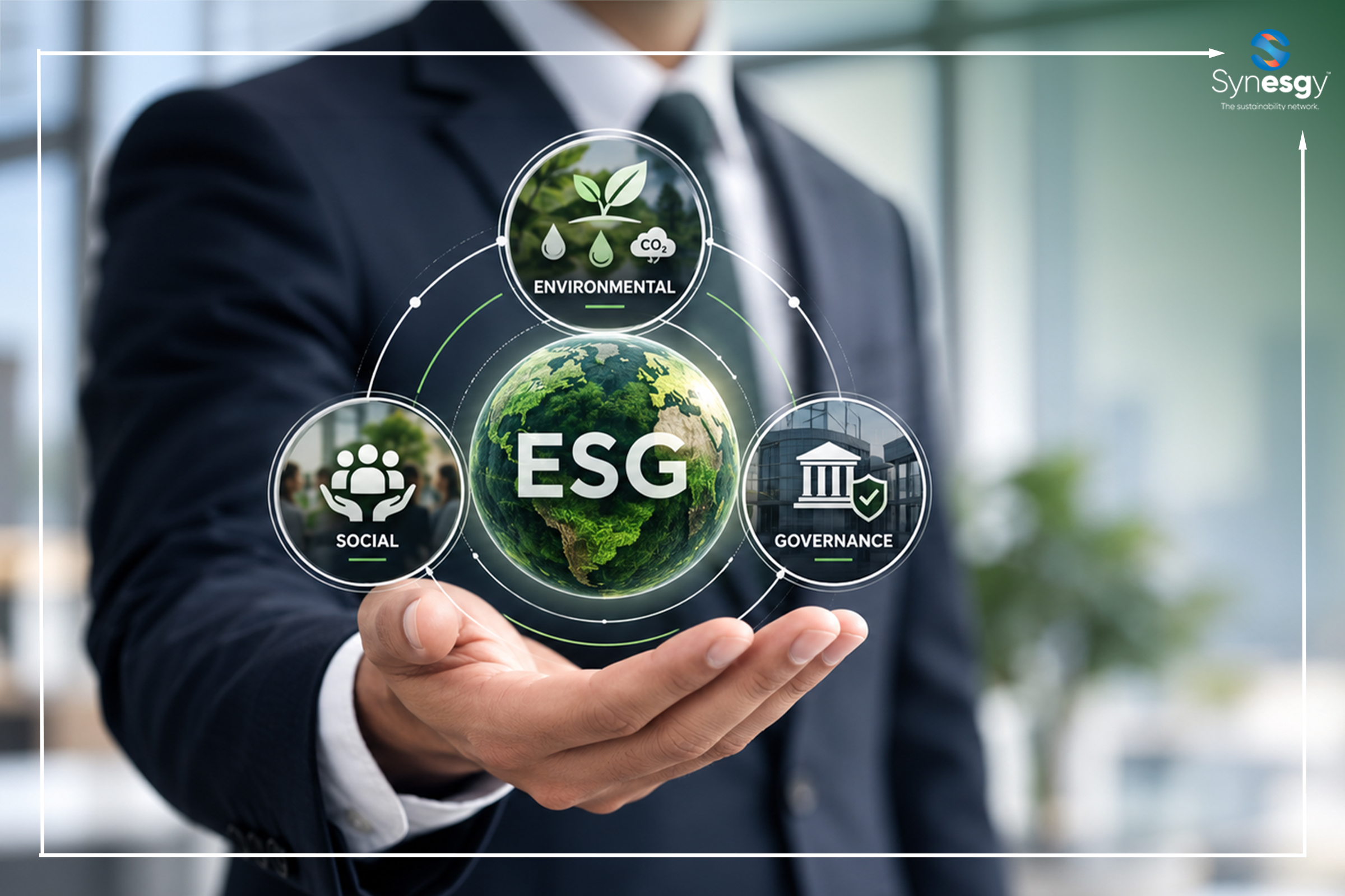
ESG assessment is often associated with environmental performance because topics such as carbon emissions, energy use, water consumption, and waste are highly visible and relatively easy to quantify.
However, environmental performance represents only one part of ESG.
A broader assessment also considers how a company manages its workforce, business conduct, governance structures, supply chain, and stakeholder relationships. These areas can reveal risks and strengths that environmental data alone may not capture.
For example, two companies may have similar emissions levels but differ significantly in workplace safety, employee development, supplier controls, anti-corruption policies, or governance oversight. A complete ESG evaluation therefore looks across Environmental, Social, and Governance factors rather than relying on one category of performance.
Is ESG Only About Environmental Performance?
No. Environmental performance is only one part of ESG assessment.
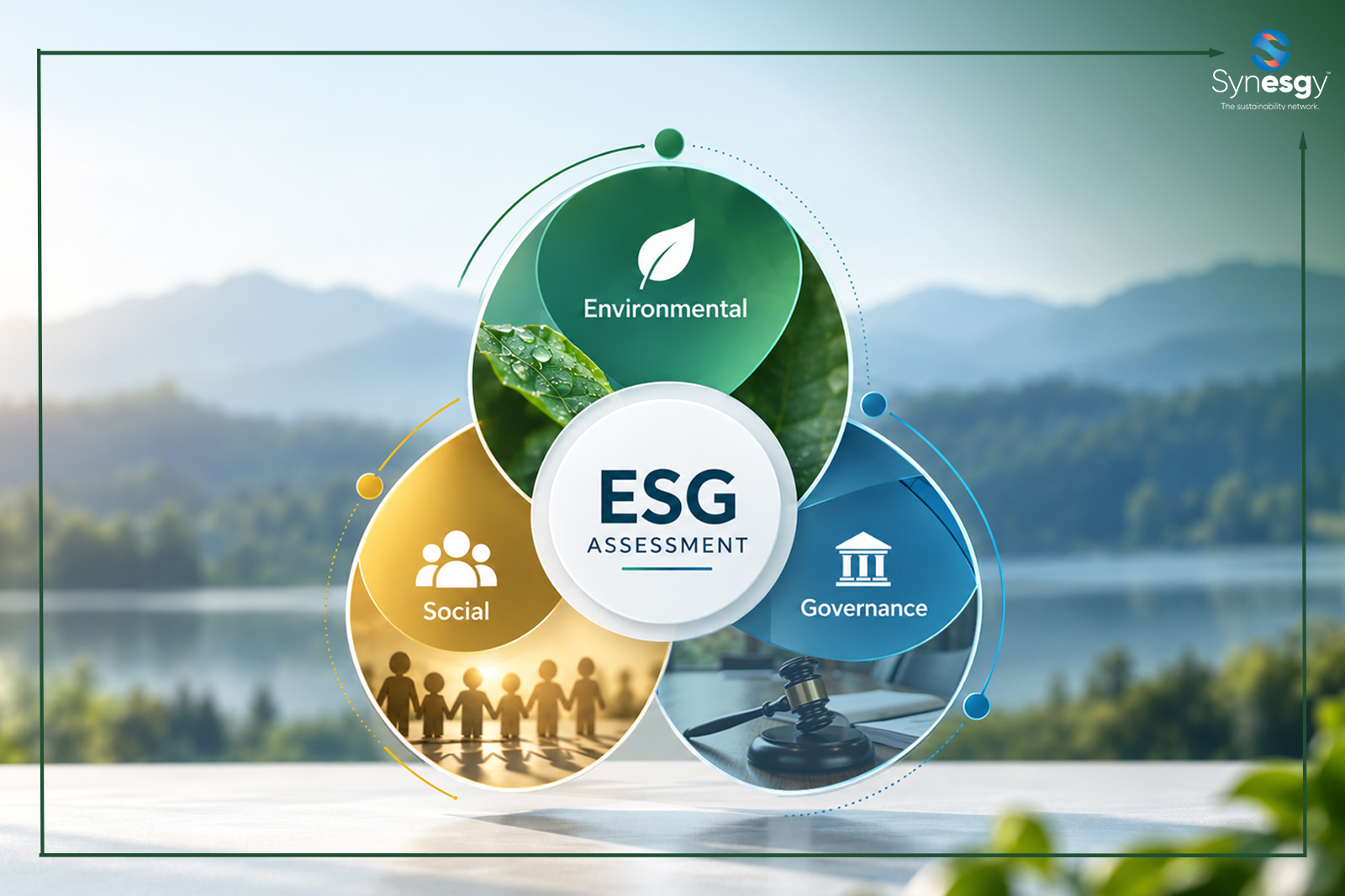
A complete ESG assessment looks across three connected areas: Environmental, Social, and Governance.
The Environmental pillar considers issues such as emissions, energy use, water, waste, pollution, biodiversity, and resource efficiency.
The Social pillar focuses on how a company manages its impact on people, including employees, workers in the value chain, communities, and other stakeholders. This can include working conditions, health and safety, diversity, training, human rights, and employee development.
The Governance pillar examines how the organisation is directed and controlled, including business conduct, compliance, internal controls, anti-corruption measures, whistleblowing, and ESG oversight.
Looking at all three pillars gives a more complete view of ESG performance. A company may perform well environmentally while still having weaknesses in workforce practices, supplier management, or governance controls.
What Does ESG Assessment Actually Measure?
An ESG assessment examines the policies, practices, indicators, and evidence used to understand a company’s sustainability profile.
Depending on the methodology, the assessment may include both quantitative and qualitative information.
Quantitative indicators can include:
-
greenhouse gas emissions
-
energy consumption
-
water usage
-
workplace accident rates
-
training hours
-
workforce composition
Qualitative information can include:
-
sustainability policies
-
governance structures
-
codes of conduct
-
anti-corruption procedures
-
supplier requirements
-
management systems
This combination matters because numbers alone do not always show how well an organisation manages underlying ESG issues.
Why Is Environmental Data Alone Not Enough for an ESG Assessment?
Environmental data can provide valuable insight into areas such as emissions, energy efficiency, waste generation, or water use. But it does not show how the company manages people, suppliers, ethical conduct, or governance.
A business may reduce its emissions while still experiencing:
-
frequent workplace accidents
-
poor employee development practices
-
weak supplier controls
-
inadequate compliance procedures
-
limited accountability for ESG issues
These factors can materially affect the company’s broader sustainability profile.
This is why ESG assessment typically combines environmental indicators with social and governance criteria.
What Social Factors Are Measured in ESG Assessment?
Social assessment focuses on the company’s relationship with people.
Common areas include:
-
workforce composition
-
employment conditions
-
diversity and equal treatment
-
employee training
-
professional development
-
health and safety
-
human rights
-
workers in the supply chain
-
community impacts
The purpose is to understand whether the company has appropriate practices and systems for managing its social responsibilities.
How Does Employee Health and Safety Affect ESG Performance?
Health and safety is an important part of the Social pillar because it provides evidence of how a company protects its workforce.
Assessment may consider:
-
health and safety policies
-
management systems
-
occupational injuries
-
accident frequency
-
lost working days
-
corrective actions
A company may have formal policies in place, but the quality of its actual health and safety performance is also important.
This is why ESG assessment often looks at both documented controls and measurable outcomes.
How Do Workforce Practices Influence a Company’s ESG Profile?
Workforce practices can indicate how effectively a company manages its employees.
Relevant factors may include:
-
employment stability
-
employee development
-
training
-
diversity
-
equal treatment
-
remuneration practices
-
employee welfare
-
human rights protections
These areas help demonstrate whether the company is managing social issues systematically rather than treating them as isolated initiatives.
What Governance Factors Are Measured in ESG Assessment?
Governance assessment examines how decisions are made, controlled, and monitored.
Typical criteria may include:
-
codes of ethics
-
anti-corruption controls
-
whistleblowing mechanisms
-
privacy policies
-
internal controls
-
board responsibilities
-
ESG oversight
-
management-system certifications
Governance matters because sustainability commitments are more credible when there are clear structures and responsibilities behind them.
How Do Supply Chain Practices Fit Into ESG Assessment?
For many companies, ESG risks extend beyond their own operations.
Suppliers may introduce issues related to:
-
labour practices
-
human rights
-
environmental performance
-
health and safety
-
ethical conduct
-
compliance
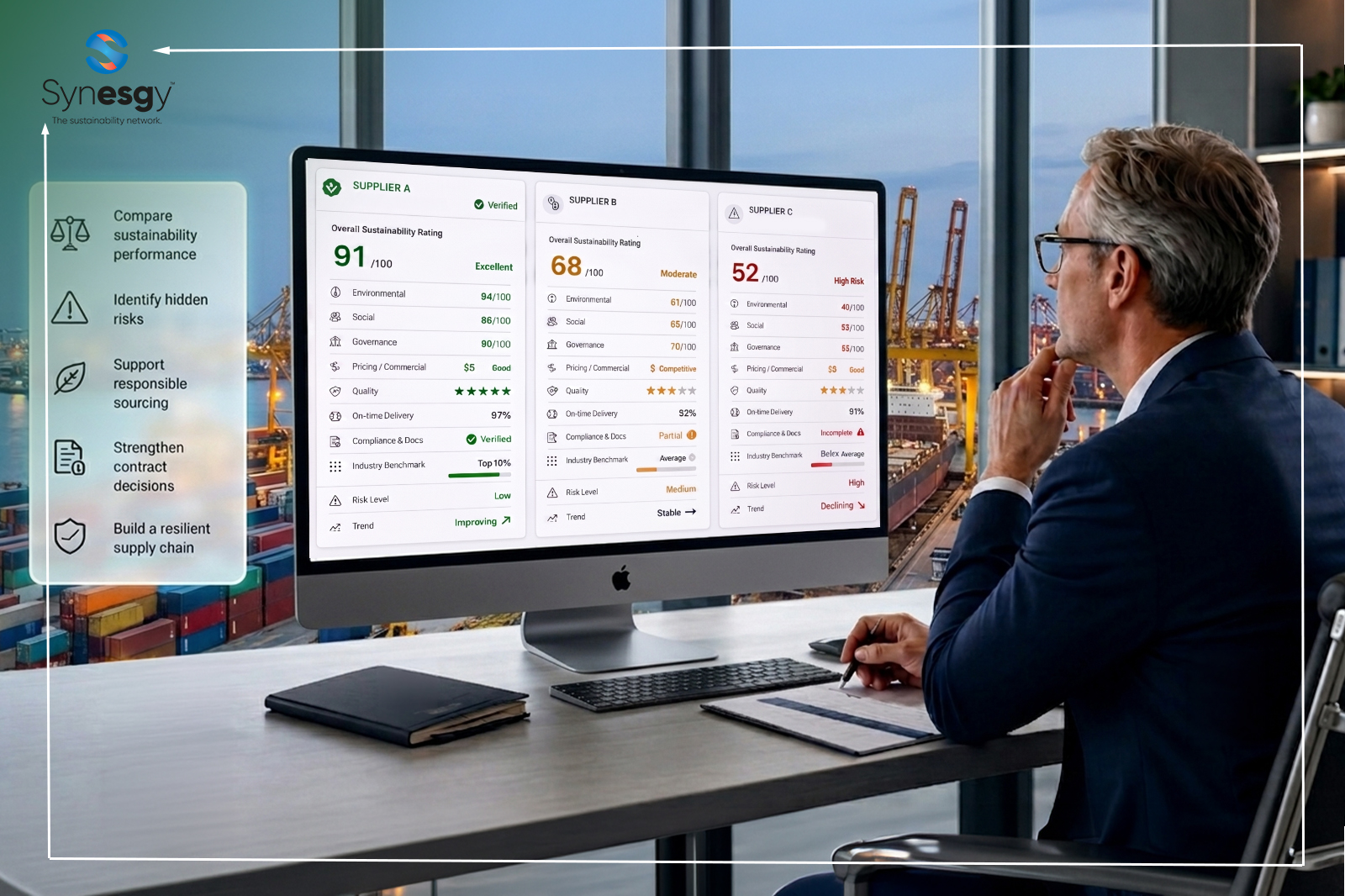
Companies may therefore assess whether ESG criteria are included in supplier selection, qualification, contracting, monitoring, and corrective action.
This is especially relevant for organisations with complex or international supply chains.
Why Can ESG Assessment Criteria Differ by Industry?
ESG risks and priorities are not the same for every business. The relevance of specific Environmental, Social, and Governance factors can vary depending on a company’s sector, operating model, resource use, workforce profile, and supply chain.
For example, a manufacturing company may place greater emphasis on energy consumption, emissions, water use, waste, and workplace safety. A service-based business may face relatively lower direct environmental impacts but greater focus on workforce practices, governance, data protection, and business conduct.
This is why ESG assessment frameworks can apply sector-specific criteria or weighting rather than treating every factor as equally important for every company. In the Synesgy methodologies, sector-specific weights are used to reflect the relative importance of different ESG topics within a given industry.
A sector-sensitive approach makes the assessment more relevant by focusing attention on the ESG issues that are most material to the company’s actual activities and operating context.
How Can a Company Identify Which ESG Areas Need Improvement?
An ESG assessment can provide a structured view of where a company is performing well and where further attention may be needed.
Rather than treating every ESG issue equally, companies can use assessment results to understand which Environmental, Social, and Governance topics are most relevant to their operations and sector.
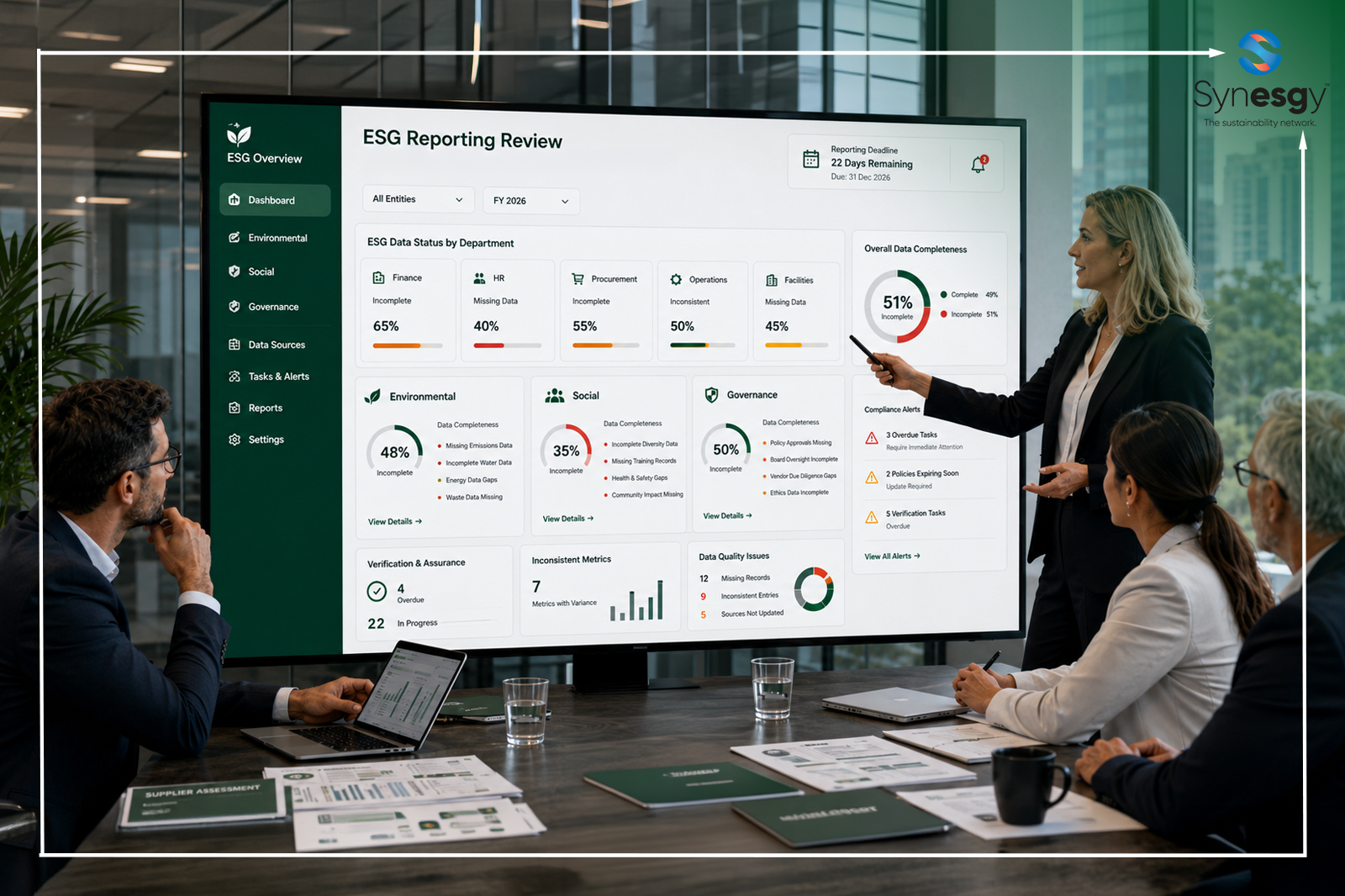
This can help highlight areas where performance is less developed, where policies or controls may need strengthening, or where better data and monitoring are required.
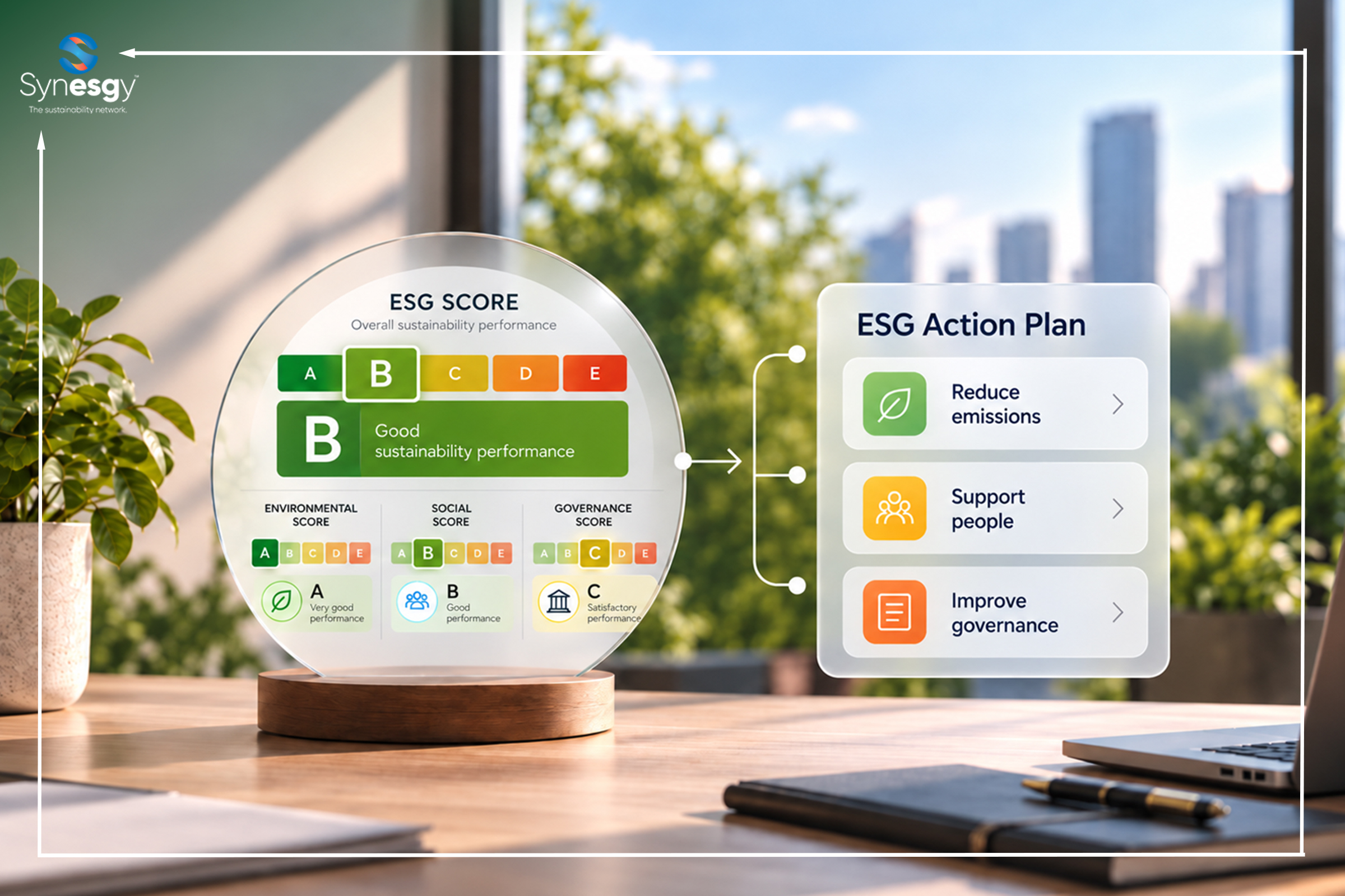
The value of the assessment therefore goes beyond the final score. It can also provide a clearer basis for deciding which ESG areas deserve closer review and future action.
How Does Synesgy Bring Environmental, Social and Governance Factors Together?
Synesgy uses a structured ESG questionnaire and assessment approach to evaluate Environmental, Social, and Governance factors within one framework.
The questionnaire covers areas such as sustainability strategy, ESG risk management, codes of conduct, certifications, employee-related practices, energy use, greenhouse gas emissions, waste, water, pollution, biodiversity, compliance, and stakeholder relations. The assessment can also consider supply-chain practices, helping businesses look beyond their own operations when evaluating ESG performance.
Rather than viewing sustainability only through environmental indicators, Synesgy brings together information across all three ESG pillars to provide a broader picture of a company’s sustainability profile. Its outputs can include an overall ESG score, individual Environmental, Social, and Governance scores, and identified areas for improvement that take industry-specific impacts into account.
Conclusion
A meaningful ESG assessment should reflect how a company manages environmental impacts, people, business conduct, and governance responsibilities together. Assessing these areas in isolation can create gaps, while a broader assessment helps businesses better understand strengths, weaknesses, and priority areas for improvement.
Want to understand your company’s ESG performance better? Explore Synesgy’s ESG assessment approach to identify key sustainability strengths, gaps, and improvement priorities across Environmental, Social, and Governance areas.
FAQs
Q: Why Are Social and Governance Factors Important in ESG Assessment?
A: Social and Governance factors help show how a company manages people, ethical conduct, compliance, and internal oversight. These areas can reveal risks or weaknesses that environmental data alone may not capture, such as poor working conditions, weak controls, or limited accountability.
Q: Does ESG Assessment Include Carbon Emissions and Energy Consumption?
A: Yes. Carbon emissions and energy consumption are commonly assessed within the Environmental pillar because they provide important information about a company’s environmental impact and resource use. They are usually considered alongside other environmental indicators rather than in isolation.
Q: Are Water, Waste and Biodiversity Included in ESG Assessment?
A: Yes, these areas can form part of the Environmental pillar, depending on the company’s activities and sector. Water use, waste management, recycling, pollution, and biodiversity can help show how effectively a business manages its broader environmental impact.
Q: Are Anti-Corruption and Whistleblowing Policies Part of ESG Assessment?
A: Yes. Anti-corruption and whistleblowing policies are common Governance factors because they indicate whether a company has controls in place to support ethical conduct, compliance, and accountability. Assessments may also consider how these policies are implemented and monitored.