Companies talk about sustainability more than ever, yet many customers and partners still struggle to trust what they are hearing. The gap between what a business claims and what it actually discloses has become one of the biggest credibility risks in modern commerce. This is where ESG transparency matters most.
ESG transparency is the practice of openly sharing environmental, social, and governance information so that customers, partners, and investors can evaluate a company’s real impact and conduct, not just its marketing message. When done well, it becomes one of the strongest tools a business has for building stakeholder trust and protecting its reputation. When done poorly or not at all, it becomes a liability.
This article looks at what ESG transparency actually means, why it matters, how it shapes brand reputation, and what businesses should be disclosing if they want to build lasting customer trust.
Ready to see where your business stands on ESG transparency? Start an ESG assessment with Synesgy to get a clear picture of your current disclosure practices.
What Is ESG Transparency
ESG transparency is the consistent, honest disclosure of a company’s environmental, social, and governance practices. It covers everything from how a business manages emissions and resources, to how it treats employees and communities, to how its leadership makes decisions and manages risk.
Transparency is different from reporting. A company can publish a lengthy sustainability report and still be opaque if the data is selective, vague, or difficult to verify. True ESG transparency means the information is accurate, consistent over time, and detailed enough for outside parties to draw their own conclusions. It is less about the volume of disclosure and more about its honesty and clarity.
Why Is ESG Transparency Important
ESG transparency has become a business requirement, driven by three converging forces.
First, regulatory pressure is increasing across most major markets, with governments and industry bodies expecting more standardized non-financial disclosure. Second, investors now factor ESG performance into funding and partnership decisions, treating a lack of disclosure as a risk signal in itself. Third, and perhaps most significantly, customers themselves have changed. Buyers, especially in B2B contexts, increasingly ask vendors and suppliers to demonstrate responsible business practices before signing a contract.
Together, these pressures mean that ESG transparency is no longer just about compliance. It has become a direct input into whether a company can win and keep business.
How Does ESG Transparency Affect Brand Reputation
Brand reputation is built on a simple chain: disclosure signals credibility, credibility builds trust, and trust shapes preference. When a company shares clear, verifiable information about its environmental and social practices, it sends a signal that it has nothing to hide. Over time, that consistency becomes part of the brand itself.
The reverse is also true. A company that makes broad sustainability claims without backing them up with real data risks being seen as evasive, even if its underlying practices are reasonable. In competitive markets, this perception gap can be enough to push a customer toward a more transparent competitor, even if that competitor’s actual performance is similar.
Reputation built on ESG transparency also tends to be more resilient. Because the claims are grounded in real disclosure rather than marketing language, the brand is less vulnerable to being undermined by a single negative story or investigation.
Does ESG Transparency Improve Customer Trust
Yes, and increasingly this is where the commercial impact is most visible. Customers, and particularly business buyers, are no longer taking sustainability claims at face value. They want to see the underlying data: emissions figures, labor practices, governance structures, and supply chain information.
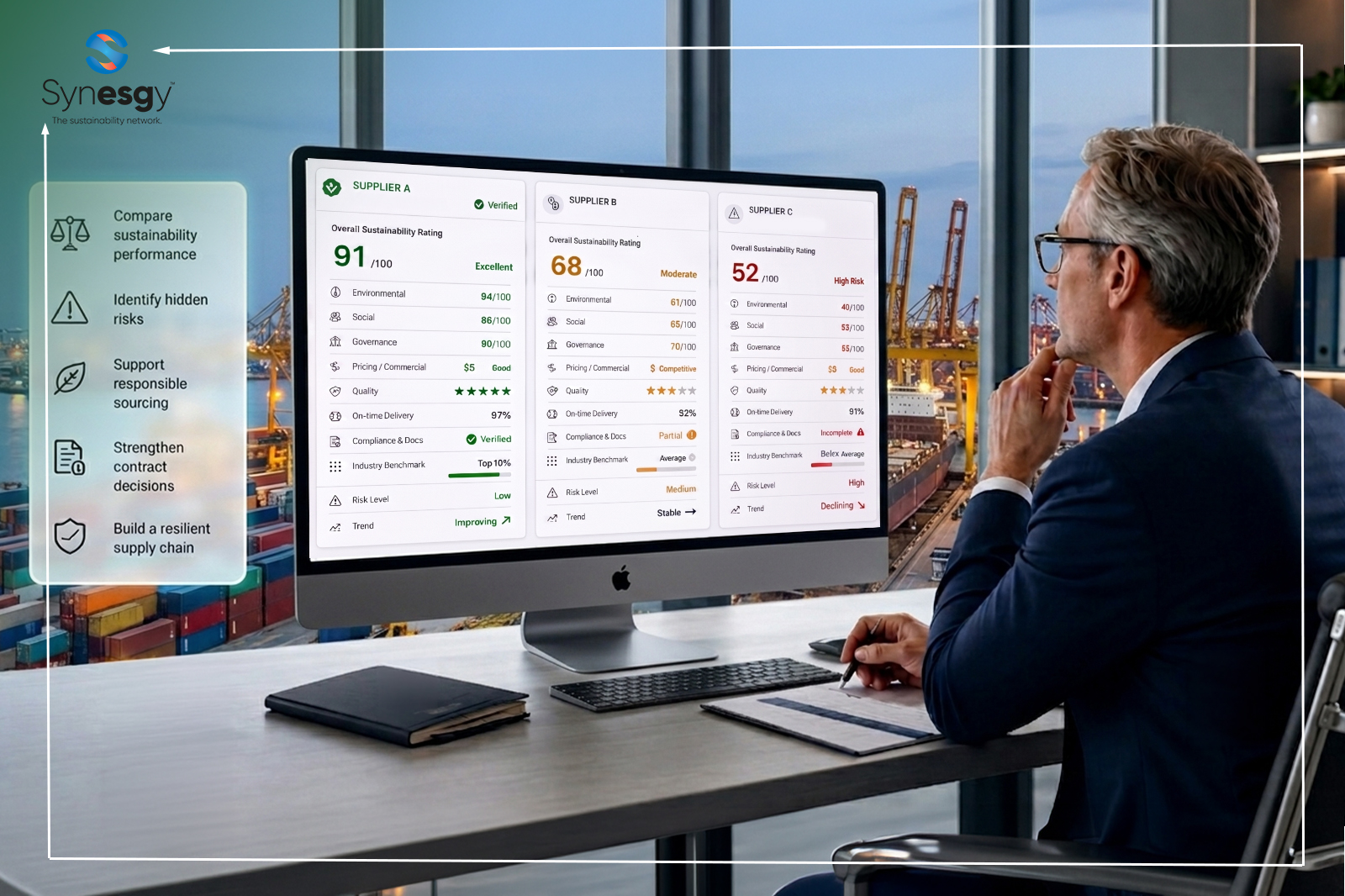
This shift is especially visible in B2B procurement, where ESG transparency has become a standard part of vendor evaluation. Companies that can readily provide this information move through due diligence faster and are viewed as lower-risk partners. Companies that cannot, or that resist sharing specifics, often find themselves excluded from consideration entirely, regardless of the quality of their product or service.
For consumer-facing businesses, the effect is slower but just as real. Customers who feel a company is transparent about its ESG practices are more likely to stay loyal, recommend the brand, and give it the benefit of the doubt when problems arise.
Curious how your ESG transparency compares to industry expectations? Run an ESG assessment through Synesgy and get a practical starting point for improvement.
What Information Should Companies Disclose
The scope of ESG disclosure can feel overwhelming, but it generally falls into three connected categories.
Environmental data includes emissions, energy and resource use, waste management, and environmental risk exposure. This is often the most quantifiable category and the one customers expect to see first.
Social data covers labor practices, employee wellbeing, community impact, diversity and inclusion, and supply chain labor standards. This category tends to carry the most reputational weight, since it touches directly on how people are treated.
Governance data includes board structure, ethics policies, anti corruption measures, and risk management processes. While less visible to the average customer, this category is heavily weighted by investors and B2B partners, since it reflects how well a company manages itself internally.
Rather than trying to disclose everything at once, most businesses benefit from a materiality assessment, a structured way of identifying which ESG factors are most relevant to their industry, size, and stakeholders. This keeps disclosure focused and meaningful instead of scattered and generic.
Why Should Businesses Disclose ESG Data
Beyond meeting external expectations, there is a direct business case for disclosure.
Companies that disclose ESG data consistently tend to face lower reputational risk, since there is less room for surprises or accusations of hidden practices. They also tend to have stronger standing with investors, who increasingly treat disclosure quality as a proxy for overall management quality.
In competitive procurement processes, businesses with clear ESG data available often move faster through vendor assessments, since they are not scrambling to produce information on request. This can translate directly into shorter sales cycles and stronger win rates in markets where ESG criteria are part of the buying decision.
Structured ESG assessment tools, as the one Synesgy offers, can help businesses organize this data into a clear, comparable format, making disclosure less of an administrative burden and more of a strategic asset.
What Are ESG Disclosures
ESG disclosures are the specific pieces of information a company shares to demonstrate its environmental, social, and governance performance. They can take several forms, including standalone sustainability reports, sections within annual reports, dedicated disclosure statements, or structured data shared directly with partners and assessment platforms.
What separates a strong disclosure from a weak one is not format but substance. Strong disclosures are specific, consistent year over year, and open to external verification. Weak disclosures tend to rely on broad statements, cherry-picked highlights, or one-time reports that are never updated.
As ESG expectations continue to formalize across industries, disclosures are increasingly expected to be structured and comparable, rather than presented as free-form narrative. This makes it easier for customers, investors, and partners to evaluate performance across companies rather than taking each claim at face value.
How Synesgy Supports ESG Transparency
Moving from good intentions to credible ESG transparency requires more than a willingness to disclose. It requires a structured way to assess, organize, and present that information clearly.
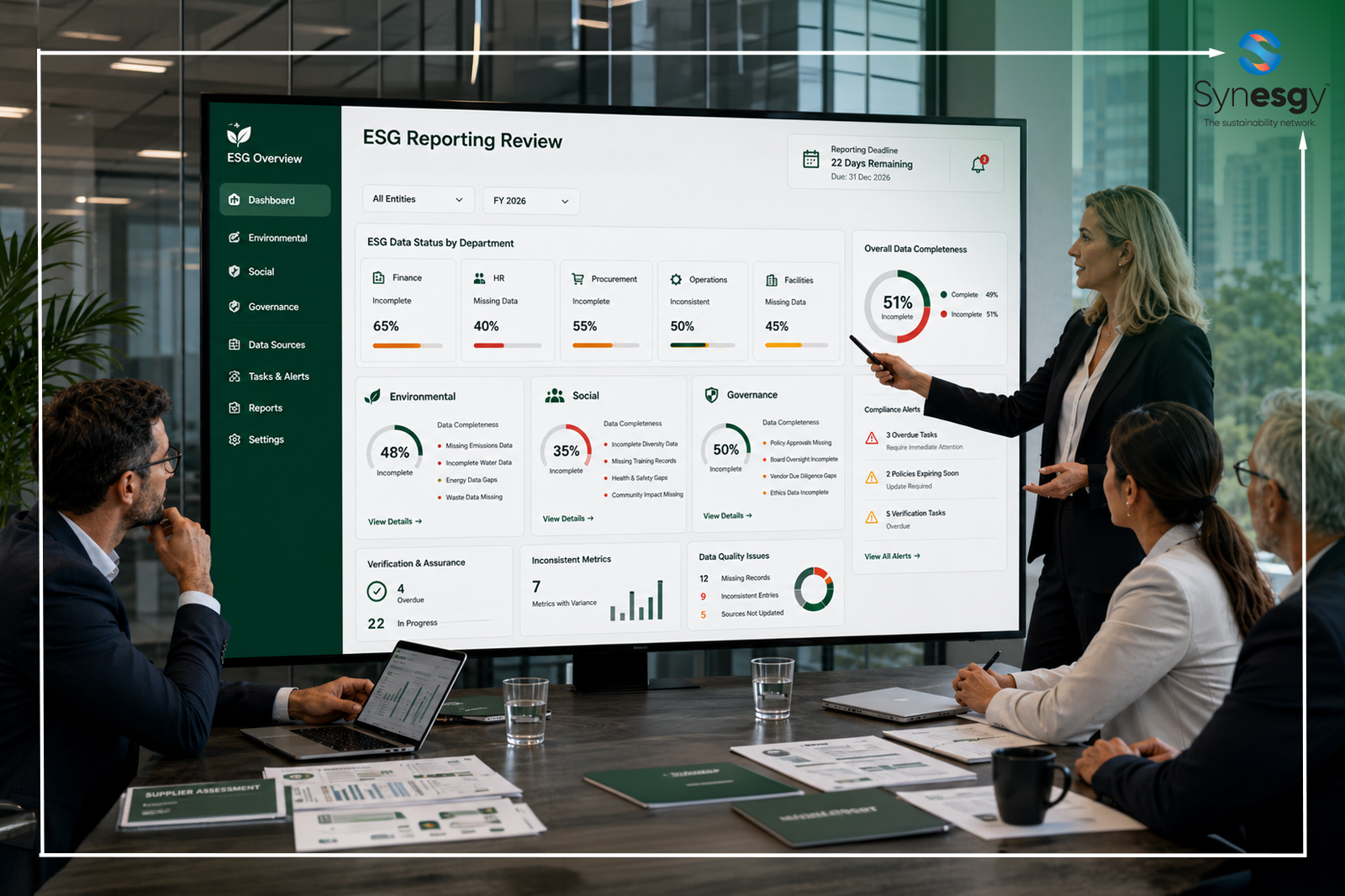
Synesgy’s ESG assessment service is built for exactly this. It gives businesses a practical framework to evaluate their environmental, social, and governance performance, and to turn that evaluation into disclosure that customers, partners, and investors can actually trust. Rather than starting from a blank page, businesses get a clear structure to work from and a way to track progress over time.
For companies that are serious about building trust through transparency, an ESG assessment is often the most efficient starting point.
Conclusion
ESG transparency now sits at the center of business credibility. Customers evaluate it before they buy, partners assess it before they sign, and investors weigh it before they commit. Businesses that disclose clearly and consistently build the kind of trust that compounds over time, while those that stay vague or selective leave themselves exposed to doubt and reputational risk.
The businesses that get this right treat ESG transparency as an ongoing discipline, not a one-time report. They know what to disclose, they keep it current, and they make it easy for others to verify. That consistency is what ultimately builds a brand reputation that holds up under scrutiny.
FAQs
Q: How can a company start improving its ESG transparency?
A: The most practical starting point is a structured ESG assessment. This identifies which environmental, social, and governance factors matter most for the business, highlights existing gaps, and gives a clear baseline to measure improvement against, rather than trying to disclose everything at once.
Q: What is the difference between ESG transparency and greenwashing?
A: ESG transparency means sharing accurate, verifiable data that reflects real practices, even where performance is imperfect. Greenwashing involves making sustainability claims that exaggerate or misrepresent actual performance. Transparency invites scrutiny, while greenwashing tries to avoid it.
Q: How do customers or partners verify a company’s ESG claims?
A: Verification usually comes through requested data, structured assessments, or third-party evaluation. Customers and partners look for consistency over time, specific figures rather than broad statements, and a willingness to share information beyond what is legally required.
Q: What role does an ESG assessment play in building transparency?
A: An ESG assessment gives a business a structured, consistent way to measure and document its environmental, social, and governance performance. This makes disclosure easier to produce, easier for others to verify, and easier to improve year over year.
Talk to a Synesgy ESG Specialist.
E-mail: info.me@crif.com