Companies operating across multiple sites, subsidiaries, or regions often struggle with one core problem: ESG data that does not match up. One location tracks emissions in different units than another, reporting frequency varies by team, and definitions of the same metric shift from site to site. This makes ESG data management harder than the reporting itself.
This guide covers what ESG data is, why it matters, which metrics to track, and how to build a standardized collection process that works across every location in the business.
Struggling to get consistent ESG data across sites? See how Synesgy centralizes ESG data management.
What is ESG Data?
ESG data is the set of quantitative and qualitative information a company collects to measure its environmental, social, and governance performance. It includes everything from energy consumption figures to board composition records.
ESG data spans three categories: environmental data (emissions, energy, water, waste), social data (labor practices, health and safety, community impact), and governance data (board oversight, ethics, compliance). On its own, this data is just raw input. Its value comes from how consistently it is collected, which is the core challenge for any business operating across multiple locations.
Why is ESG Data Important?
ESG data matters because it is the foundation for regulatory compliance, investor confidence, and buyer trust, none of which can be demonstrated without accurate, verifiable information. Without reliable data, ESG claims cannot be substantiated.
Specifically, ESG data supports:
-
Regulatory compliance, since disclosure requirements depend on accurate underlying data
-
Investor confidence, as ESG data increasingly factors into funding and valuation decisions
-
Supply chain and buyer trust, since larger buyers often require ESG data as part of supplier qualification
-
Internal risk management, by surfacing operational or reputational risks before they escalate
What are ESG KPIs?
ESG KPIs are the specific, measurable indicators a company tracks over time to monitor its ESG performance, distinct from the raw ESG data used to calculate them. A KPI turns data into a trackable, comparable metric.
For example, raw energy consumption figures are ESG data. Energy consumption per unit of output, tracked quarter over quarter, is an ESG KPI. This distinction matters for multi-location businesses, since KPIs allow performance to be compared across sites even when the underlying data collection methods differ slightly.
What ESG Metrics Should Businesses Track?
Businesses should track a core set of metrics across environmental, social, and governance categories, with the exact list shaped by a materiality assessment rather than a generic checklist. Tracking too many metrics without a clear rationale slows down data collection and reporting.
Common starting metrics by category:
-
Environmental: energy use, Scope 1, Scope 2, and Scope 3 emissions, water consumption, waste generated
-
Social: employee safety incidents, labor practices, community engagement, supplier labor conditions
-
Governance: board composition, ethics violations reported, data privacy compliance, anti-corruption policies
A materiality assessment should determine which of these carry the most weight for a given business and sector before finalizing a tracking list. This keeps data collection focused rather than expanding into metrics that do not connect to actual business risk.
How Do Companies Collect ESG Data?
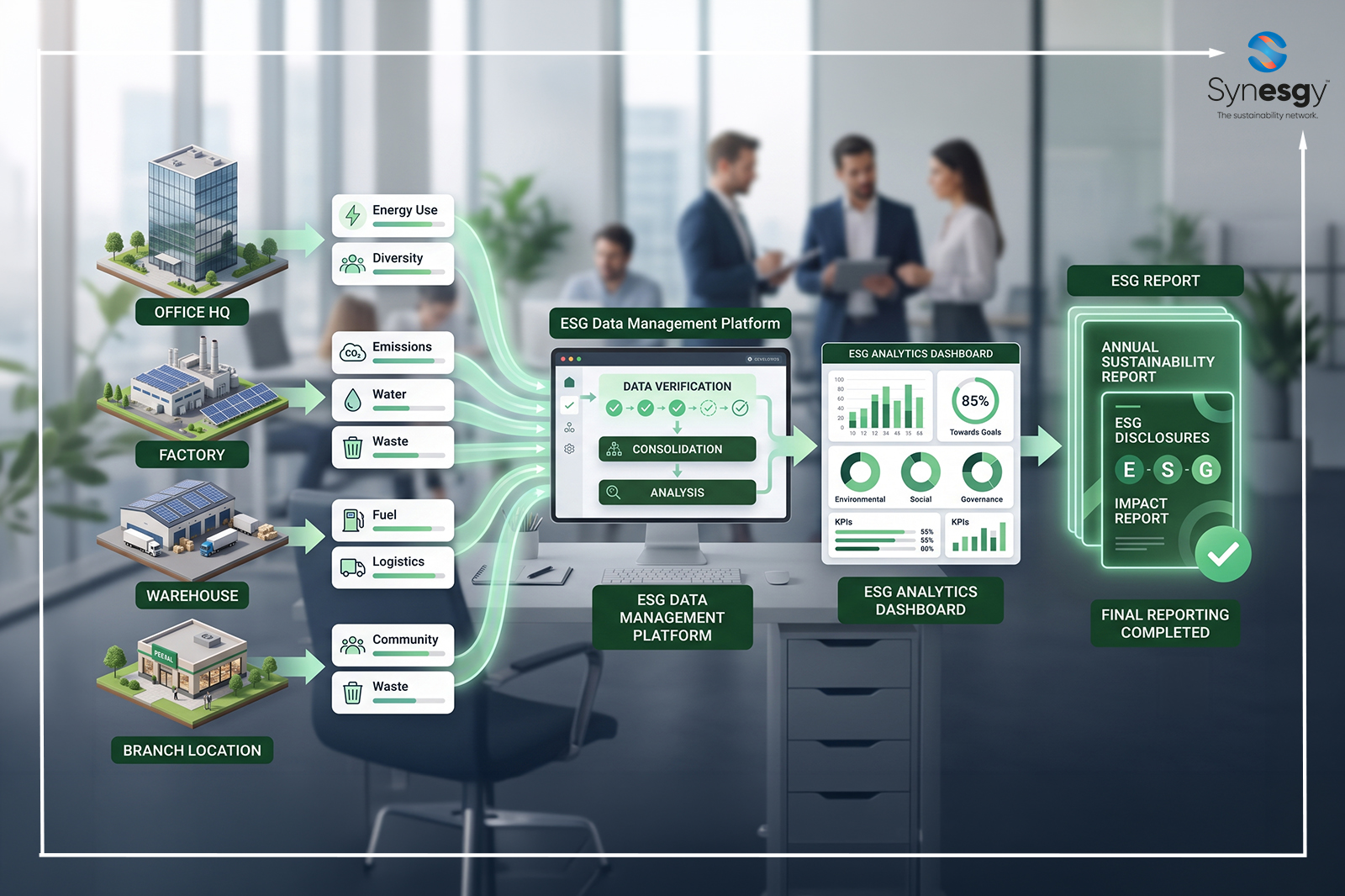
Companies collect ESG data through a structured process that assigns ownership, standardizes definitions, and sets a consistent collection frequency before data is consolidated into a central system. Skipping standardization is the most common reason ESG data becomes unreliable across a growing business.
-
Identify which metrics to collect, based on the materiality assessment
-
Assign data owners at each site, department, or subsidiary
-
Standardize data collection templates and definitions so every location reports the same metric the same way
-
Set a consistent collection frequency across the organization
-
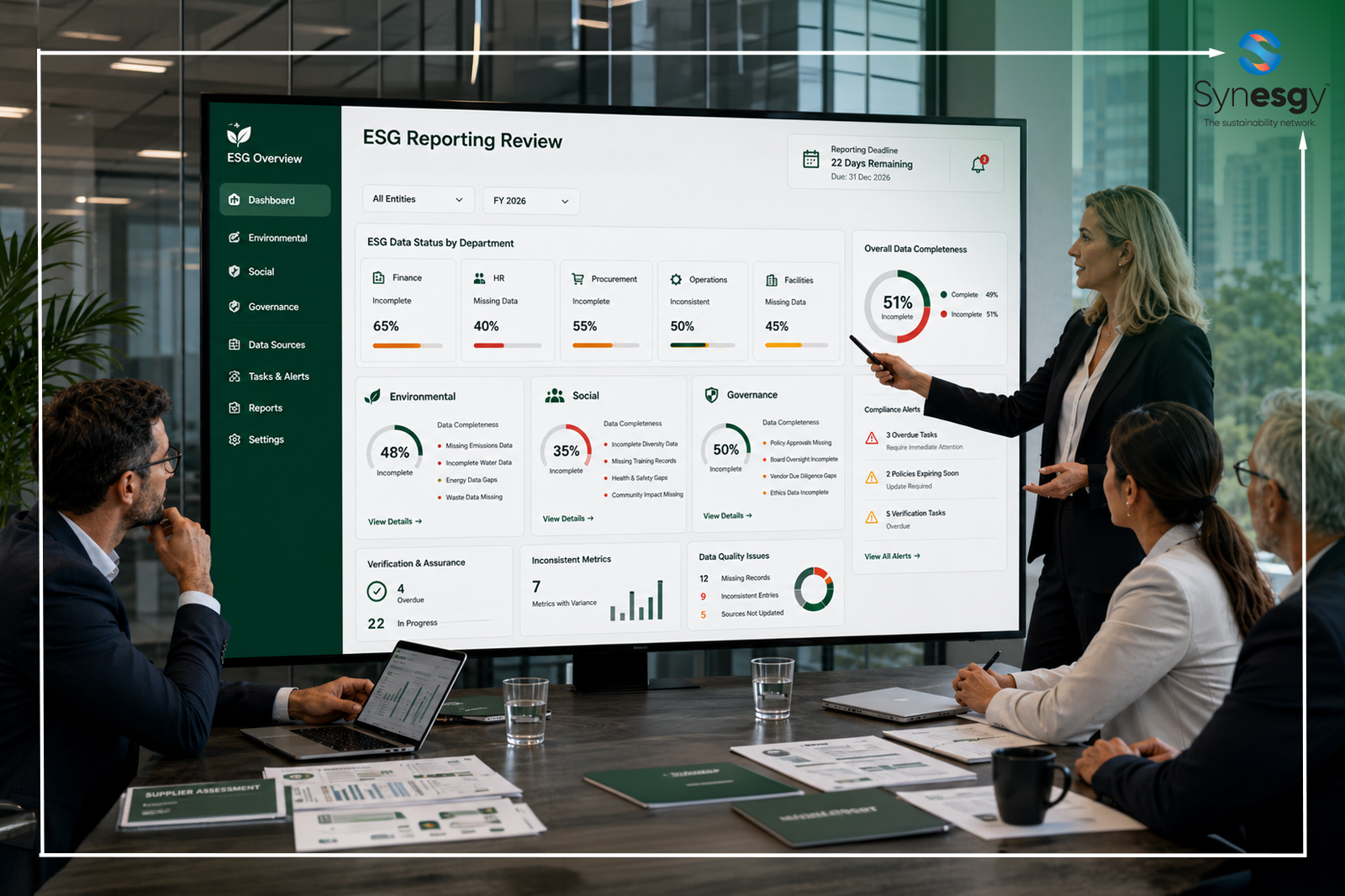
Validate data before it is consolidated, checking for gaps, outliers, or inconsistent units
-
Feed validated data into a central reporting system for consolidation and analysis
How Do Multinational Companies Manage ESG Data?
Multinational companies manage ESG data by establishing a centralized data governance structure that sets group-level standards while allowing local teams to collect data specific to their site or region. Without this structure, data collected across subsidiaries rarely aligns cleanly at consolidation.
The most common friction points for multinational ESG data management include:
-
Inconsistent definitions, where two sites report the same metric using different boundaries or assumptions
-
Unit and currency standardization, particularly for emissions, energy, and financial-linked metrics
-
Varying local regulatory requirements, which can mean some sites collect additional data others do not need
-
Uneven data maturity, since newer sites or recently acquired subsidiaries often start with less structured collection processes
The standard solution is a group-level data governance framework that defines metric definitions, collection templates, and reporting cadence centrally, while assigning local ownership for actual data capture. This keeps consolidated ESG reporting comparable across the business without forcing every site through an identical operational process.
Managing ESG data across multiple entities or regions? Talk to Synesgy about consolidating your reporting process.
How Often Should ESG Data be Updated?
Most companies collect operational ESG data monthly or quarterly, with a full consolidation cycle for annual reporting or disclosure. The right frequency depends on how the data will be used.
Data feeding into internal risk monitoring or performance tracking generally needs monthly or quarterly updates to be useful. Data intended only for annual disclosure can be consolidated less frequently, provided the underlying collection process runs consistently throughout the year rather than being assembled retroactively before a reporting deadline.
Standardizing ESG Data Collection Across Locations
Before scaling ESG data collection across multiple sites, confirm the following are in place:
-
Consistent metric definitions used across all locations
-
A named data owner at each site or subsidiary
-
A shared collection template or centralized software platform
-
An agreed collection frequency applied organization-wide
-
A validation step before data is consolidated at the group level
-
Alignment with recognized reporting standards such as GRI, SASB, or TCFD
How Synesgy Supports Multi-Location ESG Data Management
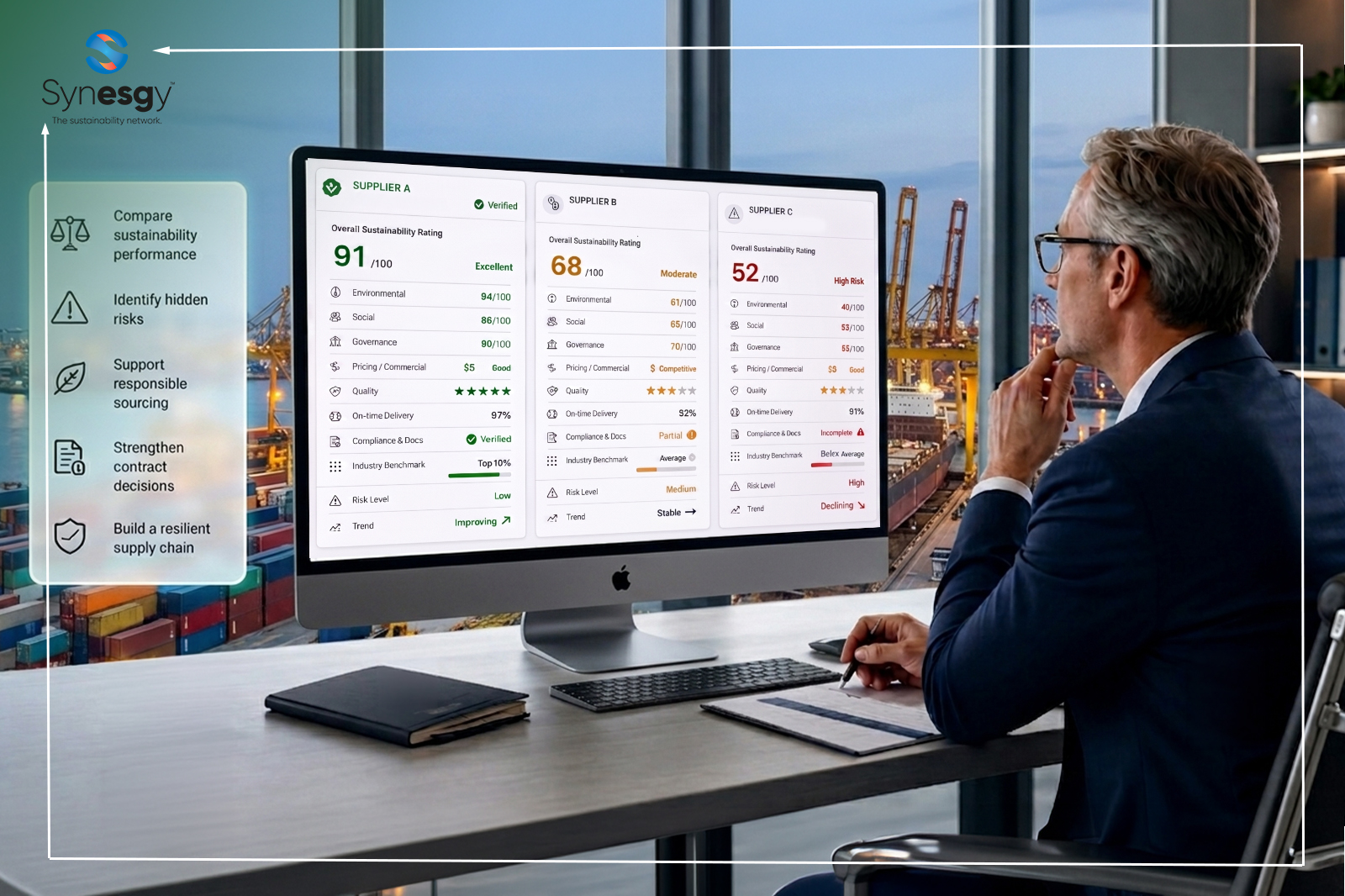
Synesgy helps businesses centralize ESG data collection across multiple sites, subsidiaries, or supply chain partners, replacing fragmented spreadsheets with a consistent data governance structure. Through standardized data inputs and a single ESG score, Synesgy gives group-level teams visibility into performance across every location without losing local-level detail.
For multinational businesses, this structured approach reduces the manual work of reconciling inconsistent definitions and units across sites, supporting both internal reporting accuracy and external ESG disclosure requirements.
Building a Reliable ESG Data Foundation Across Every Location
Consistent ESG data management across multiple business locations depends on clear ownership, standardized definitions, and a validation process that catches inconsistencies before they reach consolidated reporting. Without this foundation, even a well-designed ESG program will produce unreliable results.
FAQs
Q: What is the difference between ESG data and ESG reporting?
A: ESG data is the raw information collected on environmental, social, and governance performance, while ESG reporting is the structured output that communicates that data to regulators, investors, or buyers.
Q: Who is responsible for ESG data collection at a company?
A: Responsibility typically sits with a named data owner at each site or department, reporting into a central sustainability or ESG governance function that oversees consolidation and reporting.
Q: How do you ensure ESG data accuracy across multiple sites?
A: Accuracy depends on standardized definitions and templates, a validation step before consolidation, and clear ownership at each location, rather than relying on manual reconciliation after the fact.
Q: What happens if ESG data is inconsistent across locations?
A: Inconsistent data leads to unreliable consolidated reporting, which can undermine investor confidence, complicate regulatory disclosure, and make it difficult to compare performance across sites over time.
Q: Can small businesses with one location skip formal data governance?
A: Single-location businesses need a lighter governance structure than multinationals, but basic standardization, such as consistent metric definitions and a regular collection schedule, still supports accurate reporting as the business grows.
Q: What is the difference between ESG data and financial data?
A: ESG data measures environmental, social, and governance performance, while financial data measures monetary performance. The two increasingly intersect as ESG data is used to assess financial risk and investment decisions.
Talk to a Synesgy ESG Specialist.
E-mail: info.me@crif.com