More buyers, procurement teams, and corporate partners are now asking suppliers to complete an ESG questionnaire before a contract is signed, renewed, or extended. For many businesses, this request arrives with little warning and even less context on what is actually being asked or why. An ESG questionnaire is not simply a compliance form to fill in quickly. It is an evaluation of how a company manages its environmental, social, and governance practices, and increasingly, it shapes whether that company is seen as a low-risk or high-risk partner.
This guide walks through what an ESG questionnaire actually covers, why businesses receive them, and how to prepare so the process feels manageable rather than overwhelming. Whether this is your first ESG survey or your tenth, understanding the structure behind it makes a meaningful difference in how confidently you respond.
If your business wants a clearer picture of where it currently stands, Synesgy’s ESG assessment offers a structured way to evaluate readiness before a questionnaire lands in your inbox.
What Is an ESG Questionnaire
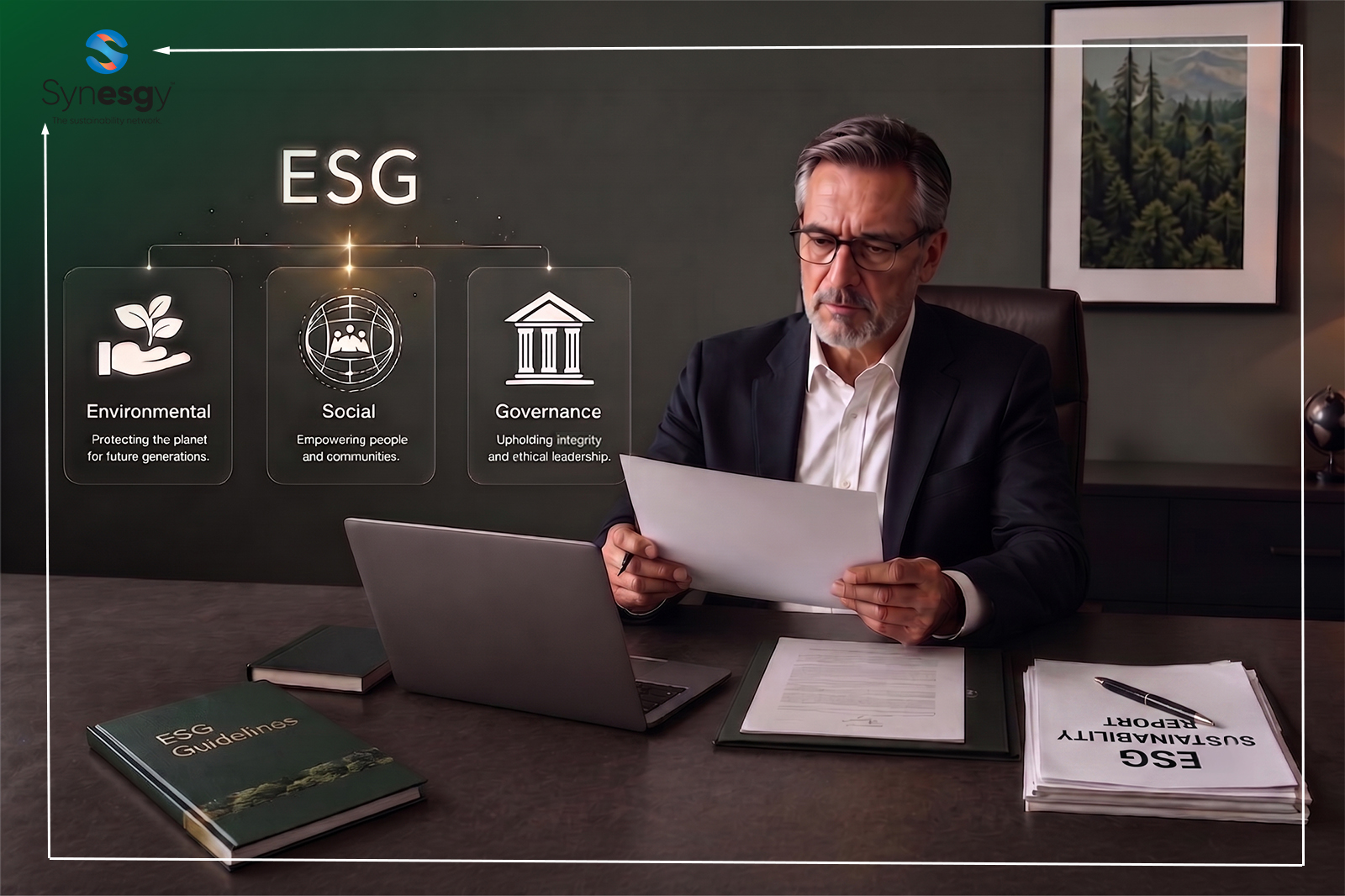
An ESG questionnaire is a structured set of questions used to evaluate a company’s environmental, social, and governance practices. Buyers, investors, and corporate partners use these questionnaires to understand how a business manages risks and responsibilities that go beyond financial performance.
Unlike a financial audit, an ESG questionnaire looks at operational practices: how a company handles emissions and resource use, how it treats its workforce, and how its governance structure supports accountability. These assessments typically appear at specific points in a business relationship, most often during supplier onboarding, contract renewal, or periodic supply chain reviews. Some questionnaires are short screening tools, while others are detailed assessments covering dozens of criteria across all three ESG pillars.
For suppliers, the questionnaire often represents the first formal touchpoint where sustainability practices are evaluated as part of doing business, rather than treated as a separate initiative.
Why Do Companies Receive ESG Surveys
Businesses rarely request an ESG questionnaire out of general interest. There is almost always a specific driver behind the request, and understanding that driver helps explain what the evaluator is actually looking for.
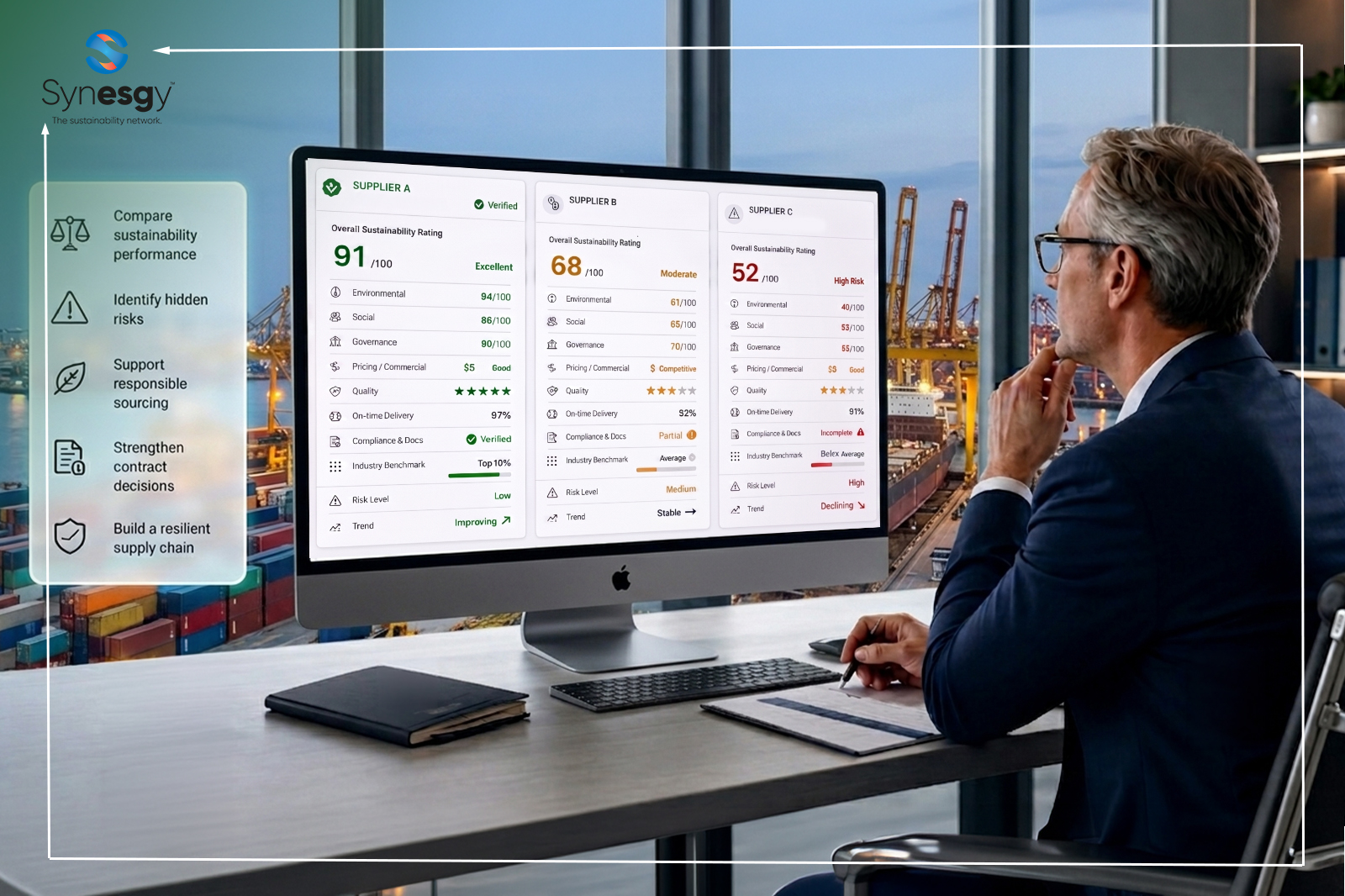
Large buyers face growing regulatory pressure to disclose sustainability information across their own supply chains, which means they need visibility into how their suppliers operate. Corporate sustainability commitments made publicly by a buyer often depend on supplier-level data to be credible. Responsible sourcing policies require proof that suppliers meet baseline standards on labor, environment, and governance. And from a pure risk management perspective, a supplier with weak ESG practices can expose a buyer to reputational, operational, or legal risk further down the line.
None of this means a business receiving a questionnaire is being singled out. In most cases, every supplier above a certain size or contract value receives the same request as part of a standardized process.
What Questions Are Included in ESG Assessments
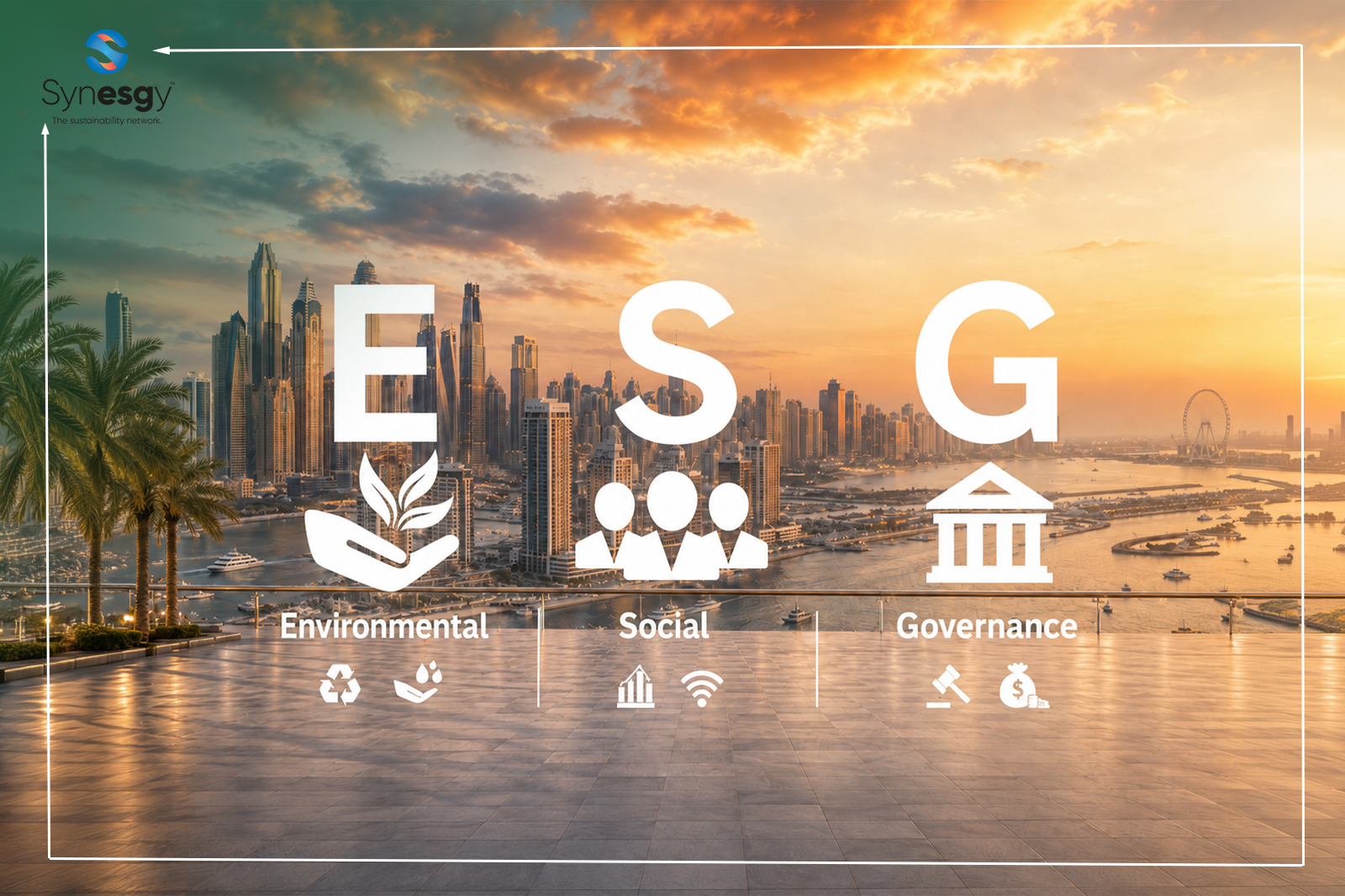
Most ESG questionnaires are organized around the three core pillars, though the depth and phrasing vary by industry and by the buyer issuing the request.
Environmental questions typically cover how a company manages energy use, waste, emissions, and resource consumption. This can include whether an environmental policy exists, whether targets are tracked, and how resource use has changed over time.
Social questions focus on labor practices, health and safety standards, and human rights policies. Evaluators want to know whether a company has documented policies covering working conditions, non-discrimination, and employee wellbeing, and whether those policies are actively applied rather than just written down.
Governance questions examine organizational structure, oversight, and accountability. This includes anti-corruption policies, board or leadership oversight of ESG matters, and how decisions affecting ESG performance are made and reviewed.
Some questionnaires also include a fourth category around supply chain oversight, asking whether the responding company applies similar ESG expectations to its own suppliers.
How Should Companies Prepare for ESG Questionnaires
Preparation matters more than most businesses expect, and starting early avoids the scramble that comes with a tight deadline.
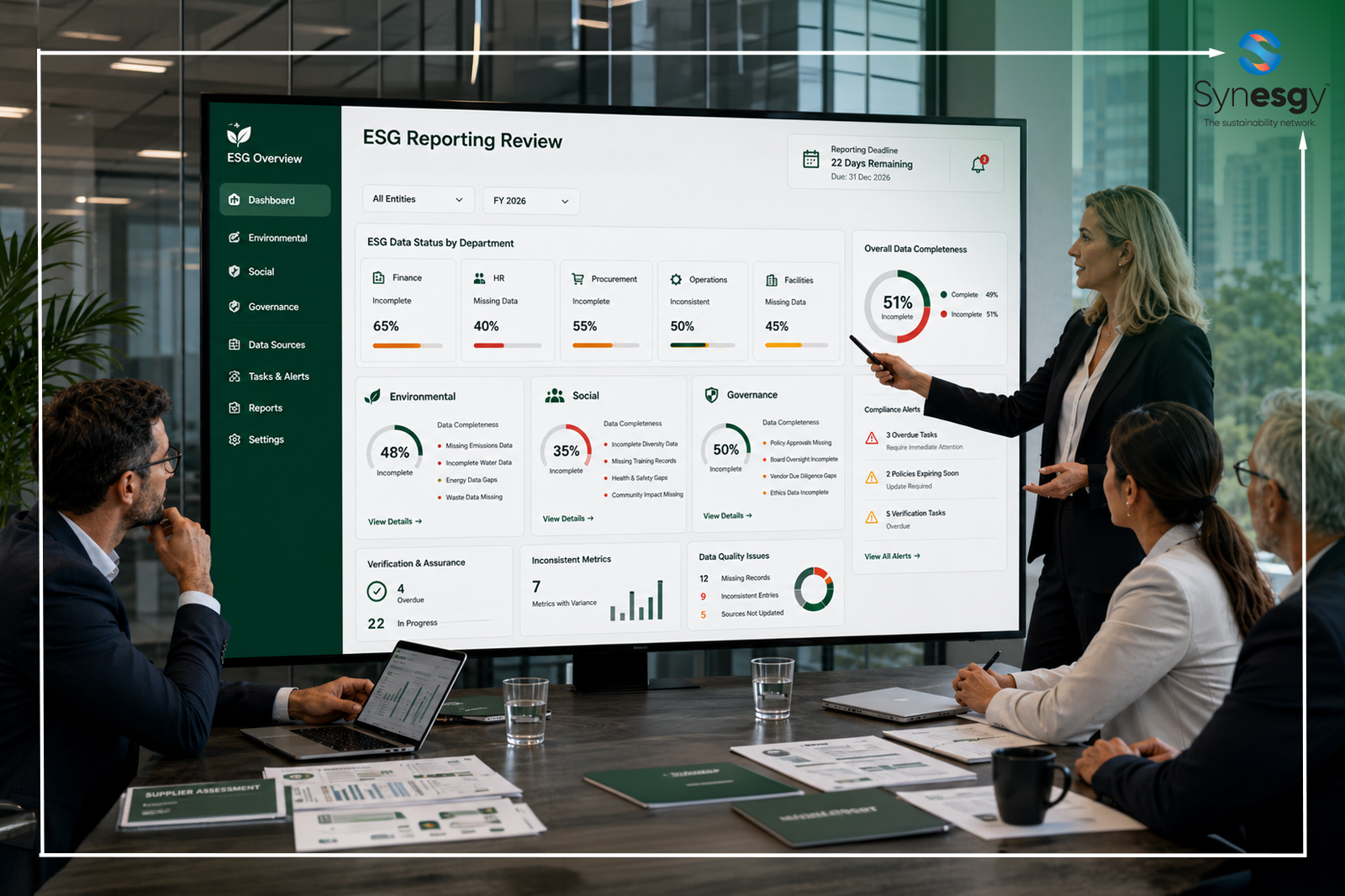
The first step is an honest internal audit of existing ESG practices against the categories covered above. This does not need to be exhaustive, but it should identify where documented policies exist and where gaps remain. From there, a simple gap analysis helps prioritize which areas need attention before the questionnaire is submitted rather than after.
It also helps to assign clear internal ownership. ESG questionnaires often require input from multiple departments, including HR, operations, compliance, and sustainability leads if one exists, so having a single point of coordination prevents inconsistent or incomplete answers. Building a central document repository ahead of time, where policies, certifications, and records are stored and kept current, turns future questionnaires from a scramble into a straightforward task of pulling from an existing library.
Businesses that treat ESG readiness as an ongoing internal practice, rather than something addressed only when requested, consistently respond faster and more accurately. Synesgy’s assessment service is designed to support exactly this kind of proactive readiness, helping businesses identify gaps before a buyer’s questionnaire does.
What Documents Are Required
The specific documents requested vary by questionnaire, but most fall into a few recurring categories. An environmental policy document outlining how the company manages resource use and emissions is commonly requested, along with any records showing environmental performance over time. On the social side, evaluators typically ask for labor and human rights policies, health and safety documentation, and evidence of how these policies are communicated to employees.
Governance documentation usually includes information on organizational structure, any anti-corruption or ethics policy, and details on how leadership oversees ESG-related decisions. Supplier code of conduct acknowledgments are also frequently requested, particularly where the responding company manages its own suppliers. If a business has completed a prior ESG assessment or holds a rating from an earlier evaluation, that history is often useful supporting material as well.
Keeping these documents current, rather than assembling them for the first time when a request arrives, is one of the simplest ways to reduce the time and stress involved in responding.
Create a stronger foundation for future ESG questionnaires. Synesgy can help your business identify missing documentation and organise the information needed for assessment.
How Do Businesses Answer ESG Questionnaires
The way a questionnaire is answered matters as much as what documentation sits behind it. Evaluators are generally more interested in accuracy than polish, and answers that overstate current practices tend to create problems later if they are checked against supporting evidence.
A useful principle is to answer based on what the company actually does, not what it aspires to do. If a policy exists on paper but is not consistently applied, that gap is worth acknowledging honestly rather than glossed over. Consistency across sections also matters, since many evaluators cross-check answers against each other and against submitted documentation. A mismatch between a social practices answer and the labor policy submitted as evidence raises more concern than a straightforward gap that is clearly disclosed.
Businesses that treat the questionnaire as an accurate snapshot of current practice, rather than a marketing exercise, generally come through the process with stronger credibility, even when their overall ESG maturity has room to grow.
What Evidence Is Needed
A common point of confusion is the difference between having a policy and having evidence that the policy is actually implemented. Stating that a company has an environmental policy is a starting point, but evaluators increasingly look for proof that the policy translates into practice.
This evidence can take several forms: internal records showing policy application, audit trails demonstrating consistent practice over time, version-controlled documentation showing policies are reviewed and updated, and relevant certifications where a company holds them. The goal is to show a pattern of implementation rather than a single point in time snapshot.
Businesses that maintain this kind of evidence on an ongoing basis, rather than compiling it reactively, tend to move through ESG questionnaires with far less friction. It also puts them in a stronger position when the same evidence is requested again in a future review cycle.
Preparing for What Comes Next
ESG questionnaires are becoming a standard part of how businesses evaluate their partners and suppliers, and that trend shows no sign of slowing. Treating ESG readiness as an ongoing capability, built through regular internal review and consistent documentation, puts a business in a far stronger position than treating it as a one-time task triggered by an external request.
Businesses that want a clearer picture of where they currently stand, before a buyer’s questionnaire arrives, can use Synesgy’s ESG assessment to identify gaps and build the documentation needed to respond with confidence.
Is your business ready for its next supplier ESG questionnaire? Complete a Synesgy ESG assessment to identify gaps, strengthen your supporting documentation, and respond to buyer requirements with confidence.
FAQs
Q: Why do companies receive ESG surveys?
A: Companies receive these requests because buyers face their own regulatory and sustainability disclosure pressures, and need visibility into supplier practices to meet those obligations. Receiving a questionnaire usually means a business meets a size or contract threshold, not that it has been singled out.
Q: How long does it take to complete an ESG questionnaire?
A: Completion time depends on how prepared a business already is. A company with existing policy documentation and a clear internal owner can often respond within a few days, while a business starting from scratch may need several weeks to gather documentation and coordinate input across departments. Ongoing readiness significantly shortens this timeline.
Q: What happens if a business fails or scores poorly on an ESG questionnaire?
A: A poor result rarely ends a business relationship outright. Most buyers use the outcome to flag risk areas and may request an improvement plan, additional documentation, or a follow-up review within a set timeframe. Consistent, honest reporting combined with a visible improvement plan is generally viewed more favorably than a strong score built on incomplete information.
Q: Do small or early-stage suppliers need to complete ESG questionnaires?
A: Yes, size does not exempt a business from receiving one, though expectations scale with company size and industry risk. Smaller suppliers are often evaluated on whether basic policies and practices exist, rather than on the scale or sophistication of a large enterprise, but the underlying categories being assessed remain the same.
Q: Is an ESG questionnaire the same as an ESG audit?
A: No, a questionnaire is typically self-reported by the business being assessed, while an audit involves independent verification of the answers and evidence provided. A questionnaire is often the first step, and a strong response can reduce the likelihood of a more intensive audit being required later.
Q: How often do businesses need to update their ESG questionnaire answers?
A: Most buyers request updates annually or at contract renewal, though some industries with higher risk profiles review more frequently. Keeping documentation current on an ongoing basis, rather than only before a known deadline, makes each subsequent submission faster and reduces the risk of outdated or inconsistent answers.
Q: What should a business do if it does not yet have all the required documentation?
A: Disclosing a gap honestly, along with a plan to address it, is a stronger approach than leaving a section incomplete or overstating current practice. Evaluators generally distinguish between a business that is early in its ESG maturity and one that appears to be misrepresenting its practices, so transparency tends to be viewed favorably.
Talk to a Synesgy ESG Specialist.
E-mail: info.me@crif.com