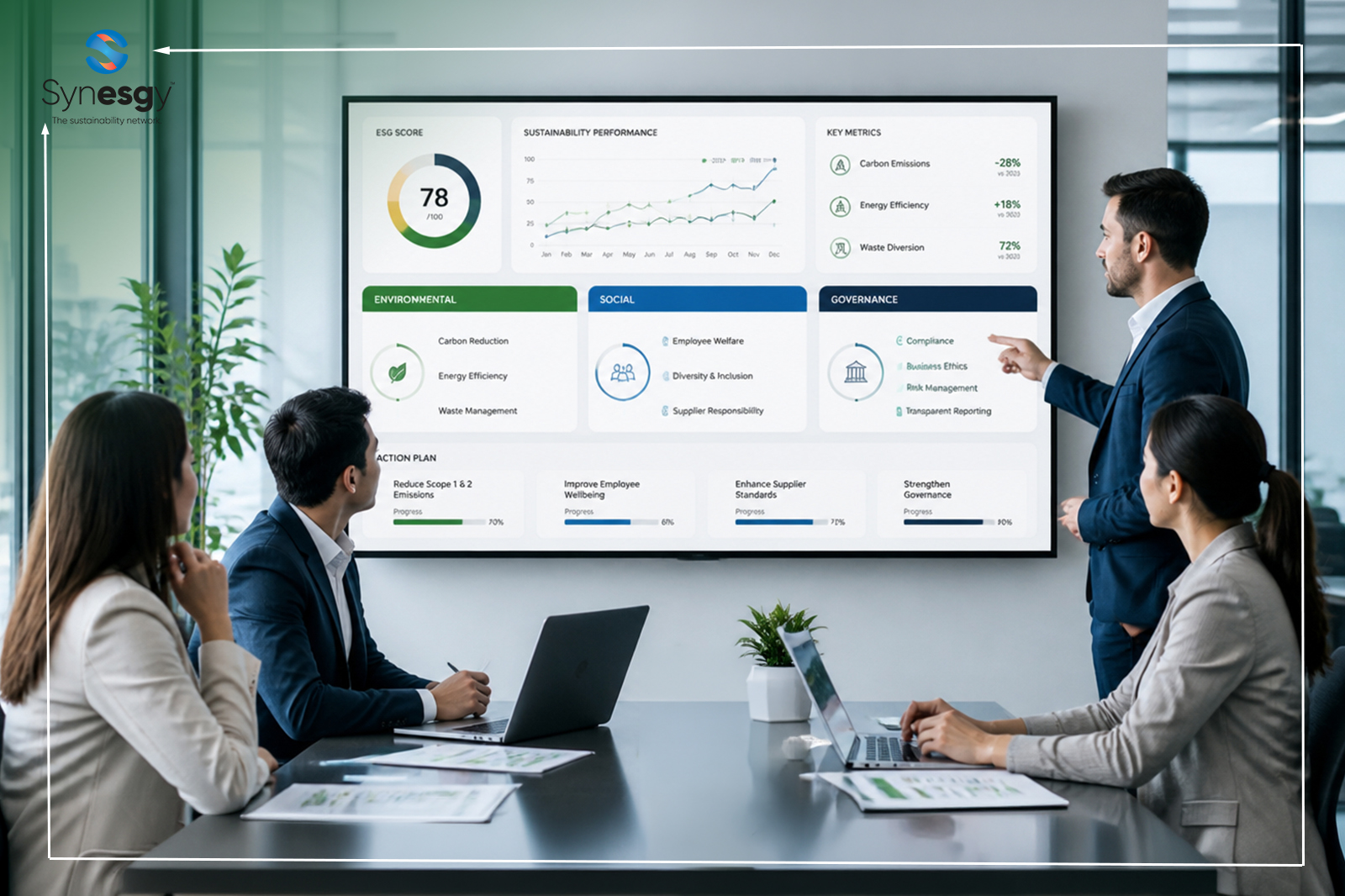
UAE businesses face growing pressure to prove their ESG credentials, from regulators, investors, buyers, and supply chain partners. Many companies start with good intentions but stall because they treat ESG as a reporting exercise rather than a structured program. An effective ESG program connects governance, data, and accountability into a system that produces measurable results over time.
This guide breaks down what an ESG program actually is, how to prioritize the first steps, how long implementation realistically takes, and what separates programs that succeed from those that stay stuck at the policy stage. If your business ESG assessment is ready to move from ESG intent to measurable progress, Synesgy’s tools can help you get there faster.
See how your business measures up. Start an ESG assessment with Synesgy to benchmark where your ESG program stands today.
What is an ESG Program?
An ESG program is a structured, ongoing framework a company uses to manage its environmental, social, and governance performance, rather than a single document or annual report. It combines strategy, governance, data collection, and reporting into one connected system.
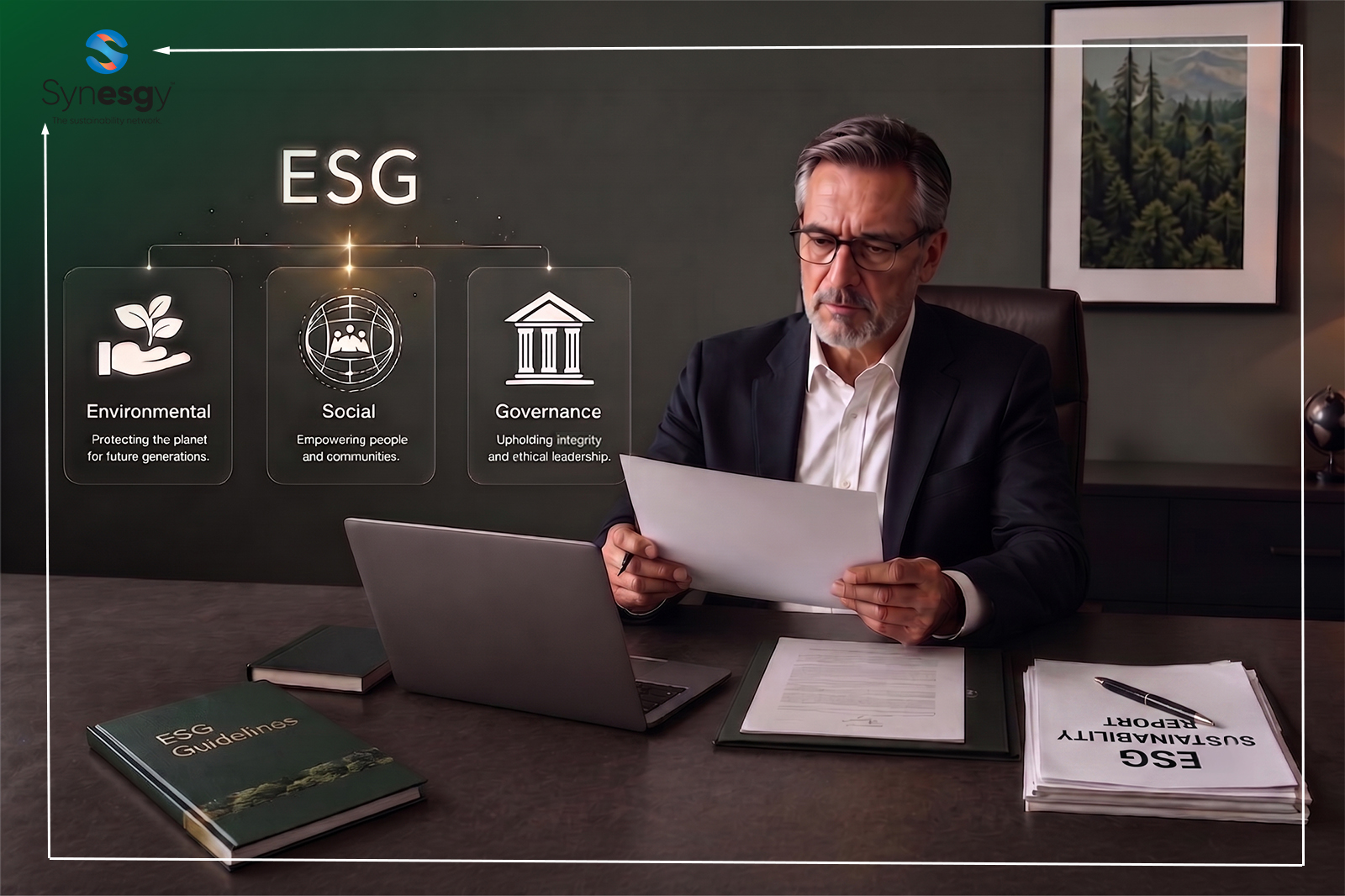
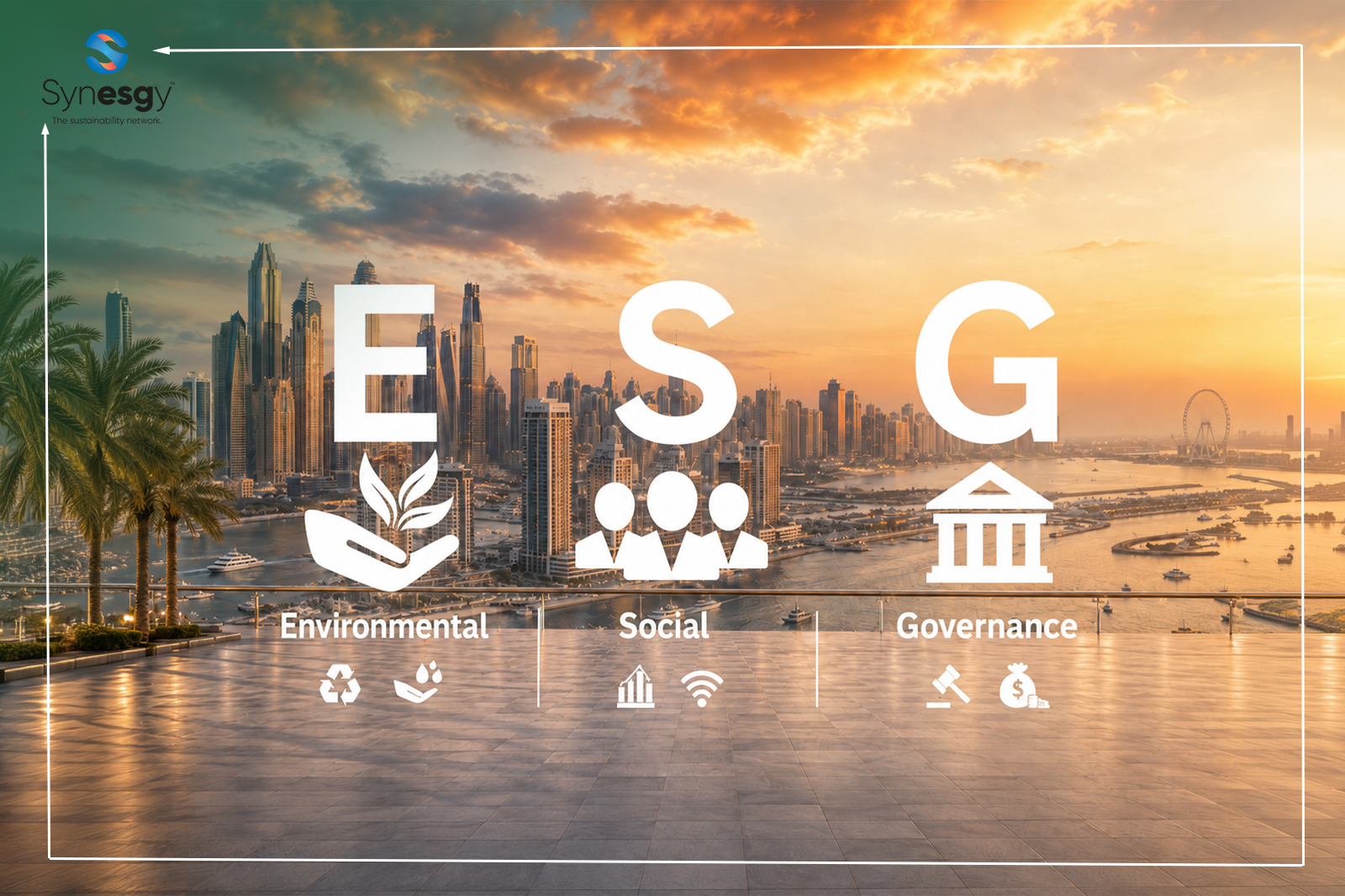
This distinguishes an ESG program from an ESG policy, which is a written commitment, and an ESG report, which is a point-in-time output. A program is the operating structure that produces both. It typically rests on three pillars:
-
Environmental: emissions, energy use, waste, and resource management
-
Social: labor practices, community impact, health and safety, and supplier conduct
-
Governance: board oversight, ethics, risk management, and disclosure practices
An ESG strategy defines the direction; an ESG framework defines the structure; the ESG program is what runs both continuously.
What are the First ESG Priorities?
The first priority for most companies is a materiality assessment, which identifies which ESG issues are most relevant to the business and its stakeholders. This determines where to focus limited time and budget before building out a full program.
After the materiality assessment, priorities typically follow this order:
-
Materiality assessment to identify the ESG issues that matter most to the business and its stakeholders
-
Baseline data collection to establish where the company currently stands on emissions, labor practices, and governance
-
Governance ownership to assign clear accountability before any metrics or targets are set
-
Quick-win identification to build early momentum with low-cost, high-visibility actions
Companies that skip the materiality assessment often end up measuring the wrong things or building metrics that do not align with regulatory or buyer expectations.
What are the Steps to Build an ESG Program?
Building an ESG program follows a sequence, starting with assessment and governance, moving through framework design, and ending with monitoring and reporting. Skipping steps out of order is one of the most common causes of stalled programs.
-
Conduct a materiality assessment to define scope and priorities
-
Establish governance and ownership, typically through an ESG committee or named sustainability lead
-
Set ESG KPIs and metrics aligned to recognized reporting standards
-
Build the ESG framework and policies that formalize how the company will act on its priorities
-
Engage stakeholders, including suppliers, employees, and investors, since ESG performance depends on data and cooperation across the value chain
-
Introduce ESG software or assessment tools to manage data collection, scoring, and reporting consistently rather than through manual spreadsheets
-
Launch pilot initiatives in priority areas before scaling company-wide
-
Establish a monitoring and reporting cadence, including periodic third-party ESG assessment where credibility with buyers or investors matters
ESG Assessment vs ESG Audit
An ESG assessment and an ESG audit serve different purposes in a program, and companies often confuse the two.
An ESG assessment evaluates current ESG performance and risk exposure. It is typically ongoing or periodic, conducted internally or by third-party ESG assessment providers, and produces an ESG score along with risk indicators and improvement areas. This makes it the tool companies use to track progress and identify gaps as the program runs.
An ESG audit, by contrast, verifies the accuracy and compliance of reported ESG data. It is usually conducted annually or as required by regulation, carried out by independent auditors or certification bodies, and results in a formal audit opinion or compliance confirmation rather than a score. Where the assessment tells a company where it stands, the audit confirms that what has been reported is accurate.
In practice, a mature ESG program uses both: ongoing assessment to manage performance, and periodic audit to validate what gets disclosed externally.
Not sure which stage your program needs next? Talk to Synesgy about ESG assessment support tailored to your business.
How Do Companies Implement ESG Successfully?
Companies implement ESG successfully when leadership buy-in, consistent metrics, and continuous improvement are treated as ongoing commitments rather than a one-time project. Programs that succeed embed ESG into daily decision-making instead of isolating it within a compliance function.
Common success factors include:
-
Leadership buy-in, since programs without visible executive sponsorship rarely get sustained budget or attention
-
ESG culture change, embedding sustainability into procurement, HR, and operations rather than treating it as a checkbox
-
Alignment to recognized reporting standards, such as the Global Reporting Initiative (GRI), the Sustainability Accounting Standards Board (SASB), and the Task Force on Climate-related Financial Disclosures (TCFD), which gives ESG metrics external credibility
-
Continuous improvement, treating the ESG program as a cycle of measurement, action, and reassessment rather than a fixed deliverable
By contrast, common ESG implementation challenges include vague ownership, metrics that are not tied to business risk, and treating the ESG report as the finish line rather than the output of an ongoing program.
What is an ESG Roadmap?
An ESG roadmap is the time-bound, milestone-based plan that sits underneath the broader ESG program, translating strategy into a sequence of actions with target dates. It answers the “when,” while the program answers the “how.”
A typical roadmap structure looks like:
-
Short-term (0 to 6 months): materiality assessment, governance setup, baseline data collection
-
Medium-term (6 to 18 months): framework rollout, ESG KPI tracking, stakeholder engagement, pilot programs
-
Long-term (18+ months): full reporting cycle, third-party assessment, continuous improvement reviews
Without a roadmap, ESG programs tend to lose momentum after the initial policy or strategy document is published.
How Long Does ESG Implementation Take?
An initial ESG assessment through a digital platform like Synesgy can usually be completed much faster than a full ESG implementation program, provided the company has the required business, environmental, social, governance, and sector-related information available. The process starts with a qualitative and quantitative ESG self-assessment, followed by an ESG score, certificate, report, benchmarks, and an action plan.
For most companies, a practical timeline may look like this:
-
ESG self-assessment and data submission: A few days to a few weeks, depending on data readiness
-
Review of ESG score, certificate, and report: After the assessment is completed
-
Action plan review and internal prioritisation: 2 to 4 weeks
-
Implementation of improvement actions: 3 to 12 months, depending on the gaps identified
-
Reassessment and certificate renewal: Every 12 months or when a new assessment is required
This means companies do not need to wait 12 to 24 months to begin measuring ESG performance. With Synesgy, the first step is to establish a structured ESG baseline through self-assessment, scoring, benchmarking, and an action plan. The longer timeline usually applies to improving ESG performance after the assessment, such as strengthening governance practices, improving environmental data, engaging suppliers, or implementing sustainability initiatives across the business.
Evaluating an ESG Assessment or Reporting Solution
Before selecting an ESG assessment provider or sustainability reporting tool, businesses should check for:
-
Alignment with recognized frameworks such as GRI, SASB, or TCFD
-
Ability to generate a clear ESG score or ESG rating, not just a static report
-
Support for supplier ESG assessment across a supply chain, not only internal operations
-
Data collection methods that scale beyond manual spreadsheets
-
Transparency in scoring methodology, so results can be explained to auditors, investors, or buyers
-
Relevance to UAE regulatory and disclosure expectations
-
Ongoing monitoring capability, not a one-time snapshot
Not sure how your current approach measures up? Synesgy’s ESG assessment can help you benchmark where your program stands today.
How Synesgy Supports ESG Program Success
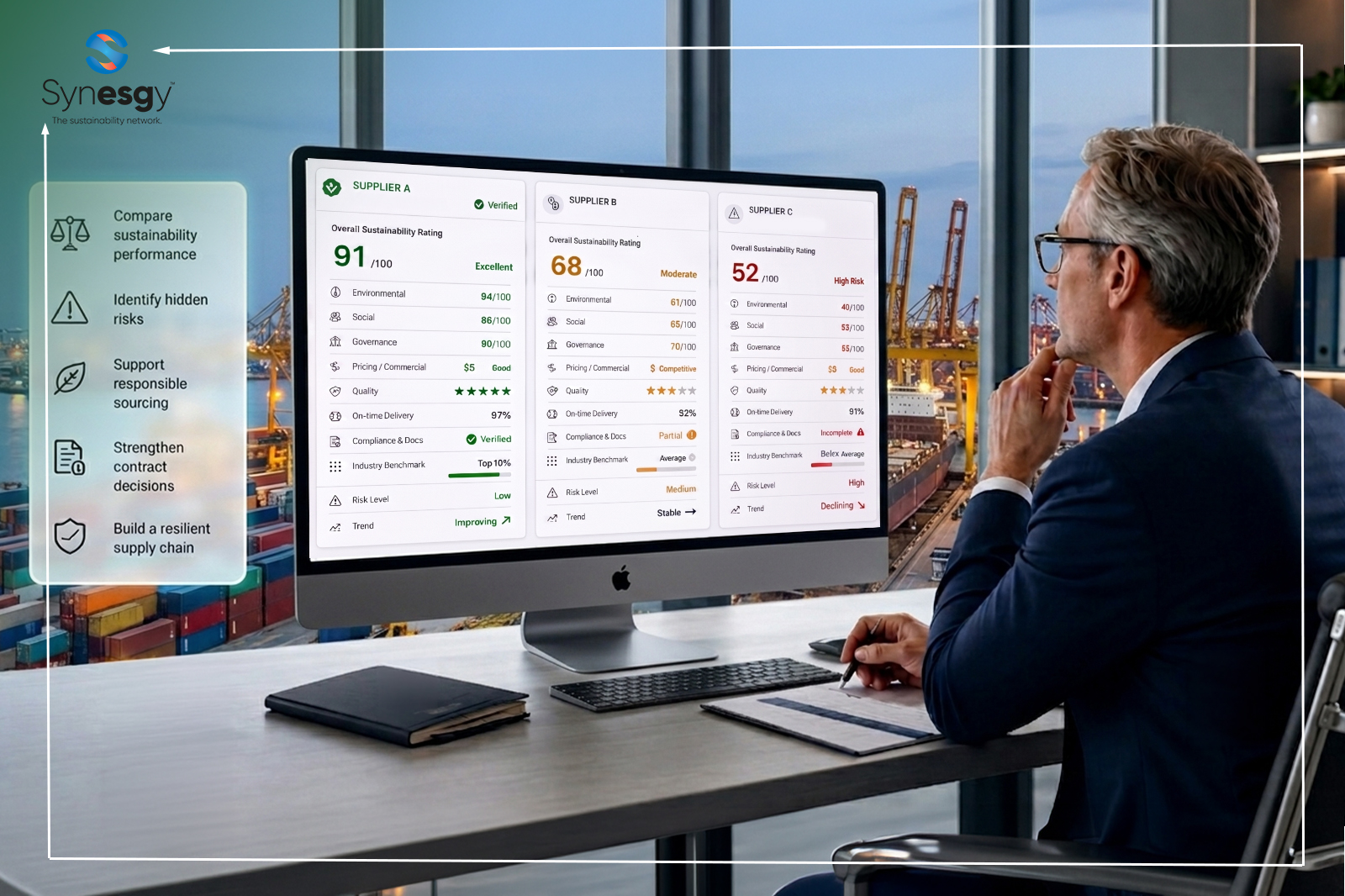
Synesgy provides ESG assessment and sustainability reporting tools that help businesses and their supply chains build measurable, ongoing ESG programs rather than one-time reports. Through supplier ESG assessment, Synesgy gives procurement and compliance teams visibility into supplier sustainability performance, supporting responsible procurement and supply chain transparency.
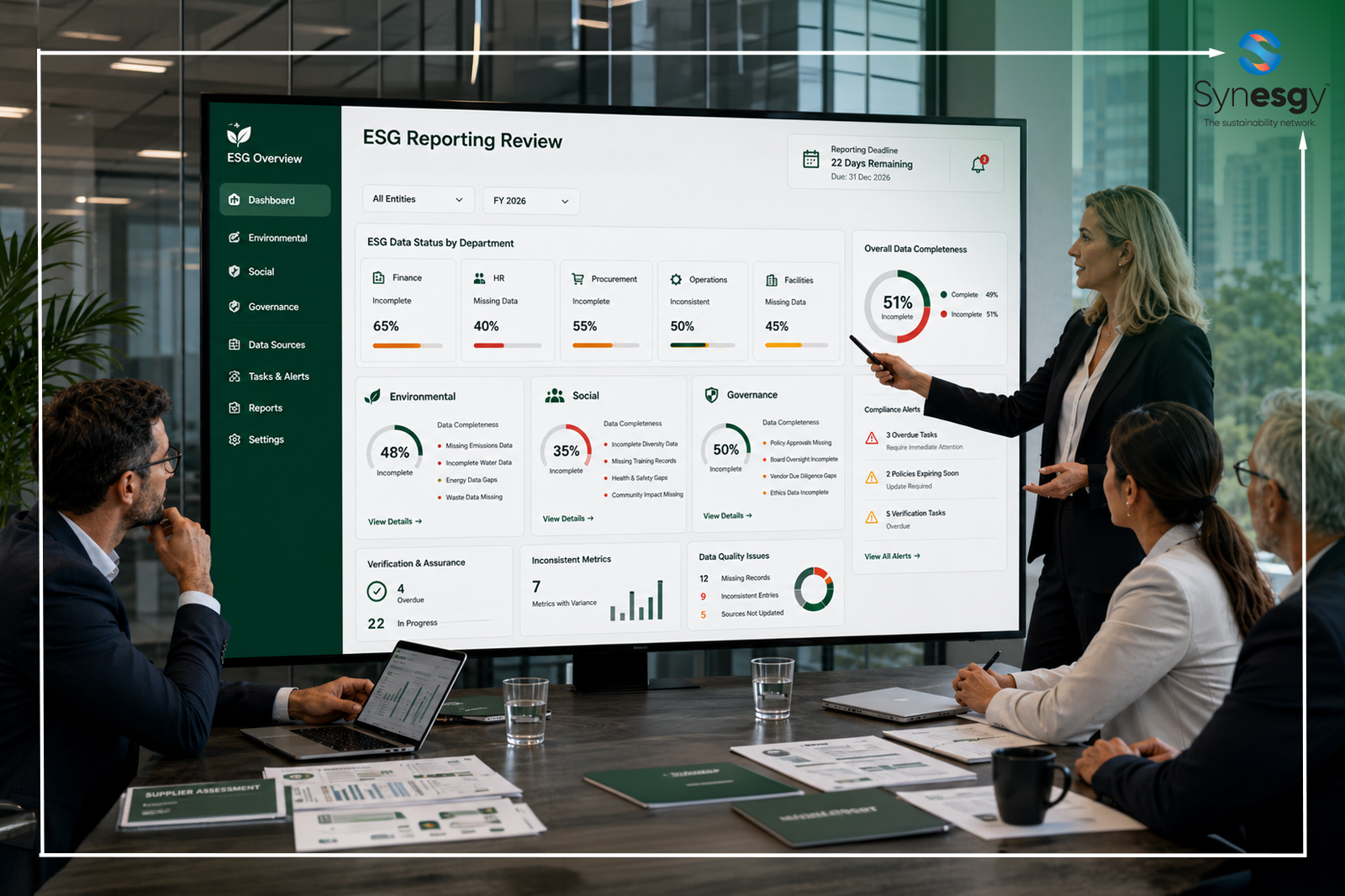
Synesgy’s ESG score and sustainability assessment structure help businesses translate materiality priorities into trackable metrics, supporting the governance, monitoring, and continuous improvement stages that separate a functioning ESG program from a static policy document. For UAE businesses managing both regulatory expectations and buyer-driven ESG requirements, this structured approach to ESG performance visibility supports both compliance readiness and stakeholder trust.
UAE Context: Why This Matters Locally
UAE regulators, exchanges, and government sustainability initiatives are increasingly formalizing ESG expectations, making structured ESG programs relevant beyond voluntary best practice. Businesses operating in or supplying into the UAE market face growing disclosure expectations tied to national sustainability priorities and regional Sustainable Business Programs.
For UAE companies, an ESG program also supports supplier onboarding and procurement risk management, since larger buyers and government-linked entities increasingly require ESG assessment as part of vendor qualification. Building a program aligned to recognized reporting standards positions UAE businesses to meet both local regulatory expectations and the ESG requirements of international buyers and investors.
Turning ESG Priorities into Measurable Outcomes
An ESG program succeeds when materiality-driven priorities, clear governance, and consistent metrics come together into a cycle of ongoing improvement rather than a single report. For UAE businesses, this means building a program that satisfies both local regulatory direction and the ESG expectations of buyers, investors, and supply chain partners.
Businesses evaluating where to start, or looking to strengthen an existing program with reliable ESG assessment and reporting, can explore Synesgy’s ESG assessment and sustainability solutions to move from policy intent to measurable ESG performance.
Ready to see where your ESG program stands? Get in touch with Synesgy to explore ESG assessment and sustainability reporting solutions built for UAE businesses.
FAQs
Q: How do UAE companies start ESG?
A: Most UAE companies start with a materiality assessment to identify which ESG issues are most relevant to their sector and stakeholders, followed by assigning governance ownership before setting metrics or targets.
Q: Who owns ESG in a company?
A: ESG ownership typically sits with a dedicated sustainability officer or an ESG committee, with oversight from the board. In smaller companies, ownership is often assigned to a senior operations or compliance leader rather than a full committee.
Q: What is the difference between an ESG program and ESG reporting?
A: An ESG program is the ongoing structure of governance, data, and action that manages ESG performance, while ESG reporting is the periodic output that communicates results from that program to regulators, investors, or buyers.
Q: Is ESG mandatory for UAE companies?
A: ESG disclosure requirements in the UAE vary by sector, listing status, and whether a company supplies into buyers with their own ESG requirements. Companies should confirm current obligations with relevant regulatory bodies rather than assume a blanket requirement.
Q: How do you measure ESG success?
A: ESG success is measured through tracked KPIs against baseline data, such as emissions reduction, supplier ESG assessment coverage, governance milestones met, and improvement in ESG score over successive reporting cycles, rather than by the existence of a report alone.
Q: Do small businesses need a full ESG program?
A: Small businesses do not need the same scale of program as a large enterprise, but a scaled-down version, focused on materiality assessment and basic governance ownership, is increasingly expected by larger buyers and supply chain partners.
Q: How much does an ESG program cost?
A: Cost varies significantly based on company size, data maturity, and whether tools or third-party providers are used for assessment and reporting. Businesses should budget for both the assessment and ongoing monitoring stages, not just initial policy development.
Q: Do companies need third-party ESG certification?
A: Third-party ESG certification or assessment is not always mandatory, but it strengthens credibility with investors, buyers, and regulators, and is often requested during supplier qualification or procurement due diligence processes.
Talk to a Synesgy ESG Specialist.
E-mail: info.me@crif.com