Sustainability reporting becomes more meaningful when it reflects a company’s current environmental, social, and governance position rather than a snapshot that is allowed to become outdated. ESG performance can change as policies are revised, workforce practices develop, environmental indicators move, certifications are renewed, management systems evolve, or new improvement actions are introduced. For that reason, ESG assessment is more useful when it is treated as a recurring review process rather than a one-time exercise.
Synesgy’s process reflects this principle. Following registration, a company completes the ESG questionnaire and provides information about the actions it has taken in relation to ESG principles. The platform calculates an ESG score, checks the adequacy and consistency of the information provided, and may request supporting documents where inconsistencies are identified. Companies can then access outputs including a report, an action plan, and a Synesgy certificate. At the end of the 12 months, the company is asked to update the questionnaire so that a new certificate can be issued for the following 12 months.
ESG Assessment as a Continuous Review Process
An ESG assessment provides a structured view of how a company is performing across environmental, social and governance areas. However, the information behind that assessment is not necessarily fixed.
Environmental indicators can change as energy use, greenhouse gas emissions, water consumption or waste volumes change. Social indicators can move as the workforce changes, training increases, health and safety performance develops, or gender representation shifts. Governance practices can also evolve as companies introduce new policies, update compliance controls, renew certifications, or assign new ESG responsibilities.
The Synesgy questionnaire reflects this broad scope. It investigates areas including corporate sustainability strategy, ESG risk management, impact analysis, sustainability reporting, codes of conduct, data security policy, certifications, compliance with international ESG standards, internal ESG policies, and stakeholder relations. It also collects information on employees, including wages, gender, training and accidents, alongside energy consumption, GHG emissions, waste management, recycling, water consumption, pollutants and biodiversity.
Because these factors can change, an assessment completed in one period may not represent the company in the next. A recurring ESG review helps businesses revisit the information that shaped their previous assessment and identify where conditions, practices or outcomes have moved.
Updating ESG Data, Evidence and Questionnaire Responses
A useful reassessment depends on more than simply repeating the same answers. The value comes from reviewing the underlying data and evidence.
The Synesgy process requires companies to update the questionnaire after 12 months. That update can provide a structured opportunity to revisit different categories of ESG information.
For environmental performance, companies may need to review figures relating to energy consumption, greenhouse gas emissions, water, waste, recycling, pollutants or biodiversity. If those values have changed, the updated questionnaire should reflect the more recent position.
For social performance, workforce information may also require attention. Changes in employee composition, gender representation, training activity or accident data can affect the picture presented by the assessment. The CRIF Synesgy Ratings methodology also considers areas such as employment stability, equal treatment, the gender pay gap, professional development, welfare measures, human rights, diversity, health and safety policies, occupational injuries and lost working days.
Governance information can change just as significantly. A company may introduce or revise a code of ethics, whistleblowing process, privacy policy, anti-corruption arrangements, internal controls or sustainability oversight responsibilities. Management-system certifications may also be obtained, renewed or changed. These are among the governance areas considered within the CRIF Synesgy Ratings framework.
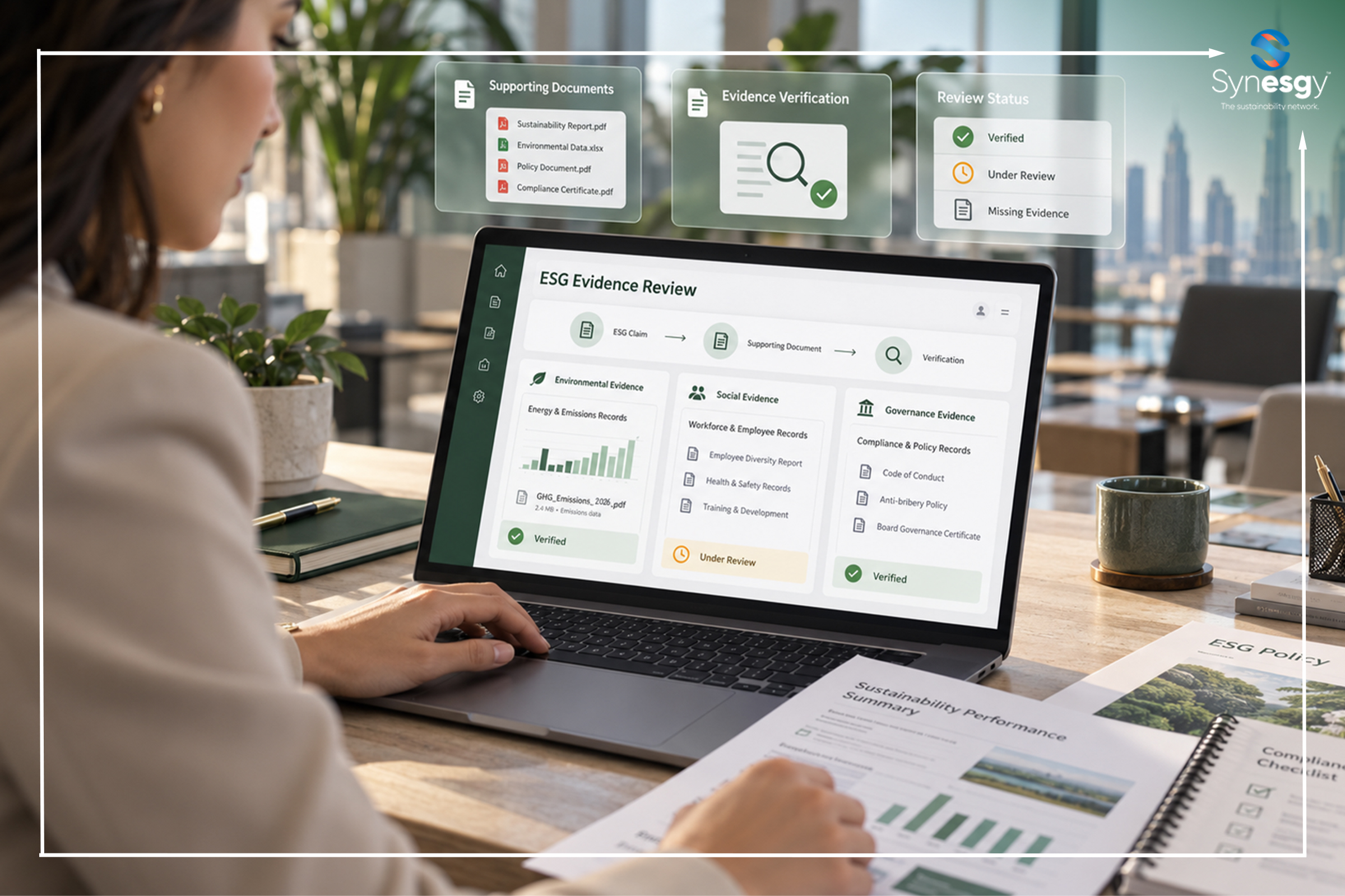
Supporting documentation matters because ESG assessment is not based only on unsupported statements. Synesgy checks the adequacy and consistency of the information provided and can ask for supporting documents if inconsistencies arise. This means that annual reassessment can also act as a prompt to review whether the evidence behind ESG claims is still current.
The Role of Current ESG Data in Sustainability Reporting
Sustainability reporting depends on the quality of the information used to describe performance. If the underlying ESG data is outdated, incomplete, or inconsistent with current operations, the resulting report may not provide the clearest picture of the company’s present position.
Annual ESG reassessment can help address this issue by creating a regular process for reviewing data before it becomes embedded in repeated reporting cycles.
For example, a company may have reduced energy consumption since its previous assessment, introduced new employee training programmes, strengthened supplier qualification procedures or implemented a new compliance policy. If sustainability reporting continues to rely on the previous year’s information, those developments may not be reflected accurately.
The opposite can also happen. Performance can deteriorate in a particular area. Waste levels may increase, workplace incidents may rise, or a policy that existed previously may no longer be actively implemented. Reassessment allows companies to identify such changes rather than assuming that prior information remains valid.
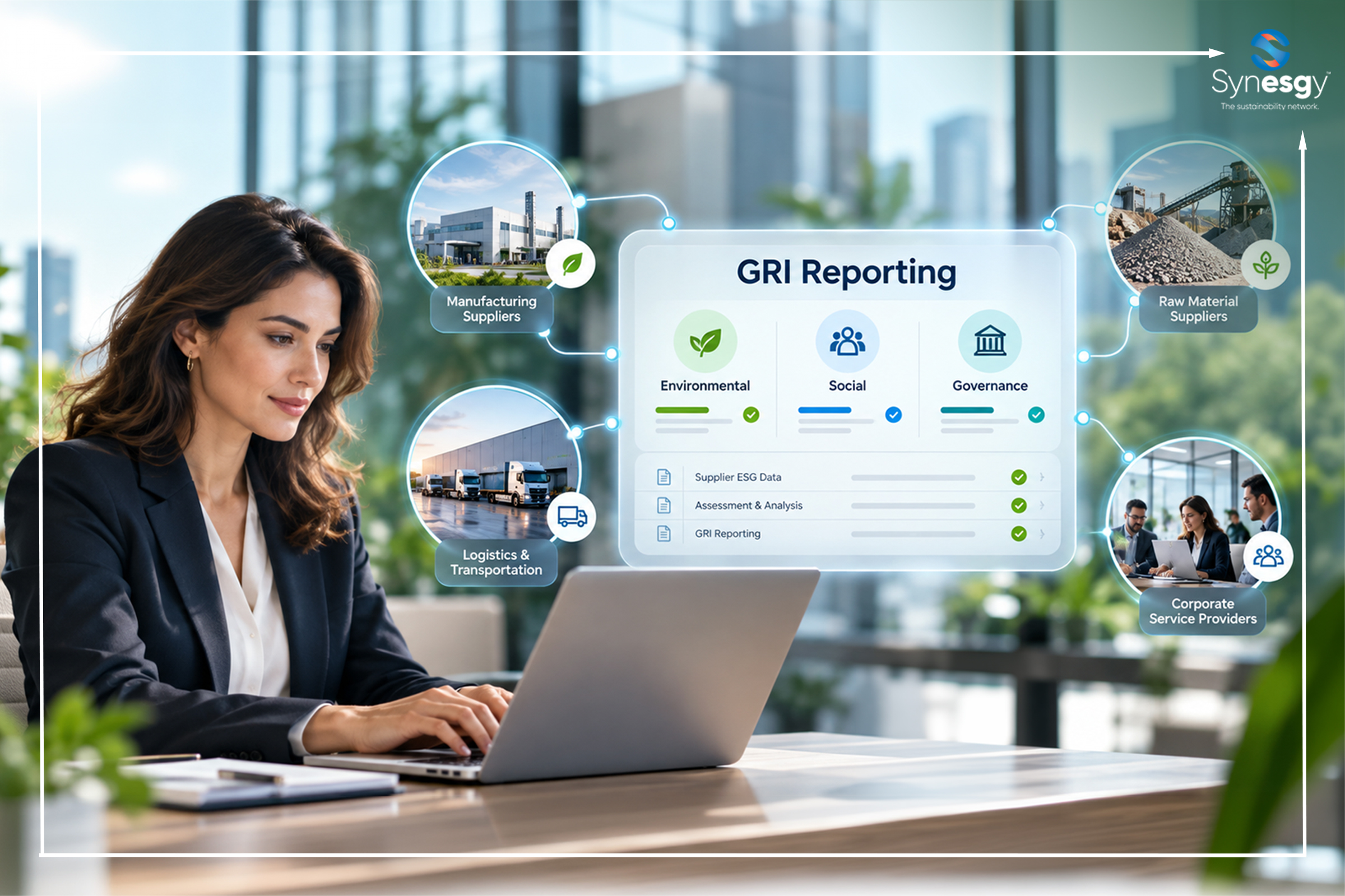
This is particularly important because sustainability reporting includes both quantitative and qualitative information. Numerical indicators need to be updated, but policies, controls, management systems, targets, initiatives, and supporting evidence may also need review.
Synesgy’s approach supports this broader understanding of ESG information. Its questionnaire combines operational indicators with information on strategies, policies, certifications, stakeholders, and management practices.
The reassessment itself should not be described as producing a sustainability report automatically. Rather, it can provide more current, structured ESG information that can support a more reliable reporting process.
Tracking ESG Performance Across Reporting Periods
One of the most useful outcomes of recurring ESG assessment is the ability to look at performance over time instead of viewing each reporting period in isolation.
Synesgy calculates an overall ESG score together with section-specific scores for Environmental, Social and Governance areas. Its outputs also identify six areas for improvement, with two associated with each ESG pillar. The action plan highlights priority actions and considers the relative importance of each area in relation to the company’s macro-industry.
When a company returns to the assessment after 12 months, updated information can show whether its ESG position has changed. The value is not simply in asking whether the total score moved. The more meaningful question is what changed underneath it.
An environmental score may improve because energy management or waste practices changed. A social result may shift because of developments in training, employee safety, or workforce policies. Governance may strengthen after the introduction of more formal compliance mechanisms or stronger oversight.
Looking at individual areas makes year-on-year comparison more informative. A stable overall score could still hide meaningful progress in one pillar and deterioration in another.
Over several reporting periods, recurring assessments can help create a more structured history of ESG development. That can make sustainability reporting more useful because the company can describe not only its current position, but also how its practices and performance have evolved.
Reassessing ESG Priorities and Improvement Actions
ESG improvement priorities should not necessarily remain unchanged year after year.
A company may complete an assessment, identify weaknesses, and begin implementing corrective or improvement actions. By the next assessment period, some of those actions may have been completed, some may still be in progress, and others may not have produced the expected results. New gaps may also have emerged.
Synesgy’s Action Plan is designed around improvement priorities. The platform identifies six areas for improvement, two for each E, S and G pillar, and highlights priority actions that should be undertaken to improve the assessment. Industry-specific impacts are also taken into account during the review phase.
Annual reassessment therefore provides a logical point to revisit those priorities.
If an organisation previously identified waste management as a major weakness and introduced new recycling or resource-efficiency practices, the updated assessment can reflect the new information. Attention may then shift toward another environmental issue or toward a social or governance priority.
The same principle applies to workforce, supplier and governance practices. A business that strengthened health and safety controls may still need to improve employee development. A company that formalised its code of ethics may still have gaps in whistleblowing, anti-corruption controls or board-level ESG oversight.
This prevents the ESG action plan from becoming static. Reassessment can help companies decide which previous priorities remain relevant and which new areas deserve attention.
Periodic ESG Reassessment Through Synesgy
Synesgy is a digital platform that supports ESG assessment for companies and supply chains through structured data collection, scoring, verification, and improvement planning.
Companies complete the Synesgy questionnaire to receive an overall ESG score across five classes, along with individual E, S, and G scores. The platform evaluates the consistency of submitted information and may request supporting documentation to validate responses.
Following the assessment, companies receive an ESG report, Action Plan, and Synesgy certificate valid for 12 months. To renew the certificate, companies must renew their subscription and update the questionnaire.
This periodic reassessment helps businesses maintain updated ESG data, monitor sustainability performance, identify improvement areas, and strengthen the reliability of their sustainability reporting.
Keep Your ESG Assessment Up to Date with Synesgy
Reassess your sustainability performance, update your ESG data, and identify opportunities for improvement with Synesgy’s structured ESG assessment platform.
FAQs
Q: Does an ESG reassessment require a company to start the entire process again?
A: Not necessarily in the sense of ignoring all previous information. In the Synesgy process, the company updates the questionnaire after 12 months. The important objective is to review whether previous responses, data, and supporting evidence still reflect the company’s current ESG position.
Q: Can changes in company policies affect ESG assessment results?
A: Yes. ESG assessment considers more than operational metrics. Synesgy’s questionnaire and CRIF Synesgy Ratings methodologies also consider policies, management systems, compliance practices, certifications, codes of conduct, and ESG oversight. Changes in these areas can therefore affect the evidence used to evaluate the company’s ESG profile.
Q: Should supporting documents be reviewed during every ESG reassessment?
A: They should be reviewed where they support information included in the assessment. Synesgy checks the adequacy and consistency of submitted information and may request documents where inconsistencies arise. Keeping supporting evidence current can help ensure that updated questionnaire responses are properly substantiated.
Q: Can supplier or workforce changes influence an updated ESG assessment?
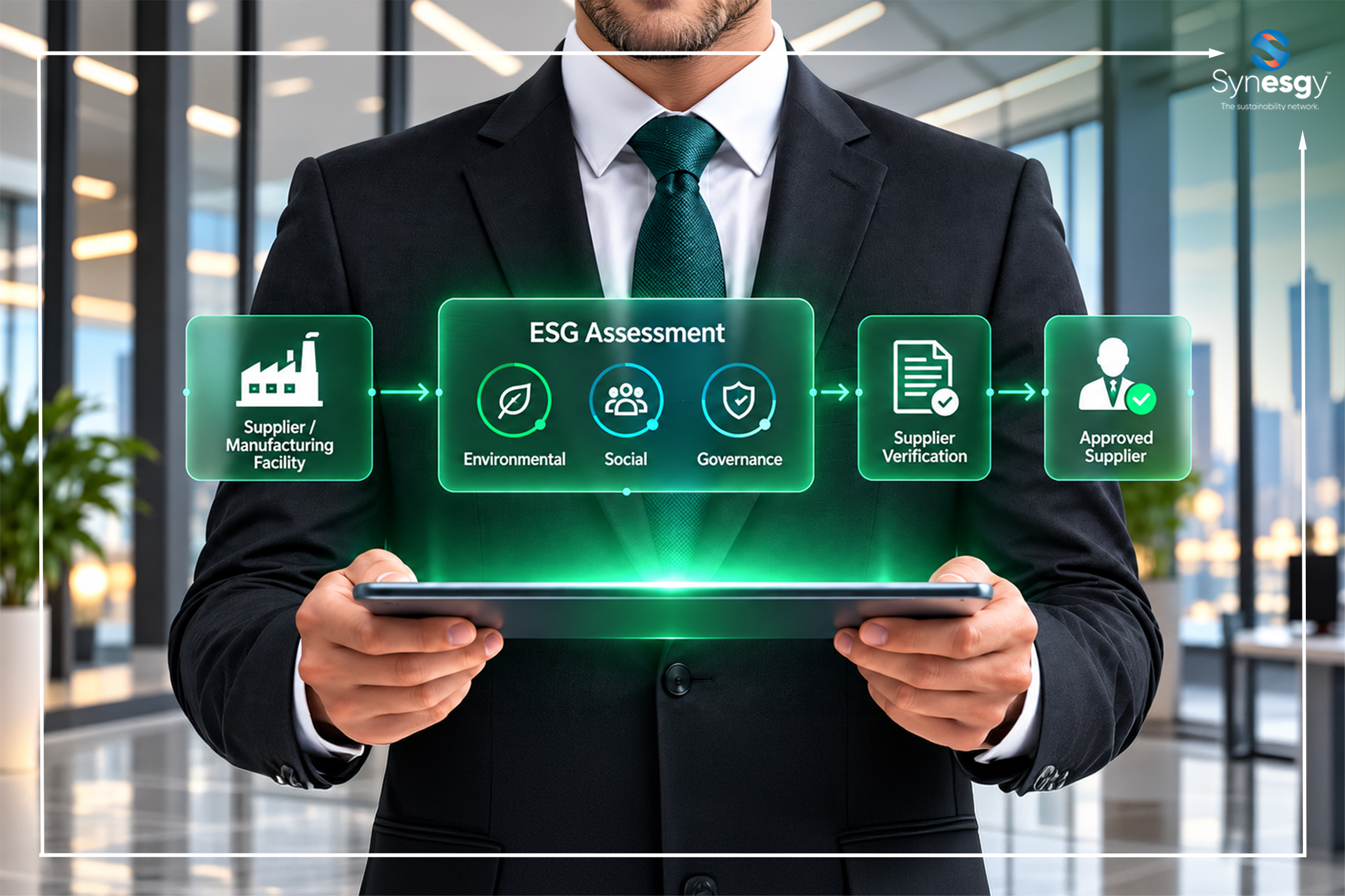
A: They can. The Synesgy and CRIF Synesgy Ratings frameworks include workforce factors and value-chain considerations. Workforce composition, training, health and safety, human rights, supplier qualification, supplier documentation and ongoing supplier monitoring can all form part of the broader ESG picture.
Q: Does an improved ESG score automatically mean every area of sustainability performance improved?
A: No. An overall result brings together multiple ESG areas. Performance may improve in one pillar while remaining stable or weakening in another. For that reason, companies should review the Environmental, Social, and Governance results and the underlying improvement areas rather than relying only on the overall score.